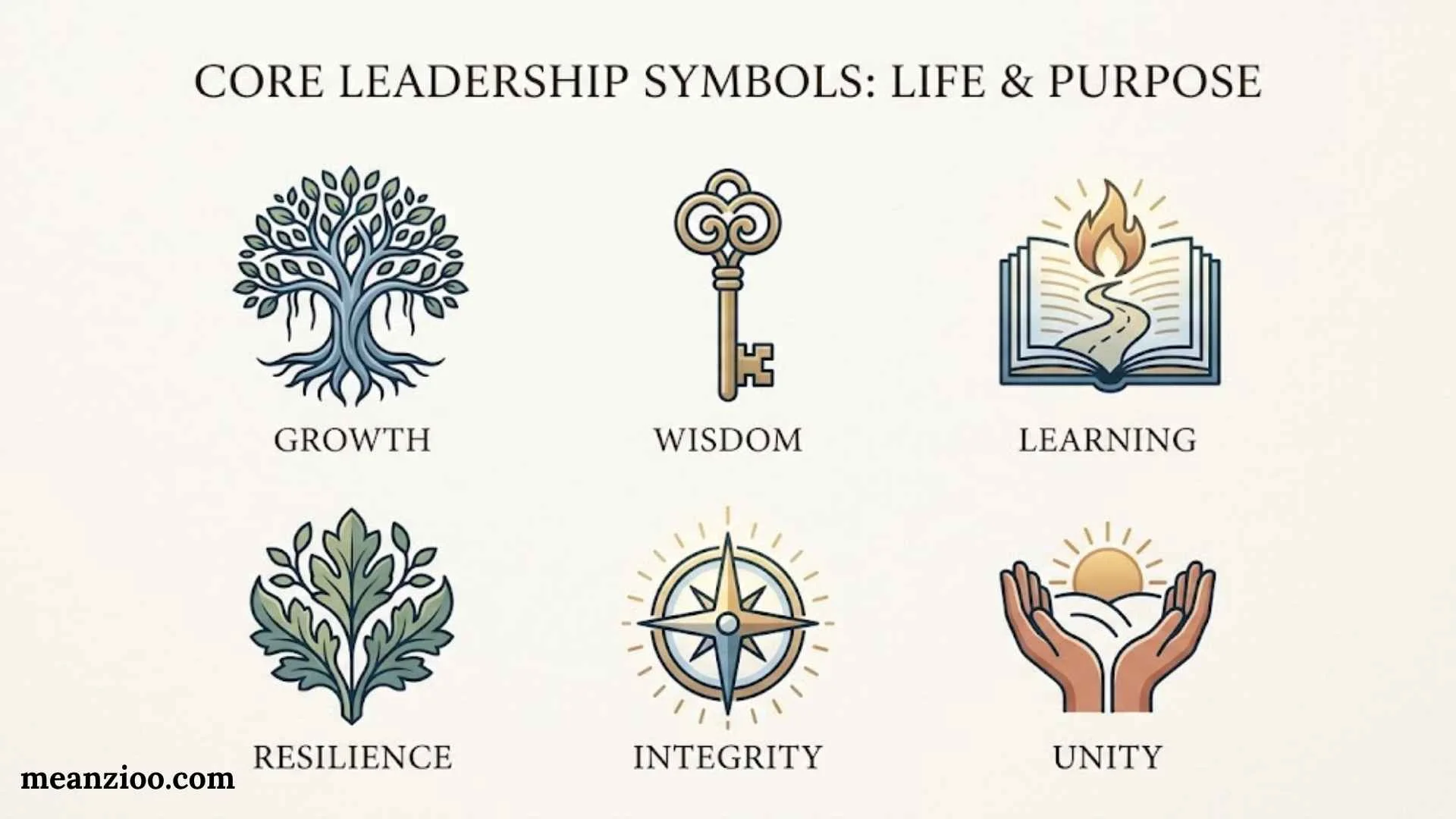
Leadership symbols communicate ideas that words sometimes struggle to express. A crown can suggest authority, a compass can represent direction, and a torch can stand for knowledge and inspiration. Across history, people have used animals, objects, emblems, and natural forms to express the qualities they expect from leaders.
But leadership symbols mean more than power or status. They can also represent courage, wisdom, responsibility, fairness, teamwork, and service. Some symbols have deep historical roots, while others have developed through modern business, education, and popular culture.
Understanding these symbols helps you choose meaningful imagery for a company logo, school presentation, leadership program, tattoo, team emblem, or personal project. It also helps you understand how different cultures portray authority and what separates responsible leadership from the misuse of power.
This guide explores 25 symbols of leadership and their meanings, examines their historical and cultural backgrounds, and explains how to choose the right symbol for your purpose.
What Are Leadership Symbols?
Leadership symbols are images, objects, animals, signs, or emblems that represent qualities associated with leading people. These qualities may include authority, vision, courage, wisdom, responsibility, influence, and the ability to guide a group toward a shared goal.
Some symbols have established historical meanings. A crown, for example, has long been associated with monarchy and sovereignty. Other symbols work mainly as metaphors. A compass can represent a leader’s ability to provide direction, while a bridge can symbolize cooperation and connection.
Leadership symbolism appears in many parts of everyday life:
- Government: National flags, official seals, and ceremonial objects communicate public authority and collective identity.
- Military organizations: Rank insignia, unit flags, and medals identify roles, service, and achievement.
- Education: Torches, books, and academic emblems can represent learning, guidance, and intellectual growth.
- Business: Logos, shields, stars, and other visual elements can express organizational values and ambitions.
- Community life: Shared emblems and ceremonial objects can represent service, belonging, and responsibility.
A symbol doesn’t automatically make someone a good leader. It communicates an idea or expectation. A person’s decisions, conduct, and treatment of others determine whether that message reflects reality.
25 Leadership Symbols and Their Meanings
The following symbols represent different aspects of leadership. Their meanings can change with the historical period, cultural tradition, and setting in which people use them.
| Leadership symbol | Common meaning | Leadership quality |
| Crown | Authority and sovereignty | Responsibility |
| Lion | Courage and strength | Confidence |
| Eagle | Vision and freedom | Perspective |
| Torch | Knowledge and inspiration | Guidance |
| Compass | Direction and purpose | Strategic thinking |
| Flag | Identity and unity | Shared purpose |
| Shield | Protection and duty | Reliability |
| Throne | Sovereignty and judgment | Accountability |
| Scepter | Formal authority | Legitimacy |
| Staff | Guidance and support | Service |
| Wolf | Cooperation and strategy | Teamwork |
| Mountain | Resilience and achievement | Determination |
| Star | Aspiration and guidance | Excellence |
| Elephant | Strength and experience | Stability |
| Dragon | Power and wisdom | Cultural authority |
| Arrow | Focus and progress | Decisiveness |
| Bridge | Connection and cooperation | Collaboration |
| Tree | Growth and stability | Long-term thinking |
| Helping hands | Care and service | Humility |
| Light | Clarity and understanding | Sound judgment |
| Halo | Holiness and virtue | Spiritual authority |
| Coat of arms | Heritage and identity | Institutional continuity |
| Medal | Achievement and honor | Recognized service |
| Crossed swords | Military tradition and bravery | Discipline |
| Royal seal | Official authority and authentication | Legitimacy |
Crown — Authority and Responsibility
The crown is one of the most recognizable symbols of power and authority. Historically, crowns have identified monarchs and represented sovereignty, royal status, and the legitimacy of a ruler’s position.
In leadership imagery, a crown can represent responsibility as well as privilege. A person who holds authority must make decisions, accept consequences, and consider the people affected by those decisions.
Crowns appear in royal portraits, coats of arms, ceremonial traditions, and modern illustrations. Businesses and personal brands sometimes use crown imagery to communicate excellence or prestige.
However, a crown doesn’t always represent ethical leadership. Depending on the context, it may suggest arrogance, entitlement, or excessive control.
Best represents: Authority, responsibility, sovereignty, and status.
Lion — Courage and Strength
The lion is a popular symbol of courage, strength, confidence, and authority. Its appearance in royal heraldry, monuments, and national emblems has helped establish its association with power.
As a leadership metaphor, the lion represents someone willing to face difficult challenges and protect a team during uncertain times. It can communicate determination and confidence without requiring words.
Lions also appear in European coats of arms and other historical emblems. Their exact meanings depend on the tradition and the design.
Still, leadership requires more than dominance. A lion may communicate bravery, but a strong leader also listens, considers evidence, and knows when cooperation works better than confrontation.
Best represents: Courage, confidence, strength, and bold leadership.
Eagle — Vision and Perspective
The eagle often symbolizes vision, freedom, ambition, and authority. Its association with flight and height makes it a natural metaphor for seeing the bigger picture rather than focusing only on immediate problems.
In leadership, vision means understanding where a team needs to go and helping people recognize the steps required to get there. An eagle can represent that ability to look beyond today’s obstacles.
Eagles also appear on national emblems, government insignia, and military symbols. The bald eagle, for example, serves as a national emblem of the United States.
The meaning isn’t universal, though. An eagle can represent different political, cultural, or spiritual ideas depending on its use.
Best represents: Vision, perspective, freedom, and strategic thinking.
Torch — Knowledge and Inspiration
A torch represents light in darkness, making it a powerful metaphor for knowledge, education, inspiration, and guidance. It suggests that a leader can help people understand a problem and find a way forward.
The torch is especially useful in educational settings. A school or leadership program might use torch imagery to represent learning, curiosity, and the sharing of knowledge.
It also appears in monuments and ceremonial imagery. The Olympic torch, for example, connects fire with the Olympic movement and its traditions.
For a modern organization, a torch can communicate the idea of helping others learn rather than keeping knowledge concentrated in one person’s hands.
Best represents: Wisdom, inspiration, learning, and guidance.
Compass — Direction and Purpose
The compass is a strong symbol of direction, purpose, and strategic planning. Navigators use a compass to determine direction, while leaders use goals, principles, and evidence to guide decisions.
A compass represents leadership that gives people clarity without controlling every step they take. It can suggest that a leader understands the destination and helps the team navigate changing conditions.
The symbol also works well in leadership training, business presentations, coaching materials, and personal development projects.
A compass doesn’t choose the destination by itself. In the same way, a leader needs sound judgment to decide which direction is worth pursuing.
Best represents: Direction, purpose, strategic thinking, and decision-making.
Flag — Unity and Shared Identity
A flag represents identity, belonging, and a shared purpose. National flags communicate collective identity, while military, organizational, and team flags can identify a group and its values.
In leadership, a flag can symbolize the ability to bring people together around a common goal. It represents the group rather than only the individual who leads it.
Flags can also communicate history, sacrifice, independence, and cultural pride. Their meaning often depends on the community that recognizes them.
For businesses and community organizations, a flag-inspired design may express solidarity and shared responsibility. However, designers should consider political associations before using national or historical flag imagery.
Best represents: Unity, identity, loyalty, and shared purpose.
Shield — Protection and Duty
The shield traditionally represents defense and protection. Warriors used shields for physical protection, while heraldic shields became a way to display family, institutional, and territorial identities.
As a leadership symbol, a shield suggests that authority comes with a duty to protect people and resources. A responsible manager, for example, should address preventable risks and create conditions where team members can do their work safely.
A shield can also communicate security and reliability in modern branding. Yet protection shouldn’t become an excuse for excessive control.
The best interpretation connects strength with responsibility rather than aggression.
Best represents: Protection, security, duty, and reliability.
Throne — Sovereignty and Judgment
A throne represents the seat of royal or sovereign authority. Throughout history, thrones have appeared in palaces, ceremonies, portraits, and depictions of rulers.
Unlike a crown, which is worn, a throne represents the position or institution through which authority is exercised. It can suggest stability, judgment, and the responsibility attached to public office.
In modern imagery, a throne may also symbolize status, ambition, or personal power. Its meaning depends on how artists present the person sitting on it.
A throne can represent legitimate authority, but it can also suggest a leader who values position more than service. That contrast makes it a useful symbol in stories about power.
Best represents: Sovereignty, status, judgment, and formal authority.
Scepter — Formal Authority and Legitimacy
A scepter is a ceremonial staff associated with royal authority. In various monarchies, rulers have used scepters as part of formal regalia to communicate sovereignty and rank.
The scepter differs from a crown because it is held rather than worn. It often serves as a visible sign of office and the authority associated with that position.
In leadership illustrations, a scepter can represent command, legitimacy, and formal responsibility. However, it usually communicates hierarchical authority more clearly than collaborative or servant leadership.
For a modern company logo, a scepter may suggest prestige or exclusivity. A compass or bridge might be more appropriate if the intended message is teamwork or guidance.
Best represents: Formal authority, sovereignty, rank, and legitimacy.
Staff — Guidance and Support
A staff is a practical object that can also carry symbolic meaning. Walking staffs, shepherds’ staffs, ceremonial staffs, and staffs of office have served different purposes across societies.
As a leadership metaphor, a staff represents guidance, support, and the responsibility to help others move forward. The shepherd’s staff, in particular, is often used in religious and pastoral imagery to express care for a community.
The staff can therefore communicate a different kind of authority from the scepter. Instead of emphasizing status alone, it can suggest service and practical responsibility.
Its meaning depends on the object and tradition. Not every staff has a leadership-related origin.
Best represents: Guidance, support, care, and responsibility.
Wolf — Cooperation and Strategy
The wolf frequently appears in modern leadership imagery because people associate it with teamwork, alertness, strategy, and survival. Wolf imagery can suggest a group working together in challenging conditions.
However, popular claims about wolves and pack leadership sometimes oversimplify wildlife behavior. Real wolf social structures vary, and observations of captive animals don’t always describe how wild wolves organize themselves.
As a metaphor, the wolf is most useful when it represents coordination and collective effort rather than the idea that the strongest individual must dominate everyone else.
This makes wolf imagery suitable for team emblems, outdoor organizations, and designs emphasizing resilience.
Best represents: Cooperation, alertness, strategy, and collective effort.
Mountain — Resilience and Achievement
A mountain symbolizes challenge, endurance, stability, and achievement in many modern visual contexts. Reaching a summit often requires preparation, patience, and the ability to respond to unexpected conditions.
Leadership follows a similar pattern. Teams encounter setbacks, competing priorities, and difficult decisions. A mountain can represent the determination needed to keep moving toward a meaningful goal.
Unlike a crown or scepter, the mountain doesn’t necessarily suggest authority over other people. Instead, it emphasizes the qualities required to overcome obstacles.
That makes it a useful choice for leadership development, coaching, personal growth, and organizations focused on long-term progress.
Best represents: Resilience, determination, perseverance, and achievement.
Star — Excellence and Guidance
A star can represent excellence, aspiration, guidance, and recognition. People have used stars for navigation, while modern institutions often include them in ranks, awards, badges, and national symbols.
In leadership imagery, a star can stand for a clear goal or a standard worth pursuing. It may also represent a person whose example inspires others.
The context matters. A star on a military uniform can indicate rank, while a star on an award may recognize achievement. In a company logo, it might communicate quality or ambition.
Best represents: Excellence, aspiration, guidance, and achievement.
Elephant — Strength and Experience
The elephant can represent strength, experience, stability, and intelligence. Its size and long lifespan make it a compelling image for leadership designs centered on endurance and steady judgment.
Elephants also hold important cultural meanings in several Asian and African traditions. Those meanings vary, so a design should reflect the particular culture rather than treating all elephant symbolism as identical.
In organizational settings, elephant imagery can suggest dependable leadership and long-term thinking. It can also remind people that strength doesn’t always require speed or aggression.
Best represents: Stability, strength, experience, and patience.
Dragon — Power and Wisdom
The dragon is a powerful example of why cultural context matters. In Chinese traditions, dragons have been associated with imperial authority and auspicious power. In many European stories, dragons appear as dangerous creatures that heroes must confront.
These traditions don’t give dragons one universal meaning. Their roles depend on the story, historical period, and cultural setting.
In leadership imagery, a dragon may represent wisdom, power, protection, or extraordinary capability. It can suit fictional characters, fantasy settings, and designs inspired by specific cultural traditions.
When using a dragon in branding or artwork, identify the tradition you intend to reference and avoid blending distinct cultural meanings without thought.
Best represents: Power, wisdom, protection, and culturally specific authority.
Arrow — Focus and Progress
An arrow symbolizes direction, movement, and focused action. Its shape suggests a destination, making it a common element in modern icons, diagrams, and business graphics.
For leaders, the arrow can represent the ability to establish priorities and move a team toward a goal. It may also suggest progress, decisive action, or a willingness to move beyond old habits.
An arrow works especially well in presentations and logos because people can recognize its basic shape quickly.
However, direction alone doesn’t guarantee a good outcome. A responsible leader must ensure that the chosen goal is worthwhile and that the team understands why it matters.
Best represents: Focus, progress, direction, and decisive action.
Bridge — Connection and Cooperation
A bridge connects places that would otherwise remain separated. As a leadership metaphor, it represents communication, cooperation, and the ability to bring people with different perspectives together.
A leader may need to resolve disagreements between departments, help new employees integrate into a team, or create trust between groups with different goals. Bridge imagery captures that connecting role.
Unlike symbols that emphasize rank, a bridge focuses on relationships and shared progress.
It is particularly suitable for organizations that value collaboration, mediation, inclusion, and partnerships.
Best represents: Teamwork, communication, cooperation, and connection.
Tree — Growth and Stability
A tree combines two powerful ideas: roots and growth. Its roots suggest stability and established values, while its branches and new leaves suggest learning, development, and future opportunities.
For leadership, a tree can represent an organization that grows without abandoning its principles. It may also symbolize mentorship, continuity, and the development of future leaders.
Tree imagery is common in educational settings, community projects, environmental organizations, and personal development materials.
Its meaning becomes even clearer when the design reflects the intended message. Deep roots can emphasize stability, while new branches may communicate expansion or fresh ideas.
Best represents: Growth, stability, continuity, and development.
Helping Hands — Service and Humility
Hands often represent work, cooperation, care, and human connection. Open or helping hands can communicate support rather than control.
This imagery fits servant leadership, an approach that emphasizes supporting people, removing obstacles, and helping team members develop their abilities.
For example, a manager who coaches an employee through a difficult task demonstrates service through action. A pair of helping hands can represent that commitment visually.
Hand symbols also have different meanings in different cultures and settings. Designers should consider the gesture, orientation, and intended audience before choosing one.
Best represents: Service, humility, support, and cooperation.
Light — Clarity and Understanding
Light is often used to symbolize knowledge, understanding, hope, and clarity. It helps people see what was previously hidden, making it a useful metaphor for sound leadership.
A leader may bring clarity by explaining a difficult decision, sharing reliable information, or helping a team understand its priorities. Light imagery can represent that process.
It appears in educational graphics, public monuments, religious art, and modern illustrations about discovery or innovation.
Unlike symbols of rank, light emphasizes understanding. It suggests that leadership involves helping others see clearly rather than simply demanding obedience.
Best represents: Clarity, knowledge, understanding, and insight.
Halo — Holiness and Virtue
A halo is a circular or radiant feature used in religious art to indicate holiness or sacred status. It appears in various Christian artistic traditions and other religious or spiritual visual contexts, although its form and meaning differ.
As a leadership symbol, a halo may represent moral authority, virtue, or spiritual guidance. However, it isn’t a general-purpose symbol of leadership in every culture.
A halo can also be used ironically in cartoons or popular culture to portray someone as unusually innocent or morally superior.
For this reason, use halo imagery when the spiritual or moral message fits the audience and setting.
Best represents: Holiness, virtue, and spiritual authority.
Coat of Arms — Heritage and Identity
A coat of arms is a heraldic design associated with an individual, family, institution, or other recognized entity. Heraldry developed formal conventions for displaying and identifying coats of arms, particularly in medieval Europe.
These designs may contain shields, animals, crowns, plants, stars, and other elements. Each feature must be interpreted within the particular arms and its documented history.
In leadership contexts, a coat of arms can represent heritage, institutional identity, honor, and continuity. Schools, civic bodies, and historic institutions may use heraldic designs to communicate their history.
A coat of arms isn’t simply a decorative logo. Traditional heraldic arms have specific identities and rules of use.
Best represents: Heritage, identity, honor, and continuity.
Medal — Achievement and Honor
A medal represents recognition for achievement, service, or distinction. Governments, military organizations, sporting bodies, and educational institutions award medals for different reasons.
In leadership imagery, a medal can symbolize dedication, service, and accomplishments recognized by others. It may also represent a team’s collective success rather than an individual’s status.
A medal is not proof of good leadership by itself. Its meaning depends on the award’s purpose and the conduct of the person receiving it.
Best represents: Achievement, honor, service, and recognition.
Crossed Swords — Military Tradition and Bravery
Crossed swords appear in military insignia, heraldry, and historical artwork. They often communicate martial tradition, combat, bravery, and military service.
As a leadership symbol, crossed swords can represent command, discipline, and the responsibility associated with military roles. The exact meaning depends on the insignia or institution in which they appear.
The image is less suitable for a general message of cooperation because it can suggest conflict or force. For a civilian organization, a bridge or compass may communicate the desired values more clearly.
Best represents: Military service, bravery, discipline, and command.
Royal Seal — Official Authority and Legitimacy
A royal seal traditionally identifies or authenticates documents issued under a ruler’s authority. Seals have helped governments and institutions confirm the origin and formal status of official documents.
As a leadership symbol, a seal represents legitimacy, formal approval, and accountability attached to an office. It differs from a crown because it functions as a mark of authentication rather than primarily as an item of royal regalia.
Modern governments and organizations also use official seals to identify institutions and validate documents.
Best represents: Official authority, authentication, legitimacy, and institutional identity.
Historical Leadership Symbols in Ancient Civilizations
Ancient societies used symbols to make authority visible. Clothing, ceremonial objects, animals, and official emblems helped people recognize rulers and understand their place within a political or religious system.
These symbols weren’t simply decorations. Their meanings often depended on established customs, religious beliefs, and rules about who could display them.
Leadership Symbols in Ancient Egypt
Ancient Egyptian rulers used crowns, staffs, ceremonial clothing, and other insignia to communicate kingship and divine authority. These objects appeared in statues, tombs, temple reliefs, and religious artwork.
One important example is the crook and flail, objects associated with kingship and the god Osiris. The crook resembles a shepherd’s staff, while the flail is a ceremonial implement. The Metropolitan Museum of Art documents both objects in representations of Osiris. The Met’s figure of Osiris.
The Egyptian was scepter also represented power or dominion in religious and royal imagery. Its form and interpretation have attracted scholarly discussion, so it shouldn’t be reduced to one simple meaning. The Met’s was scepter reference.
These examples show how ancient leadership symbolism combined political authority with religious ideas and cultural traditions.
Leadership Symbols in Ancient Rome
Roman authority appeared through official clothing, ceremonial objects, public monuments, and military standards.
One notable symbol was the fasces, a bundle of rods traditionally associated with Roman magistrates and their authority. In later European history, the fasces acquired additional political meanings, including its adoption by Italian Fascism.
Roman military standards also helped identify units and maintain a shared identity among soldiers. Such standards represented the group as well as its chain of command.
Laurel wreaths appeared in Roman victory imagery and public honors. Today, they often symbolize achievement, distinction, and excellence.
The important lesson is that symbols can change meaning over time. A design associated with one political system in antiquity may carry very different associations in the modern world.
Leadership Symbols in Ancient Greece
Ancient Greek art and literature portrayed leaders through scepters, crowns of leaves, ceremonial objects, and images of gods and heroes.
The scepter appears in Greek epic traditions as a sign of authority. Laurel wreaths, meanwhile, became associated with honor and victory in particular religious, athletic, and cultural settings.
Greek city-states also developed distinct political traditions. Their visual symbols reflected different institutions and ideals, so ancient Greek leadership cannot be explained through a single universal emblem.
For modern readers, Greek imagery can be useful when exploring classical education, civic responsibility, strategic thinking, and public recognition. However, the meaning of each object should be tied to its historical setting.
Leadership Symbols in Ancient China
Imperial China developed elaborate systems of visual symbolism. Dragons, ceremonial robes, colors, and other motifs communicated the emperor’s status and the hierarchy of the court.
The Metropolitan Museum of Art documents a Qing dynasty imperial robe decorated with twelve traditional symbols. These included the sun, moon, constellations, mountains, dragons, and other motifs associated with righteous imperial rule. Explore the emperor’s twelve-symbol festival robe.
Dragon imagery deserves particular attention. In Chinese imperial traditions, the dragon became closely associated with the emperor’s authority, dignity, and auspicious power. Its use on court clothing could also indicate rank.
The Kyoto National Museum explains how dragon robes communicated imperial status and how particular details distinguished the emperor from other court members. Read about dragon robes and their symbolism.
This history demonstrates that leadership symbolism in different cultures can depend on highly specific visual rules. A color, motif, or number of claws might communicate a rank rather than a general personality trait.
Royal Symbols in Medieval Europe
Medieval European rulers used crowns, scepters, seals, banners, and heraldic designs to communicate their authority.
A coat of arms helped identify a person, family, or institution through a recognizable arrangement of colors and figures. Heraldic lions, eagles, crosses, and other elements could carry associations with lineage, office, allegiance, or particular achievements.
Royal seals served a different purpose. They authenticated documents and connected an official act to the authority of the person or institution issuing it.
Together, these objects made leadership visible in a society where many people encountered rulers through ceremonies, public displays, and official documents rather than direct contact.
Leadership Symbols in Different Cultures and Traditions
Although certain symbols appear in many parts of the world, their meanings aren’t identical. Understanding the original setting helps prevent misleading interpretations.
Symbols of Leadership in Asian Traditions
Asian traditions include a wide range of leadership symbols. Chinese imperial dragons, Japanese ceremonial objects, and royal regalia from South and Southeast Asia each belong to distinct historical and cultural settings.
For example, Chinese imperial dragon imagery communicated royal authority and status. That meaning shouldn’t automatically be applied to every dragon design in Asian art.
When choosing a symbol inspired by an Asian tradition, identify the specific culture, period, and intended meaning. This approach creates a more accurate and respectful design.
Symbols of Leadership in European Traditions
Crowns, heraldic animals, coats of arms, and ceremonial staffs are familiar examples of European leadership imagery.
Their meanings often developed through monarchy, military institutions, civic life, and religious traditions. A lion in a coat of arms, for example, may have a documented heraldic meaning rather than simply representing personal courage.
Modern companies frequently borrow this imagery to suggest reliability, prestige, or heritage. However, using an old-looking emblem doesn’t automatically establish trust or legitimacy.
Symbols of Leadership in African Traditions
African societies have developed diverse systems of leadership and authority. Depending on the community, traditional symbols may include staffs of office, royal regalia, ceremonial clothing, carved objects, and other emblems.
Their significance can relate to community responsibilities, ancestry, political institutions, spiritual beliefs, or the history of a particular ruler.
There isn’t one universal African leadership symbol. A symbol meaningful within one kingdom or community may have a different meaning elsewhere.
For a meaningful project, research the specific community and its traditions instead of combining unrelated symbols under a broad cultural label.
Leadership Symbols in Indigenous Communities
Indigenous communities around the world maintain their own leadership traditions, visual languages, and ceremonial practices.
Some objects or designs may communicate community identity, responsibilities, relationships with the natural world, or the authority of particular individuals. Others may have sacred meanings or restrictions on their use.
Before using an Indigenous symbol in a logo, tattoo, or presentation, establish what it means to the community concerned. Avoid treating sacred or culturally restricted designs as generic decoration.
Respectful symbolism begins with understanding, not assumption.
Religious and Spiritual Symbols of Leadership
Religious traditions often portray leadership through figures, objects, gestures, and visual features associated with spiritual authority.
A halo, for instance, commonly identifies holiness in Christian art. A shepherd’s staff may represent pastoral care in religious imagery, while light can communicate knowledge, revelation, or spiritual understanding.
These meanings depend on the specific tradition. A symbol used in one religion shouldn’t automatically be assigned the same meaning in another.
For personal or organizational projects, choose spiritual symbols only when their meaning fits the message and intended audience.
Symbols of a Good Leader and Their Core Values
A strong leader needs more than authority. Effective leadership also involves judgment, fairness, trust, communication, and the ability to help others succeed.
The following symbols can represent these qualities in educational materials, workplace presentations, and personal projects.
Symbols of Wisdom and Guidance
- Owl: Commonly associated with wisdom in many modern Western contexts.
- Compass: Represents direction and a clear sense of purpose.
- Torch: Suggests knowledge, learning, and inspiration.
- Light: Represents clarity and understanding.
These symbols work well for mentors, educators, coaches, and leaders who help others make informed decisions.
Symbols of Courage and Determination
- Lion: Represents bravery and confidence in many popular and heraldic contexts.
- Mountain: Suggests resilience and the effort required to overcome challenges.
- Arrow: Represents focus and forward movement.
- Shield: Communicates protection and a willingness to accept responsibility.
These images are especially suitable for leadership training, personal development, and projects focused on overcoming obstacles.
Symbols of Integrity and Ethical Leadership
Integrity means acting honestly and consistently, even when doing so is difficult.
Useful symbolic choices include:
- Balanced scales: A familiar representation of justice and impartial judgment.
- Light: A metaphor for clarity, honesty, and openness.
- Open hands: Can communicate transparency, cooperation, and willingness to help.
- Tree: Can represent deeply rooted values and long-term stability.
These are interpretations rather than universal historical meanings. Their effectiveness depends on how clearly the surrounding design communicates the intended message.
Symbols of Service and Humility
Servant leadership emphasizes helping people develop and giving them the support they need to succeed.
Helping hands are an obvious visual choice because they represent practical assistance. A bridge can communicate cooperation, while a tree may represent growth and mentorship.
For example, a leadership program that teaches managers to coach employees could use a bridge or helping-hands emblem. The image would reinforce the idea that leadership includes removing obstacles rather than simply issuing instructions.
Symbols of Teamwork and Unity
- Flag: Shared identity and a common goal.
- Bridge: Connection between people or groups.
- Interlocking circles: Relationships and cooperation.
- Connected hands: Mutual support and participation.
Teamwork symbols should show that success depends on collective effort. Avoid imagery that suggests only one person matters if your message focuses on shared achievement.
Symbols of Stability and Protection
A shield represents defense and duty, while a tree can suggest stability and continuity. A mountain may communicate endurance and resilience.
These symbols can suit organizations that value dependable service, careful planning, safety, and long-term relationships.
However, protection shouldn’t be confused with control. A responsible leader creates a safe environment while allowing people to exercise judgment and contribute ideas.
Positive and Negative Leadership Symbolism
Leadership imagery can communicate admirable qualities, but it can also criticize the misuse of authority.
The same object may have positive or negative associations depending on how an artist presents it.
Positive Symbols of Leadership
| Symbol | Positive interpretation | Example use |
| Torch | Knowledge and inspiration | Education program |
| Compass | Direction and purpose | Strategic planning |
| Shield | Protection and duty | Safety organization |
| Bridge | Cooperation and connection | Team-building presentation |
| Tree | Growth and stability | Mentorship program |
| Balanced scales | Fairness and justice | Ethics training |
| Open hands | Service and support | Community initiative |
These symbols work best when the organization’s behavior supports the message. A company that uses a shield in its logo should also demonstrate reliability and responsible service.
Symbols Associated With Control or Oppression
Certain images are used to portray harmful leadership, especially in political art, literature, and fictional stories.
- Chains: Restriction, captivity, or loss of freedom.
- Iron fist: Force, coercion, or uncompromising control.
- Closed gates: Exclusion and restricted access.
- Broken scales: Injustice and unfair judgment.
- An oversized throne: In some artistic contexts, excessive status or an obsession with power.
These interpretations aren’t fixed rules. A crown, for example, may represent legitimate public authority in one context and tyranny in another.
The key question is what the image communicates within the full design.
Leadership Symbols in Modern Organizations
Modern organizations use symbols to communicate identity, rank, values, and shared goals. These visual elements can help people recognize an institution, but they don’t replace clear policies or trustworthy leadership.
Corporate Leadership Symbols
Businesses may use stars, shields, arrows, trees, and abstract geometric shapes in their visual identities.
A shield can communicate reliability. An arrow can suggest progress, while a tree can represent growth and long-term thinking.
When choosing a leadership logo symbol, consider these questions:
- Does the design reflect the organization’s actual values?
- Can people recognize it quickly?
- Does it work in color and black and white?
- Does it remain readable at small sizes?
- Could it be confused with an existing trademark or institutional emblem?
A simple, relevant symbol often communicates more clearly than a logo crowded with unrelated imagery.
Leadership Symbols in Education
Schools, colleges, and leadership programs often use torches, books, stars, and academic emblems.
A torch can represent the sharing of knowledge, while a book suggests learning and intellectual development. A star may communicate achievement or aspiration.
These symbols can support lessons about responsibility, teamwork, and ethical decision-making. Their meaning becomes stronger when educators connect the imagery to specific behaviors and examples.
Military Leadership Symbols
Military organizations use official insignia, ranks, unit flags, badges, and medals to communicate identity and hierarchy.
These aren’t merely decorative leadership emblems. They can identify a person’s rank, role, unit, or recognized service according to an institution’s rules.
Crossed swords, stars, shields, and eagles appear in some military designs, but their meanings vary by country and branch of service.
When describing military symbols, use the official meaning of the particular insignia instead of assuming that every design element has the same interpretation.
Community and Public Leadership Symbols
Civic seals, public-service emblems, and community flags can represent shared identity and institutional responsibility.
A public seal may authenticate official documents. A community flag may bring residents together around a common identity or cause.
These symbols can encourage belonging, but public trust depends on how institutions act. A symbol cannot substitute for accountability, fairness, or effective service.
Leadership Symbols in Sports and Popular Culture
Sports use captain’s armbands, team badges, trophies, and championship emblems to recognize roles and achievements.
Films, books, and video games also use crowns, swords, shields, and animals to portray powerful characters. These images help audiences understand a character’s role quickly, even before the story explains their personality.
However, fictional leadership symbolism often exaggerates dominance or heroic strength. Real leadership usually involves communication, judgment, patience, and cooperation as well.
How to Choose the Best Symbol for Leadership
The best symbol depends on what you want to communicate. A logo about teamwork needs a different visual approach from an emblem about authority or courage.
Choose a Symbol Based on the Leadership Quality
Use this guide to narrow your options:
| Leadership quality | Suitable symbol | Why it fits |
| Vision | Eagle or compass | Suggests perspective or direction |
| Courage | Lion or mountain | Communicates bravery or resilience |
| Integrity | Balanced scales | Represents fairness |
| Service | Helping hands | Shows support and care |
| Unity | Flag or bridge | Communicates shared purpose |
| Growth | Tree | Suggests development |
| Protection | Shield | Represents security and duty |
| Knowledge | Torch or light | Communicates learning and clarity |
| Achievement | Star or medal | Represents distinction or recognition |
| Authority | Crown or scepter | Communicates formal power |
These pairings are useful starting points, not universal rules. You can choose another symbol if it fits your audience and message more clearly.
Consider Your Audience and Cultural Context
Before choosing a symbol, investigate its historical and cultural associations.
A dragon may communicate imperial authority in a Chinese historical context, while a dragon in a European fantasy story may represent a dangerous adversary. A crown can suggest prestige, monarchy, or arrogance depending on the design.
Ask yourself:
- Will the audience recognize the intended meaning?
- Does the symbol have religious or political associations?
- Could the design unintentionally offend or exclude people?
- Is the symbol appropriate for the organization’s identity?
Research helps you avoid mistakes and choose imagery with greater care.
Match the Symbol to Its Intended Use
A symbol that works on a presentation slide might not work as a tattoo or company logo.
- Business logo: Choose a simple, distinctive design that reflects the organization’s values.
- School presentation: Use recognizable symbols with concise explanations.
- Personal tattoo: Choose an image whose meaning matters to you personally.
- Team emblem: Focus on shared purpose, cooperation, and group identity.
- Leadership training: Match each symbol to a clear lesson or behavior.
For commercial designs, also check trademark rights and the rules governing official or protected emblems.
Keep the Design Clear and Appropriate
Simple imagery is often easier to recognize and remember. Too many crowns, animals, swords, stars, and shields can make a design difficult to understand.
A good design usually has one main idea. A compass with a clean shape may communicate direction more effectively than a crowded emblem containing ten different objects.
Consider how the symbol will appear on different backgrounds and at different sizes. If it loses its meaning when printed in black and white, the design may need simplification.
Leadership Symbols for Tattoos, Logos, and Presentations
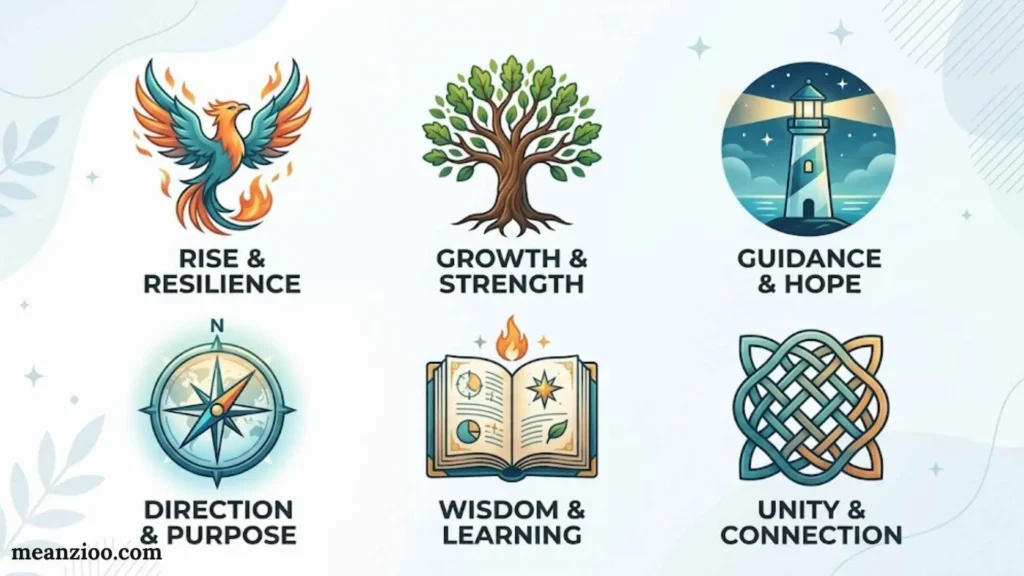
People often search for leadership symbols because they need a design for a specific project. The following options connect common goals with practical visual choices.
Leadership Symbols for Tattoos
For a personal tattoo, consider what you want the image to remind you of.
- Lion: Courage and confidence.
- Compass: Direction and purpose.
- Mountain: Perseverance through difficulty.
- Tree: Growth and stability.
- Arrow: Focus and forward progress.
- Helping hands: Service and care for others.
A personal interpretation can differ from a traditional meaning. What matters is understanding the symbol’s established associations and choosing an image that fits your own values.
Leadership Symbols for Company Logos
A company logo should communicate a clear identity rather than simply make a business appear powerful.
A shield may suit a business focused on protection or reliability. A bridge may fit a company built around collaboration, while a tree may suit an organization emphasizing sustainable growth.
Before adopting a design, check its uniqueness, cultural associations, legibility, and trademark availability.
Leadership Symbols for Presentations and Educational Materials
For slides, posters, and training materials, prioritize clarity.
- Use a torch to introduce knowledge or learning.
- Use a compass to discuss goals and strategic direction.
- Use a flag to represent shared objectives.
- Use connected circles to illustrate teamwork.
- Use balanced scales when explaining fairness and ethical decisions.
Include a short explanation next to each symbol. This prevents audiences from having to guess what the graphic means.
How Leadership Symbols Influence People
Symbols can shape how people interpret an organization or leader because they connect visible images with familiar ideas.
For example, a shield may encourage people to associate an organization with safety. A torch may suggest learning, while a flag can reinforce a sense of shared identity.
Several processes help explain these effects:
- Recognition: Familiar symbols help people identify an institution or group.
- Association: Repeated use connects an image with particular values or experiences.
- Group identity: Shared emblems can help members feel connected to a team.
- Communication: Symbols can express complex ideas quickly when the audience understands them.
- Expectation: An emblem can create an expectation about how a leader or institution should behave.
However, symbols don’t influence everyone in the same way. Personal experience, culture, history, and the situation all affect interpretation.
A company that displays a torch may want to communicate innovation, but customers will judge that message against the company’s actual products and behavior.
The image introduces the promise. The leader’s actions determine whether people believe it.
Are Leadership Symbols the Same in Every Culture?
No. Some symbols have overlapping associations, but their meanings often depend on cultural and historical context.
A crown may represent monarchy in one setting and achievement or prestige in another. An eagle may appear on a national emblem, a military badge, or a fictional character’s costume, with different meanings in each case.
Dragons provide a particularly clear example. Chinese imperial traditions associated dragon imagery with the emperor and court rank. European stories often portray dragons as threatening creatures or opponents for heroes.
The same visual creature can therefore communicate authority in one context and danger in another.
When interpreting leadership symbolism, consider three things:
- History: What did the symbol represent in its original setting?
- Culture: How does the relevant community understand it?
- Modern use: What does the current design communicate to its audience?
These questions are especially important when working with religious imagery, Indigenous traditions, royal emblems, and political symbols.
Frequently Asked Questions About Leadership Symbols
What Is a Leadership Symbol?
A leadership symbol is an image, object, animal, or emblem that represents qualities associated with leading others. Examples include a crown for authority, a compass for direction, a torch for knowledge, and a bridge for cooperation.
What Are the Most Powerful Symbols of Leadership?
The crown, lion, eagle, torch, and compass are recognizable examples. The crown often represents authority, the lion courage, the eagle vision, the torch knowledge, and the compass direction.
The most suitable symbol depends on whether you want to communicate power, service, wisdom, or teamwork.
What Animal Best Represents Leadership?
The lion is a popular choice for courage and authority, while the eagle often represents vision and freedom. The elephant can communicate strength and experience, and the wolf is frequently used as a metaphor for cooperation.
No animal represents leadership universally. Cultural traditions and the intended message matter.
What Does a Crown Symbolize in Leadership?
A crown traditionally represents sovereignty, monarchy, and royal status. In modern imagery, it can also suggest prestige, excellence, and responsibility. Its meaning depends on the context and design.
Why Is the Eagle a Symbol of Leadership?
Eagles are associated with vision, freedom, and authority in various traditions. Their appearance on national emblems and official insignia has strengthened these associations. In modern leadership imagery, an eagle often represents seeing the bigger picture.
What Objects Represent a Good Leader?
A compass can represent direction, a torch knowledge, a shield protection, a bridge cooperation, and helping hands service. These objects provide useful visual metaphors for different leadership values.
What Symbols Represent Ethical Leadership?
Balanced scales can represent fairness, light can suggest clarity, and helping hands can communicate service. A tree may represent stable values and long-term growth.
These are symbolic interpretations. Ethical leadership itself requires honesty, accountability, fairness, and responsible decisions.
What Are Some Ancient Symbols of Leadership?
Examples include the Egyptian crook and flail, the was scepter, Roman fasces, royal scepters, crowns, and heraldic emblems. Their historical meanings differ, so each symbol should be interpreted within its original context.
How Do Companies Use Leadership Symbols?
Companies use logos, emblems, and visual identities to communicate their values and distinguish themselves from other organizations. A shield may suggest reliability, a compass direction, and a tree growth.
A symbol works best when it reflects the company’s real behavior rather than an image it hopes to project.
Can a Leadership Symbol Have Different Meanings?
Yes. Meaning depends on history, culture, design, and audience. A dragon can symbolize imperial authority in Chinese traditions but serve as a dangerous adversary in some European stories. A crown can represent legitimate authority or excessive pride, depending on the setting.
Final Thoughts on Leadership Symbols
Leadership symbols help communicate ideas about authority, courage, vision, wisdom, responsibility, and unity. From crowns and scepters to compasses, bridges, and trees, each symbol offers a different way to represent what leadership can mean.
Historical emblems can reveal how societies recognized rulers and institutions. Modern symbols can help companies, schools, teams, and individuals express their values. Yet the most appropriate choice always depends on the audience, purpose, and cultural context.
If you need a symbol for a logo, tattoo, presentation, or leadership program, start with the quality you want to express. Choose an image that communicates that idea clearly, research its background, and avoid meanings that don’t fit your message.
Above all, remember that symbols communicate ideals rather than prove character. A crown may represent authority, but fairness earns respect. A compass may suggest direction, but good judgment sets the course. And a shield may promise protection, but responsible action makes that promise real.

Hi, I’m Charlotte Hayes. I love writing about the newest English slang, pop culture phrases, and digital communication. I spend my time exploring how language evolves across social media, gaming, and everyday conversations. I enjoy sharing easy-to-understand guides that help learners keep up with modern English. My goal is to make every article useful, accurate, and enjoyable for readers around the world.
Books:
- Everyday Slang Dictionary
- Fluent Through Informal English
 Ryan Mitchell