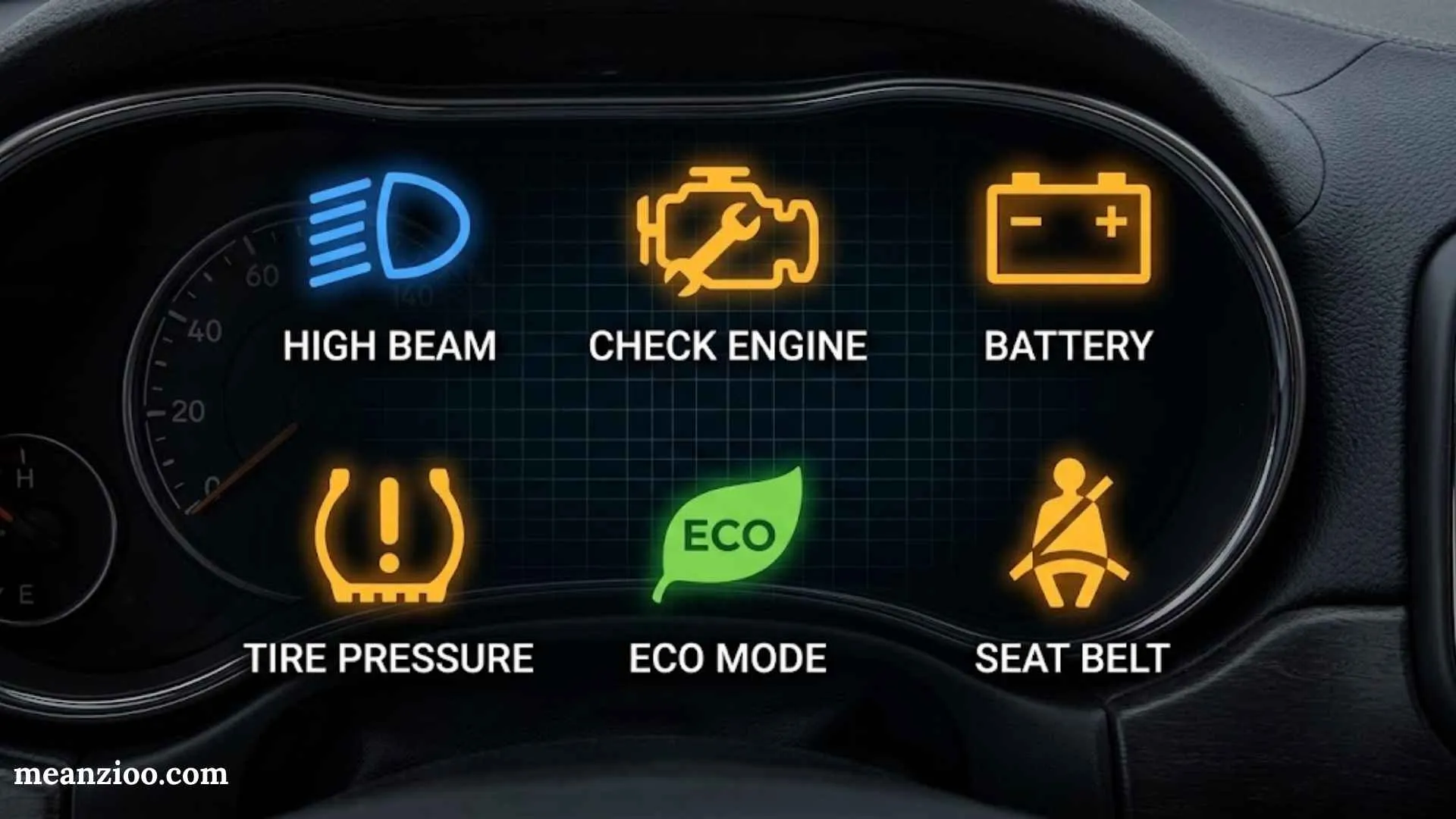
Seeing an unfamiliar light on your Jeep’s dashboard can be confusing, especially when you’re driving through traffic or heading off-road. Some indicators simply tell you that a feature is active. Others warn you about problems that could affect your engine, brakes, tires, or vehicle safety.
Understanding Jeep dashboard symbols and meanings helps you recognize these warnings and decide what to do next. A red oil pressure light, for example, calls for a very different response than a green turn signal indicator. Knowing the difference can protect your Jeep from costly damage and help keep you safe.
This guide explains the most common Jeep dashboard warning lights, what they indicate, their possible causes, and the steps you should take when they appear. You’ll also find a quick-reference chart, model-specific guidance, troubleshooting tips, and answers to common questions.
Keep in mind that dashboard symbols vary by Jeep model, model year, trim, and engine type. Always consult your vehicle’s owner’s manual for the exact meaning of an unfamiliar symbol.
Jeep Dashboard Symbols Chart: Quick Reference Guide
If you need to identify a warning light quickly, start with this Jeep dashboard symbols chart. It summarizes common indicators and explains the appropriate response.
| Dashboard symbol or indicator | Meaning | What you should do |
| Oil can | Low engine oil pressure | Pull over safely and shut off the engine as soon as possible. |
| Engine outline | Check engine or engine control fault | Check whether the light flashes and arrange diagnosis. |
| Battery | Charging system malfunction | Arrange prompt service and watch for electrical problems. |
| Tire with exclamation mark | Low tire pressure or TPMS warning | Check all tires and adjust their pressure to the recommended levels. |
| BRAKE or brake circle | Parking brake or brake system warning | Release the parking brake; if the warning remains, assess the brake system immediately. |
| Thermometer over waves | Engine coolant temperature warning | Stop safely and shut off the engine if it is overheating. |
| Airbag symbol | Airbag or restraint system fault | Arrange professional inspection. |
| ABS | Anti-lock braking system fault | Drive cautiously if normal braking remains and seek prompt service. |
| Skidding car | Traction control or electronic stability control | Check whether the system is active or reporting a fault. |
| Steering wheel with exclamation mark | Power steering system fault | Stop if steering becomes difficult or unpredictable. |
| Triangle with exclamation mark | General warning on some models | Read the accompanying dashboard message. |
| Fuel pump | Low fuel | Refuel as soon as practical. |
| Seat belt symbol | Seat belt reminder | Fasten the seat belt. |
| Four-wheel-drive indicator | Selected 4WD mode or drivetrain warning | Check the icon and message against your owner’s manual. |
| Glow plug symbol | Diesel engine preheating or a related fault | Follow the instructions for your specific diesel model. |
| Cruise control symbol | Cruise control status | Check whether the system is active, on standby, or reporting a fault. |
These descriptions cover common meanings, not every possible Jeep configuration. Some symbols appear only on certain models or equipment packages.
What Do Jeep Dashboard Warning Light Colors Mean?
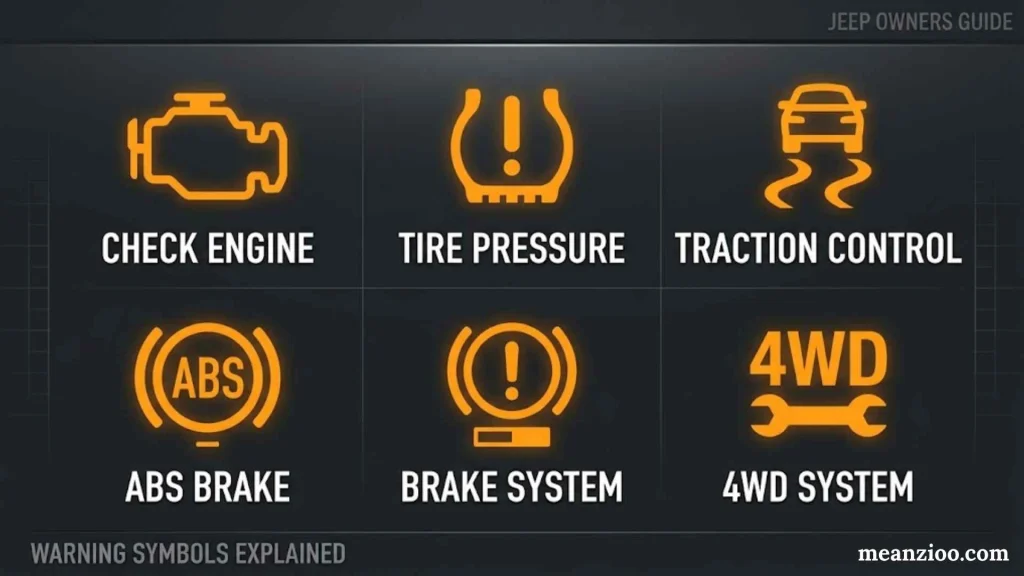
The color of a dashboard indicator offers an important clue about its urgency. However, warning light colors don’t tell the entire story. You must also consider the symbol, accompanying message, and vehicle behavior.
Red Jeep Dashboard Warning Lights
Red indicators often signal a serious problem or a condition requiring immediate action. Depending on your Jeep, these may include oil pressure, engine temperature, brake system, or certain restraint system warnings.
Examples include:
- Oil pressure warning light: Stop safely and turn off the engine.
- Engine temperature warning light: Stop safely and follow the manufacturer’s cooling instructions.
- Brake warning light: Check the parking brake. If the warning remains or braking feels abnormal, stop driving.
- Seat belt warning light: Fasten the seat belt before continuing.
A red light doesn’t always mean a mechanical failure. It may indicate that the parking brake is engaged or a seat belt remains unfastened. Read the symbol and dashboard message before deciding what to do.
Yellow or Amber Jeep Dashboard Warning Lights
Yellow and amber indicators commonly warn you about a fault, a maintenance need, or a system that requires attention.
Common examples include:
- Check engine light
- Tire Pressure Monitoring System (TPMS) warning
- Anti-lock Braking System (ABS) warning
- Electronic stability control fault
- Electronic throttle control warning
- Service 4WD warning
Some amber warnings allow you to drive cautiously to a repair facility. Others require you to stop if the vehicle loses power, handles poorly, or develops another serious symptom.
Never assume an amber light is harmless simply because it isn’t red.
Green and Blue Jeep Dashboard Indicators
Green and blue indicators usually show that a feature is operating or available rather than reporting a fault.
Examples include:
- Green turn signal arrows
- Green cruise control indicators on applicable models
- Blue high beam indicator
- Exterior lighting indicators
- Certain four-wheel-drive or driving mode indicators
For example, a blue high beam symbol generally means your high beam headlights are on. It doesn’t mean your vehicle has developed an electrical fault.
What Does a Flashing Jeep Dashboard Light Mean?
A flashing warning light may indicate a more urgent condition than a steady light, but its meaning depends on the specific system.
A flashing check engine light can indicate an engine misfire severe enough to damage the catalytic converter. Reduce engine load and stop driving when it is safe to do so, particularly if the engine shakes, loses power, or runs roughly.
A flashing tire pressure indicator may instead point to a TPMS malfunction on certain vehicles. Check your owner’s manual to distinguish a system fault from low tire pressure.
The rule is simple: Never interpret flashing behavior without identifying the symbol itself.
Common Jeep Dashboard Warning Lights and Their Meanings
This section explains the most important Jeep dashboard warning light symbols, including what they look like, why they appear, and how to respond.
Jeep Master Warning Light: Triangle With an Exclamation Point
Symbol appearance: Triangle containing an exclamation mark, where equipped.
A triangle with an exclamation point can serve as a master warning indicator on some vehicles. It alerts you that the vehicle has detected a condition requiring attention.
Depending on the Jeep model, the warning may relate to another system message rather than one specific mechanical fault.
Possible reasons include:
- A secondary dashboard warning.
- A vehicle system malfunction.
- A condition that requires the driver to review a message.
- A model-specific alert or maintenance notification.
What should you do?
Read the instrument cluster display and identify any additional warning lights. If the display identifies a brake, oil pressure, or overheating problem, follow the instructions for that particular warning.
Don’t assume the triangle itself identifies a failed sensor or low fluid level. Its exact purpose varies across vehicles.
Jeep Oil Pressure Warning Light
Symbol appearance: An oil can, sometimes with a dripping drop.
The Jeep oil pressure warning light is one of the most important indicators to recognize. It warns that the engine’s oil pressure may be too low to provide proper lubrication.
Engine oil forms a protective film between moving parts. Without adequate pressure, components such as bearings and other internal engine parts can suffer serious damage.
Possible causes include:
- Insufficient engine oil.
- An oil leak.
- A faulty oil pressure sensor.
- An oil pump problem.
- Restricted oil flow or another lubrication system fault.
Low oil pressure and low oil level aren’t the same thing. Your engine may have enough oil in the sump but still experience a pressure problem.
What should you do?
- Pull over somewhere safe as soon as possible.
- Switch off the engine.
- Allow the vehicle to sit before checking the oil level according to the owner’s manual.
- If the oil is low, add the specified oil only if it’s safe and appropriate to do so.
- If the warning remains on, don’t continue driving. Arrange professional assistance.
A warning that appears while the engine is running deserves immediate attention. Adding oil won’t fix a failed oil pump or every other cause of low pressure.
Jeep Check Engine Light
Symbol appearance: An outline resembling an engine.
The Jeep check engine light monitors the engine management and emissions control systems. It may appear when the onboard diagnostics system detects a problem that affects engine operation or emissions.
Common causes include:
- A loose or damaged gas cap on applicable models.
- An oxygen sensor fault.
- A mass airflow sensor problem.
- Ignition system faults.
- An exhaust gas recirculation (EGR) system problem.
- An emissions system leak.
- An engine misfire.
A steady check engine light doesn’t always mean the engine is about to fail. However, you shouldn’t ignore it because some faults become more expensive when left untreated.
A flashing light is more concerning, especially when accompanied by rough running or reduced power.
How can you diagnose it?
A mechanic or a compatible OBD-II scanner can retrieve diagnostic trouble codes (DTCs). These codes help narrow down the affected system.
For example, an oxygen sensor code doesn’t automatically prove that the sensor itself has failed. An exhaust leak, wiring problem, or another underlying fault may produce a related code.
If the light is steady and the Jeep drives normally, arrange diagnosis promptly. If it flashes or the engine runs poorly, stop driving when safe and seek assistance.
Jeep Tire Pressure Warning Light (TPMS)
Symbol appearance: A cross-section of a tire with an exclamation mark inside.
The Jeep tire pressure warning light indicates that one or more monitored tires may have pressure below the recommended level. TPMS stands for Tire Pressure Monitoring System.
Correct tire pressure supports handling, braking, tire life, and fuel efficiency. Driving on a severely underinflated tire can cause overheating and tire failure.
Common causes include:
- A puncture or slow air leak.
- Natural pressure loss over time.
- Cold weather.
- Incorrect inflation after a tire service.
- A faulty TPMS sensor or system issue.
What should you do?
- Find a safe place to stop.
- Inspect the tires for visible damage or an obvious loss of air.
- Use a reliable tire pressure gauge.
- Inflate each tire to the recommended cold pressure shown on the vehicle’s tire information placard.
- Seek tire service if you discover a puncture or persistent pressure loss.
Don’t use the maximum pressure printed on the tire sidewall as a substitute for the vehicle’s recommended pressure.
If the light remains on after inflation, give the system time to update according to the owner’s manual. If it flashes and then stays illuminated, some Jeep models may be reporting a TPMS malfunction rather than ordinary low pressure.
For further technical guidance, see this Mopar TPMS reference, which explains tire pressure monitoring and its limitations.
Jeep Brake Warning Light
Symbol appearance: The word BRAKE or a circle containing an exclamation mark, depending on the system.
The Jeep brake warning light may indicate that the parking brake is engaged, brake fluid is low, or the braking system has detected a fault.
Because brakes are essential to vehicle control, this warning deserves careful attention.
Possible causes include:
- An engaged parking brake.
- Low brake fluid.
- A brake hydraulic system problem.
- A fault involving the brake booster.
- A related ABS or electronic brake force distribution issue.
What should you do?
First, check whether the parking brake is fully released. If the light remains on, stop safely and consult the owner’s manual.
If the brake pedal feels unusually soft, sinks toward the floor, or requires more pressure than normal, don’t continue driving. The vehicle may have a serious braking problem.
A red brake warning that remains illuminated after the parking brake is released can indicate a potentially dangerous fault. Arrange immediate inspection rather than assuming the warning is caused by worn brake pads alone.
Jeep Battery Warning Light
Symbol appearance: A rectangular battery with positive and negative signs.
The Jeep battery warning light commonly signals a problem with the charging system. Although the symbol looks like a battery, the alternator, wiring, or related electrical components may be responsible.
When the engine runs, the charging system supplies electrical power and replenishes the battery. If the system fails, the vehicle may eventually lose electrical power and stall.
Potential causes include:
- A failing alternator.
- Damaged or loose battery cables.
- Corroded battery terminals.
- A damaged drive belt on applicable engines.
- A wiring or charging control fault.
- A weak battery combined with a charging problem.
What should you do?
Turn off unnecessary electrical accessories if doing so is safe, then arrange prompt inspection. If headlights dim, electrical systems stop working, or the engine begins to stall, pull over safely.
Don’t assume replacing the battery will solve the problem. A faulty alternator can cause the warning to return even with a new battery.
Jeep Engine Temperature Warning Light
Symbol appearance: A thermometer above wavy lines.
The Jeep engine temperature warning light indicates that the engine coolant temperature may be too high. Overheating can damage engine components and, in severe cases, cause major engine failure.
The cooling system circulates coolant through the engine and radiator to control temperature.
Common causes include:
- Low coolant.
- A coolant leak.
- A faulty thermostat.
- A malfunctioning radiator fan.
- Radiator blockage or damage.
- A water pump problem.
What should you do?
- Pull over safely as soon as possible.
- Follow the model-specific instructions for an overheating warning.
- Shut off the engine when instructed or when overheating persists.
- Allow the engine to cool completely before checking the coolant level.
- Arrange service if coolant is leaking or the temperature warning returns.
Never remove a hot pressurized radiator or coolant reservoir cap. Hot coolant can escape violently and cause severe burns.
If steam appears under the hood, avoid standing near it while the engine cools.
Jeep Transmission Temperature Warning Light
Symbol appearance: Varies by model; the instrument cluster may also display a transmission temperature message.
The Jeep transmission temperature warning light indicates that transmission fluid or transmission operating temperature may have exceeded the permitted range.
Transmission fluid lubricates components, supports hydraulic operation, and helps transfer heat. Excessive temperature can reduce fluid performance and damage internal components.
Possible causes include:
- Heavy towing or hauling.
- Prolonged demanding driving.
- Driving under difficult conditions.
- Insufficient or degraded transmission fluid.
- A transmission cooling problem.
- An internal transmission fault.
What should you do?
Follow the dashboard message and your owner’s manual. If the warning directs you to stop, pull over safely and allow the system to cool as instructed.
Don’t assume every Jeep has the same transmission cooling procedure. Avoid checking or adding transmission fluid unless your model’s service instructions explain the correct method.
If the warning persists, returns frequently, or appears with slipping gears or unusual noises, arrange professional diagnosis.
Jeep Airbag Warning Light
Symbol appearance: A seated person with a circle representing an airbag.
The Jeep airbag warning light indicates a possible problem with the Supplemental Restraint System (SRS). This system may include airbags, seat belt pretensioners, sensors, wiring, and control modules.
A persistent warning can mean that some restraint features may not operate as intended during a crash.
Possible causes include:
- An airbag sensor fault.
- Damaged wiring or electrical connections.
- A control module problem.
- A seat belt pretensioner fault.
- Another SRS malfunction.
What should you do?
Arrange prompt professional diagnosis. Don’t attempt to test, disassemble, or repair airbag components yourself because these systems contain safety devices that require specific handling procedures.
The warning may illuminate briefly during startup as part of a normal system check. If it stays on or appears while driving, consult the owner’s manual and arrange service.
Jeep Electric Power Steering Warning Light
Symbol appearance: A steering wheel with an exclamation mark on applicable models.
The electric power steering (EPS) warning light indicates that the steering assistance system may have a fault.
Electric power steering uses an electric motor and control electronics to help the driver turn the steering wheel. When assistance decreases or fails, steering can become much harder, particularly at low speeds.
Possible causes include:
- A power steering motor fault.
- A steering control unit problem.
- A sensor malfunction.
- Electrical supply or wiring issues.
- A related control system fault.
What should you do?
If steering becomes heavy, unpredictable, or difficult to control, reduce speed carefully and stop somewhere safe. Arrange assistance rather than continuing a journey with impaired steering.
If the warning appears but steering feels normal, consult the manual and arrange prompt diagnosis. Don’t assume the system will continue operating normally.
Jeep ABS Warning Light
Symbol appearance: The letters ABS inside a circle.
The Anti-lock Braking System (ABS) warning light indicates a possible fault in the system that helps prevent wheel lockup during hard braking.
ABS can help you maintain steering control during emergency braking, particularly when tire grip varies across the road surface.
Potential causes include:
- A faulty wheel speed sensor.
- Damaged sensor wiring.
- An ABS control module problem.
- A fault in related braking electronics.
If the ABS light remains on, conventional braking may still function, but anti-lock assistance may be unavailable. Other brake functions can also be affected depending on the fault.
Drive cautiously only if normal braking remains effective and no other serious warning appears. Seek prompt service.
If the red brake warning appears alongside the ABS light, or braking performance changes, stop safely and arrange immediate assistance.
Jeep Traction Control and Electronic Stability Control Lights
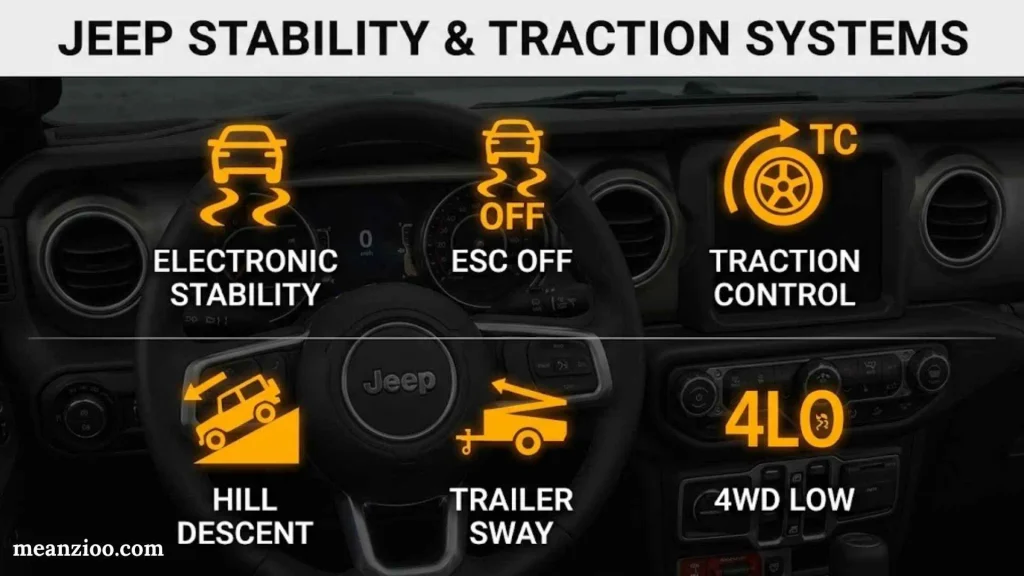
Symbol appearance: A vehicle with curved skid marks behind it.
The traction control warning light and electronic stability control (ESC) indicator help you understand the status of systems designed to improve control.
Traction control helps limit wheelspin. Stability control can apply selective braking or adjust engine output to help the driver maintain the intended direction.
The skidding-car indicator may flash briefly when the system intervenes on a slippery surface. That can be normal.
A light that stays on may indicate that the system has been switched off or has detected a fault.
Possible causes include wheel speed sensor problems, electrical faults, or another issue affecting the stability control system.
What should you do?
- Reduce speed on slippery or uneven roads.
- Check whether the system was intentionally disabled.
- Consult the owner’s manual if the light remains on.
- Arrange diagnosis if the system reports a fault.
Remember that traction and stability systems assist the driver. They don’t eliminate the need for appropriate speed, careful steering, or suitable tires.
Jeep 4WD and Service 4WD Warning Lights
Symbol appearance: Varies by model and drivetrain configuration.
Jeep vehicles equipped with four-wheel drive may display indicators showing the selected drive mode or warning messages relating to the drivetrain.
These indicators don’t all mean the same thing.
- A 4WD mode indicator may show that a particular drivetrain setting is selected.
- A 4WD Low indicator may show that low-range gearing is engaged on an equipped vehicle.
- A Service 4WD warning indicates that the system may require diagnosis.
- A 4WD overtemperature warning, where equipped, indicates that the system has become too hot.
Possible faults can involve actuators, sensors, electrical connections, or drivetrain components. Difficult driving conditions can also affect system temperature.
What should you do?
Check the exact message and follow the model-specific instructions. Avoid repeatedly switching drive modes in an attempt to clear a fault.
If the warning persists or the drivetrain behaves unusually, arrange service. A selected drive mode is not necessarily a malfunction, so identify the icon before reacting.
Jeep Electronic Throttle Control Warning Light
Symbol appearance: Often a lightning bolt between curved brackets on applicable models.
The Electronic Throttle Control (ETC) warning light indicates a possible problem with the system that manages engine throttle response.
Depending on the engine and model, the system uses electronic signals to control throttle operation rather than relying solely on a direct mechanical connection.
Possible causes include:
- A throttle body fault.
- A sensor malfunction.
- Damaged wiring.
- An electronic control problem.
You may notice reduced engine power, unusual throttle response, rough running, or difficulty accelerating.
If the Jeep loses power or responds unpredictably, stop safely and arrange assistance. Otherwise, consult the owner’s manual and have the system diagnosed promptly.
Jeep Low Fuel Warning Light
Symbol appearance: A fuel pump icon.
The low fuel warning light tells you that the fuel level has reached the vehicle’s warning threshold.
The remaining range varies with tank size, fuel consumption, driving conditions, terrain, and vehicle load. Off-road driving and frequent acceleration can increase fuel use.
Refuel as soon as practical instead of relying on a fixed distance estimate. If the fuel gauge behaves erratically or the warning appears despite a recently filled tank, arrange inspection.
Jeep Seat Belt Warning Light
Symbol appearance: A seated person wearing a seat belt.
The seat belt warning light reminds the driver or passenger to fasten a seat belt. Depending on the vehicle, an audible chime may accompany the indicator.
Fasten the seat belts before moving. If the warning persists despite correctly fastened belts, check the owner’s manual for model-specific guidance.
A persistent warning could involve a buckle, sensor, or related restraint system component. If an airbag or SRS warning appears as well, arrange professional inspection.
Jeep Gas Cap or Fuel System Warning
A loose or damaged gas cap can trigger a fuel system or emissions warning on some Jeep models.
The evaporative emissions system limits fuel vapor from escaping into the atmosphere. A poor seal can allow vapor to leak, causing the onboard diagnostics system to detect an emissions-related fault.
Possible causes include:
- A loose gas cap.
- A damaged cap seal.
- A missing cap.
- A leak elsewhere in the evaporative emissions system.
If your Jeep has a conventional fuel cap, check that it’s correctly secured. If the warning persists, the vehicle may need a diagnostic scan.
Not every Jeep uses a dedicated gas cap symbol. Some display a check engine light or a text message instead.
Jeep Diesel Glow Plug and Diesel Particulate Filter Warning Lights
Certain diesel-powered Jeep models use additional indicators that don’t appear on gasoline versions.
A glow plug indicator generally relates to diesel engine preheating. Depending on the model, you may need to wait for the light to go out before starting the engine.
A diesel particulate filter (DPF) warning indicates a condition involving the filter that captures soot from exhaust gases.
The correct response depends on the vehicle’s instructions. Some conditions require a prescribed regeneration process, while others require service.
Don’t apply diesel-specific instructions to gasoline models. Consult the correct owner’s manual and avoid attempting an unfamiliar regeneration procedure without following the manufacturer’s requirements.
Other Jeep Dashboard Symbols and Indicator Lights
Not every Jeep dashboard symbol indicates a problem. Many simply show that a feature is switched on, a system is operating, or the vehicle has detected a normal condition.
Turn Signal and Hazard Warning Indicators
Green arrows usually indicate that the left or right turn signal is operating. The hazard warning indicator shows that the vehicle’s hazard lights are activated.
If a turn signal flashes much faster than usual, a bulb or circuit problem may be responsible on vehicles that use this behavior to signal a fault.
Check the exterior lights if an indicator behaves unusually.
High Beam and Exterior Lighting Indicators
A blue headlight symbol commonly indicates that the high beam headlights are active. Other lighting symbols may identify parking lights, fog lights, or automatic lighting features.
These indicators help you understand which lights are operating. They don’t automatically indicate a malfunction.
However, if a lighting fault warning appears, check the relevant bulbs, fuses, and system instructions. Modern LED lighting systems may require professional diagnosis.
Cruise Control and Adaptive Cruise Control Indicators
Cruise control indicators show whether the system is ready, active, or set to a particular speed.
Vehicles equipped with adaptive cruise control (ACC) may display additional symbols for following distance, system availability, or detected faults.
A normal cruise control indicator doesn’t mean the system has failed. A service message or fault warning requires a different response.
Always remain attentive and ready to control the vehicle. Driver assistance systems don’t replace your responsibility to steer, brake, and watch the road.
Lane Departure and Driver Assistance Indicators
Depending on equipment, a Jeep may display indicators for:
- Lane departure warning.
- Lane keeping assistance.
- Blind spot monitoring.
- Forward collision warning.
- Automatic emergency braking.
- Active driving assistance.
These symbols may change color to show system status, driver alerts, or an unavailable feature.
For example, an assistance system may become unavailable when visibility is poor or required operating conditions aren’t met. A persistent service warning may indicate a fault.
Check the message display before assuming a sensor needs replacement.
Jeep Off-Road and Hill Descent Control Indicators
Some Jeep models include additional symbols for off-road driving and terrain management.
These may include:
- Hill descent control.
- Selected off-road driving modes.
- Four-wheel-drive low range.
- Differential lock status on equipped vehicles.
- Other drivetrain settings.
A status indicator usually shows that a feature is selected or operating. A service message, by contrast, may indicate that the system needs attention.
Because Jeep drivetrain configurations differ, use the owner’s manual to confirm which modes your vehicle supports and when to use them.
Other Jeep Dashboard Messages
Your instrument cluster may also display:
- Door-open warnings.
- Hood or liftgate-open warnings.
- Low washer fluid.
- Key fob or security system messages.
- Electronic parking brake status.
- Stop-start system status.
- Oil change reminders.
- Exterior bulb failure.
- Icy road warnings.
Some messages appear only under specific conditions. For example, an icy road warning may indicate a low outside temperature rather than a vehicle fault.
Read the complete message and identify whether it describes a normal operating condition, a maintenance reminder, or a malfunction.
Jeep Dashboard Symbols by Model
Jeep uses different instrument clusters, warning messages, and optional equipment across its vehicle lineup. Many symbols share common meanings, but the exact display and response can differ.
Jeep Wrangler Dashboard Symbols
The Jeep Wrangler dashboard symbols include common engine, braking, battery, tire pressure, and safety indicators. Four-wheel-drive versions may also display drivetrain mode indicators and off-road system messages.
When driving a Wrangler off-road, pay particular attention to:
- Four-wheel-drive mode indicators.
- Low-range status where equipped.
- Engine temperature warnings.
- Tire pressure warnings.
- Traction and stability control indicators.
A selected off-road mode isn’t necessarily a fault. A persistent Service 4WD message, however, deserves investigation.
Jeep Grand Cherokee Dashboard Symbols
Jeep Grand Cherokee dashboard symbols may include conventional warning lights alongside indicators for available driver assistance, suspension, drivetrain, and other vehicle systems.
The exact symbols depend on the generation, trim, engine, and equipment package.
If the instrument cluster displays a message about air suspension, four-wheel drive, or driver assistance, consult the manual for that particular vehicle rather than relying on a chart for an older Grand Cherokee.
Jeep Cherokee Dashboard Warning Lights
The Jeep Cherokee dashboard warning lights cover familiar systems such as engine management, braking, battery charging, tire pressure, and restraint systems.
Depending on the model year and equipment, you may also see drivetrain and electronic control warnings.
If several lights appear together, check whether the vehicle reports a common electrical problem or a specific system fault. A diagnostic scan can help distinguish related warnings from separate problems.
Jeep Compass Dashboard Symbols
The Jeep Compass dashboard symbols vary by model year and trim. Common indicators cover engine performance, tire pressure, braking, stability control, and safety systems.
Equipped versions may also display driver assistance or four-wheel-drive messages.
Check the owner’s manual when an unfamiliar symbol appears. A feature available on one Compass trim may not exist on another.
Jeep Renegade Dashboard Warning Lights
Jeep Renegade dashboard warning lights may include engine check, battery charge, electronic throttle control, electric power steering, transmission, and 4WD indicators, depending on the version.
Some Renegade quick-reference guides list additional symbols for adaptive cruise control, electronic stability control, hill descent control, and service-related warnings.
Use the documentation for the correct model year because symbol availability and terminology can change.
Jeep Gladiator Dashboard Symbols
The Jeep Gladiator dashboard symbols include common engine, brake, battery, tire pressure, and safety indicators. Equipped versions may also show drivetrain and off-road system information.
If you tow or carry heavy loads, pay particular attention to relevant temperature warnings and vehicle messages.
A transmission temperature warning or an engine overheating warning shouldn’t be treated as a routine maintenance reminder. Follow the specified stopping and cooling instructions.
How to Find the Correct Dashboard Symbols for Your Jeep
Use these steps to identify the right reference:
- Confirm the model and model year.
- Identify the engine or powertrain.
- Check the exact symbol and accompanying message.
- Find the matching section in the owner’s manual.
- Use the manual’s troubleshooting instructions for that warning.
What Should You Do When a Jeep Dashboard Warning Light Comes On?
When a warning appears, your first priority is safety. Don’t try to diagnose the entire vehicle while driving.
Identify the Symbol and Its Behavior
Look at the symbol’s shape, color, and accompanying message. Notice whether it stays illuminated, flashes, or disappears after startup.
If you can’t identify it immediately, find a safe place to stop before checking the manual.
Decide Whether You Need to Stop
Some warnings require an immediate response. Others allow cautious travel to a repair facility.
| Warning or symptom | Recommended response |
| Oil pressure warning while the engine runs | Stop safely and shut off the engine. |
| Engine overheating | Stop safely and follow the cooling instructions. |
| Brake warning with abnormal braking | Stop and arrange assistance. |
| Steering becomes difficult | Stop safely and seek assistance. |
| Flashing check engine light with rough running | Stop driving when safe and arrange diagnosis. |
| Low tire pressure | Check the tires promptly; don’t continue on a flat or seriously underinflated tire. |
| Steady check engine light without severe symptoms | Arrange prompt diagnosis and monitor vehicle behavior. |
| Persistent ABS warning with normal braking | Drive cautiously if safe and seek prompt service. |
| Airbag warning remains illuminated | Arrange professional inspection. |
These recommendations are general guidance. Your Jeep’s exact warning message and owner’s manual take priority.
Check Only What Is Safe to Inspect
Once the vehicle is parked safely, you may be able to perform a basic visual inspection.
For example:
- Look for a visibly damaged or deflated tire.
- Check for obvious fluid leaks beneath the vehicle.
- Inspect the engine oil level using the specified procedure.
- Check whether the parking brake is released.
- Read any additional instrument cluster messages.
Avoid reaching near moving belts or fans. Never open a hot pressurized cooling system or work on high-voltage components in an electrified vehicle.
Read the Owner’s Manual
The owner’s manual explains what each symbol means for your specific model. It may also describe startup checks, warning chimes, and the conditions under which a feature becomes unavailable.
This matters because two Jeep models can use similar symbols while requiring different procedures.
Retrieve Diagnostic Trouble Codes
If the check engine light or another electronic fault remains active, an OBD-II scanner may help identify stored diagnostic trouble codes.
A mechanic can use those codes alongside live sensor data, wiring checks, and physical inspections to locate the cause.
Don’t replace a component simply because a code mentions it. Codes identify detected conditions, not always the precise failed part.
Arrange Repairs and Confirm the Warning Is Resolved
After the repair, check whether the warning disappears according to the manufacturer’s procedure. Some systems clear warnings automatically once the problem is corrected. Others require additional checks or service procedures.
If the light returns, the underlying fault may remain unresolved or occur intermittently.
Keep a record of the warning, symptoms, diagnostic codes, and repair work. These details can help a technician diagnose recurring problems.
Why Does My Jeep Dashboard Warning Light Stay On?
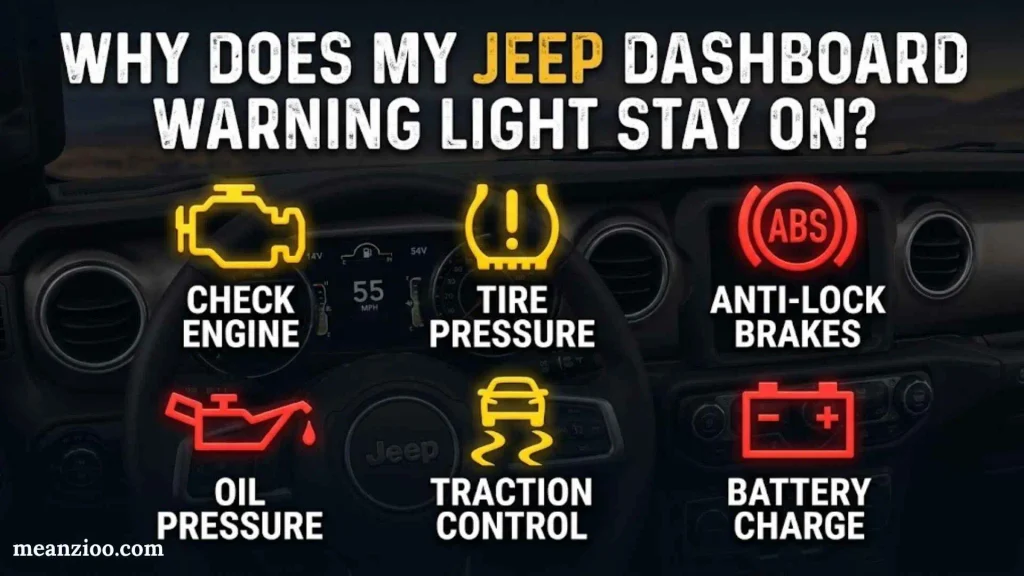
A warning that remains illuminated can have several explanations. The key is determining whether the vehicle is reporting a persistent fault, a normal status, or a condition that hasn’t yet cleared.
The Warning Appears at Startup
Many dashboard indicators illuminate briefly when you switch on the ignition. This startup check allows the vehicle to verify that the warning indicators can illuminate.
A light that goes out as expected may be normal. A light that stays on after the system check may indicate a problem.
Check the owner’s manual if you aren’t sure whether the behavior is expected.
The Warning Appears While Driving
A warning may appear when a sensor detects a problem or when a system moves outside its normal operating range.
Examples include a drop in tire pressure, rising engine temperature, or a charging system fault.
Pay attention to any changes in engine performance, steering, braking, or electrical operation. These symptoms help determine how urgently you need assistance.
Multiple Jeep Warning Lights Appear at Once
Several dashboard warnings can appear together when one fault affects multiple systems.
Possible causes include:
- Low system voltage.
- A charging system failure.
- Damaged wiring or electrical connections.
- A control module or communication problem.
- A fault affecting several related vehicle systems.
Don’t assume every illuminated symbol represents a separate failed component. A proper diagnostic scan can help identify the underlying cause.
The Warning Returns After a Repair
If a warning returns after a repair, the original problem may not have been fully corrected. An intermittent sensor fault, wiring issue, or separate underlying problem may also be responsible.
Have the vehicle checked again rather than repeatedly clearing the warning.
The Warning Stays On After Restarting the Jeep
Restarting the vehicle may clear some temporary messages, but it doesn’t repair a mechanical or electrical fault.
Never use repeated restarts as a substitute for diagnosis when the warning involves oil pressure, overheating, braking, or steering.
How to Reset Jeep Dashboard Warning Lights
Resetting a warning light can sometimes be appropriate after you fix the underlying problem. However, resetting Jeep dashboard warning lights should never replace proper diagnosis.
Can You Reset a Jeep Warning Light Yourself?
The correct procedure depends on the type of warning.
Some maintenance reminders have a manufacturer-approved reset procedure. Other warnings clear automatically once the problem is resolved. Certain electronic faults require diagnostic equipment or additional service procedures.
Before attempting a reset:
- Identify the exact warning.
- Check the owner’s manual for the approved procedure.
- Correct the underlying problem first.
- Confirm that the warning doesn’t return.
Never reset a safety-related warning simply to make the dashboard look normal.
How to Clear Check Engine Light Codes
An OBD-II scanner can retrieve diagnostic trouble codes and, on supported vehicles, clear stored codes.
However, clearing a code doesn’t repair the fault. If the underlying problem remains, the check engine light may return after the vehicle detects the same condition again.
Clearing codes may also reset emissions readiness monitors. The vehicle may need to complete specific driving conditions before those monitors become ready for an emissions test.
A better approach: Retrieve and record the codes before clearing them. Use the information to diagnose the problem and verify the repair afterward.
Why Disconnecting the Battery Isn’t a Universal Fix
Disconnecting the battery isn’t a reliable solution for every dashboard warning. It may fail to clear the fault and can affect vehicle settings or electronic system behavior.
Some systems also retain diagnostic information even after power is disconnected.
Follow the manufacturer’s instructions instead. If a warning persists, use appropriate diagnostic equipment or seek professional assistance.
How to Prevent Common Jeep Dashboard Warning Lights
You can’t prevent every sensor fault or mechanical failure. However, regular maintenance can reduce the risk of several common warning conditions.
Follow the Recommended Oil Change Schedule
Use the engine oil specification and service intervals recommended for your Jeep.
Check the oil level according to the owner’s manual and watch for leaks. If the oil pressure warning appears while the engine runs, stop safely rather than assuming the vehicle simply needs an oil change.
Regular oil changes support engine health, but they won’t correct every lubrication system problem.
Check Tire Pressure Regularly
Inspect tire pressure at least monthly and before long trips. Check it when the tires are cold and use the pressure listed on your vehicle’s tire information placard.
Also inspect for:
- Nails or other punctures.
- Cuts or bulges in the sidewalls.
- Uneven tread wear.
- Repeated pressure loss.
Correct inflation supports safe handling, braking, tire durability, and fuel efficiency.
Maintain the Battery and Charging System
Have the battery and charging system checked when necessary, particularly if your Jeep struggles to start or the battery warning appears.
Look for obvious corrosion or loose connections, but avoid working on electrical components if you lack the necessary knowledge.
A charging system inspection can help distinguish a weak battery from an alternator or wiring problem.
Inspect the Cooling and Brake Systems
Monitor coolant levels according to the manufacturer’s procedure and look for visible leaks. Never open a hot pressurized cooling system.
Follow the recommended brake inspection schedule. If you notice reduced braking performance, unusual pedal feel, or a persistent brake warning, arrange immediate inspection.
These systems directly affect vehicle safety, so don’t postpone repairs when symptoms appear.
Follow Jeep’s Scheduled Maintenance Plan
Your Jeep’s maintenance schedule provides model-specific guidance for inspections, fluid changes, and component servicing.
Keep service records and address repeated dashboard messages promptly. Preventive maintenance can reduce avoidable problems, although it cannot eliminate every unexpected fault.
When Should You Take Your Jeep to a Mechanic?
Knowing when to seek help is just as important as recognizing the symbol.
Warning Lights That Need Immediate Attention
Stop driving as soon as it’s safe when you encounter a warning that indicates a serious or potentially dangerous condition, including:
- An oil pressure warning that remains on while the engine runs.
- An engine overheating warning.
- A brake warning accompanied by abnormal braking or suspected fluid loss.
- Steering difficulty that affects vehicle control.
- A flashing check engine light accompanied by rough running or significant power loss.
- A severely underinflated or damaged tire.
Depending on the warning, you may need roadside assistance or towing rather than driving to a repair shop.
Warning Lights That Usually Need Prompt Diagnosis
Some persistent warnings may allow cautious driving if the vehicle behaves normally and the owner’s manual permits it.
Examples include a steady check engine light without severe symptoms, an ABS warning with normal braking, or a recurring TPMS warning after correcting the tire pressure.
Even when the Jeep seems to drive normally, arrange diagnosis promptly. A system fault can affect safety or lead to further damage.
What Information Should You Give the Mechanic?
Accurate details help a technician diagnose the problem more efficiently.
Before your appointment, record:
- Your Jeep’s model, model year, and engine.
- The exact warning symbol or message.
- Whether the light is steady or flashing.
- When the warning appeared.
- Any unusual noises, smells, leaks, or performance changes.
- Diagnostic trouble codes, if available.
- Recent repairs, battery replacement, or maintenance work.
Avoid clearing the codes before the appointment unless a technician specifically instructs you to do so.
Frequently Asked Questions About Jeep Dashboard Symbols and Meanings
What do Jeep dashboard symbols and meanings tell you?
Jeep dashboard symbols communicate information about vehicle operation, system status, maintenance needs, and potential faults. Some indicate normal activity, while others warn about problems involving the engine, brakes, tires, battery, steering, or safety systems.
The symbol’s color, flashing behavior, and accompanying message help you determine the appropriate response.
What does a triangle with an exclamation point mean on a Jeep?
A triangle with an exclamation point can indicate a general warning on some Jeep models. The exact meaning depends on the instrument cluster and vehicle configuration.
Read the accompanying message to identify the condition. If another warning appears alongside the triangle, follow the instructions for that specific system.
Which Jeep dashboard warning lights mean you should stop immediately?
Oil pressure, engine overheating, serious brake faults, and steering problems that affect control generally require you to stop as soon as it’s safe.
A flashing check engine light with rough running or significant power loss also deserves urgent attention. Follow your owner’s manual and arrange assistance when continuing to drive could be unsafe.
Can I drive my Jeep with the check engine light on?
It depends on how the light behaves and whether the vehicle has other symptoms.
A steady check engine light with normal engine operation may allow cautious driving to a repair facility, provided the owner’s manual doesn’t instruct you to stop. A flashing light, rough running, unusual noises, or significant power loss requires a more urgent response.
Don’t ignore a persistent warning just because the Jeep still runs.
Why is my Jeep tire pressure light still on after adding air?
The light may remain on because one or more tires still have incorrect pressure, a tire has a slow leak, or the TPMS hasn’t updated its readings yet.
Check all tires against the recommended cold pressure. If the light flashes and then stays on, some models use that pattern to indicate a system malfunction.
What does the Jeep battery warning light mean?
The battery symbol commonly indicates a charging system problem. Possible causes include a failing alternator, damaged wiring, loose battery connections, or another electrical fault.
Arrange prompt inspection. If the vehicle develops serious electrical problems or begins to stall, pull over safely.
How do I reset Jeep dashboard warning lights?
The correct reset method depends on the warning and model year. Some maintenance reminders have specific reset procedures, while fault warnings may clear automatically after the underlying issue is repaired.
For a check engine light, retrieve and record the diagnostic trouble codes before clearing them. Never use a reset to hide an unresolved safety or mechanical problem.
Where can I find the correct Jeep dashboard symbols chart?
The most reliable reference is the owner’s manual for your exact Jeep model and model year. You can start with the official Jeep owner resources or contact an authorized Jeep dealer.
A generic chart is useful for initial identification, but it may not include every symbol on your vehicle.
Do Jeep Wrangler and Grand Cherokee dashboard symbols mean the same thing?
Many common symbols have similar meanings across the Wrangler, Grand Cherokee, Cherokee, Compass, Renegade, and Gladiator. However, instrument displays, available features, and warning procedures can differ.
Always check the manual for your particular vehicle, especially when dealing with four-wheel-drive systems, driver assistance features, or powertrain warnings.
Can one problem trigger multiple Jeep dashboard warning lights?
Yes. A charging system fault, low system voltage, wiring problem, or control module issue can trigger multiple warnings.
A diagnostic scan can help identify whether the lights share an underlying cause. Don’t assume every illuminated warning represents a separate failed component.
What should I do if my Jeep dashboard displays a warning I don’t recognize?
Find a safe place to stop if you’re unsure whether the warning requires immediate action. Read the accompanying message and consult your owner’s manual.
If the warning indicates a serious fault, the vehicle behaves abnormally, or you can’t establish whether driving is safe, arrange professional assistance.
Final Thoughts on Jeep Dashboard Symbols and Meanings
Understanding Jeep dashboard symbols and meanings helps you respond to warnings before a minor issue becomes a major repair. The most important step is identifying the exact symbol and understanding how urgently you need to act.
Remember these key points:
- Red warnings often require immediate attention, particularly when they involve oil pressure, overheating, or braking.
- Amber warnings commonly indicate faults that need investigation, although some still require you to stop.
- Green and blue indicators usually show that a feature is operating.
- Flashing lights can indicate a more urgent condition, depending on the system.
- Diagnostic trouble codes help narrow down faults but don’t always identify the failed component.
- Your Jeep’s owner’s manual provides the most reliable instructions for your specific model and year.
When in doubt, prioritize safety over convenience. Identify the warning, follow the manufacturer’s instructions, and seek professional help when necessary.

Hi, I’m Charlotte Hayes. I love writing about the newest English slang, pop culture phrases, and digital communication. I spend my time exploring how language evolves across social media, gaming, and everyday conversations. I enjoy sharing easy-to-understand guides that help learners keep up with modern English. My goal is to make every article useful, accurate, and enjoyable for readers around the world.
Books:
- Everyday Slang Dictionary
- Fluent Through Informal English
 Ryan Mitchell