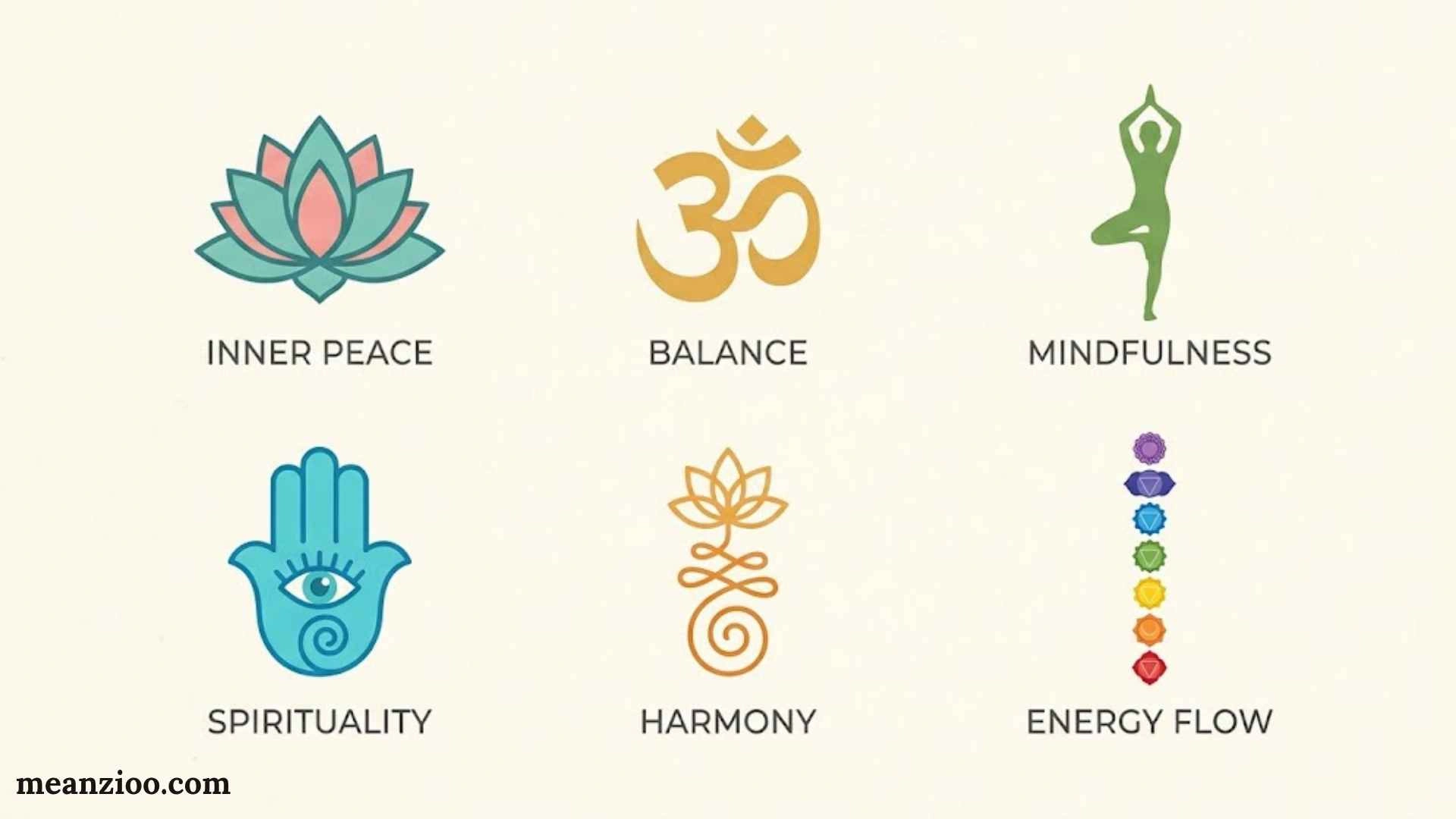
Yoga symbols carry meanings that go far beyond their shapes. A simple sound, a lotus flower, a circular pattern, or a hand gesture can represent ideas about awareness, spiritual growth, wisdom, and the connection between mind and body.
If you’ve ever noticed the Om symbol in a yoga studio or wondered why practitioners use mala beads during meditation, you’re not alone. These symbols appear in yoga classes, spiritual artwork, religious traditions, jewelry, and everyday mindfulness practices.
However, not every spiritual symbol originated in yoga. Some have roots in Hinduism, others belong to Buddhism or different cultural traditions, and several have developed new interpretations through modern wellness practices.
Understanding these differences helps you appreciate what each symbol represents and how people use it.
This guide explores yoga symbols and their meanings, including their cultural backgrounds, spiritual associations, and practical uses in meditation. You’ll also learn about the seven chakra symbols, the significance of the number 108, and ways to incorporate meaningful symbols into your practice respectfully.
What Are Yoga Symbols?
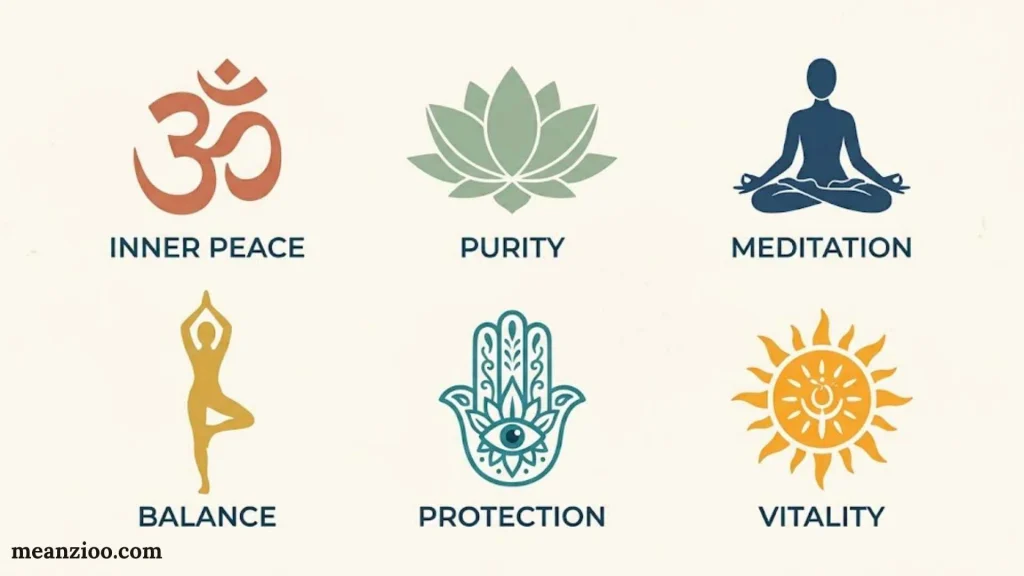
Yoga symbols are visual designs, sacred sounds, numbers, and gestures that represent ideas or support particular spiritual practices. They can help practitioners focus their attention, contemplate philosophical teachings, or express a personal intention.
Some symbols have specific meanings in religious texts and traditional practices. Others serve as modern visual reminders of mindfulness, balance, or personal growth.
For example, the Om symbol represents a sacred syllable in Hindu traditions. A mandala may serve as a focus for contemplation, while a mudra uses the position of the hands to support a particular practice.
Yoga symbolism also reflects the diversity of yoga’s historical and cultural background. Hindu philosophical traditions, Buddhist contemplative practices, and contemporary yoga communities may share certain symbols while interpreting them differently.
Why Are Symbols Used in Yoga and Meditation?
Symbols can give an abstract idea a recognizable form. Rather than thinking about awareness, compassion, or spiritual growth in vague terms, a practitioner can use an image or gesture as a point of focus.
Common purposes include:
- Concentration: Focusing on a visual design or repeating a sacred syllable during meditation.
- Contemplation: Reflecting on teachings about consciousness, compassion, or spiritual development.
- Intention setting: Choosing a symbol that represents a personal goal or quality.
- Ritual practice: Using sacred sounds, beads, or gestures within an established religious tradition.
- Visual expression: Representing spiritual ideas through artwork, clothing, or objects in a meditation space.
A symbol doesn’t need to have supernatural powers to serve a useful purpose. Its meaning, the attention you give it, and the context in which you use it all influence your experience.
Quick Guide to 11 Yoga Symbols and Their Meanings
The following table summarizes 11 important symbols associated with yoga, meditation, Hindu traditions, Buddhist practices, and related spiritual cultures.
| Yoga or spiritual symbol | Common meaning or association | Typical use |
| Om (Aum) | Sacred sound and spiritual contemplation | Chanting and meditation |
| Mandala | Wholeness, order, and contemplation | Visual meditation and sacred art |
| Lotus flower | Purity, spiritual growth, and awakening | Religious imagery and reflection |
| Hamsa hand | Protection and good fortune in certain traditions | Amulets, jewelry, and cultural art |
| Buddha imagery | Awakening, wisdom, and compassion | Buddhist devotional and contemplative spaces |
| Seven chakra symbols | Subtle-body concepts and spiritual awareness | Chakra-based meditation |
| Chin Mudra | Meditation and awareness | Seated contemplative practice |
| Gyan Mudra | Knowledge and concentration in modern yoga contexts | Meditation and yoga |
| Number 108 | Sacred numerical significance | Mantra repetition and ritual practice |
| Dharma wheel | Buddhist teachings and the path to awakening | Buddhist art and religious teaching |
| Swastika | Auspiciousness in several Asian traditions | Religious and cultural contexts |
These symbols don’t all belong exclusively to yoga. Understanding their original contexts is just as important as learning their popular meanings.
Om or Aum Symbol: The Sacred Sound of Yoga
The Om symbol (ॐ) is one of the most recognizable spiritual symbols associated with yoga. It represents the sacred syllable Om, also written as Aum, which holds an important place in Hindu religious and philosophical traditions.
Om isn’t simply a decorative design. It’s a sound used in prayer, recitation, and meditation, with meanings that vary according to the tradition and context.
What Does the Om Symbol Mean?
In Hindu thought, Om is associated with ultimate reality, consciousness, and the sacred nature of existence. Some philosophical interpretations connect it with Brahman, the ultimate reality, and Atman, the inner self.
The syllable is often described as a sound encompassing existence as a whole. This explains why people sometimes call it the “sound of the universe,” although that phrase is a popular spiritual description rather than a scientific claim.
Traditional interpretations also connect Om’s component sounds with different states of consciousness. These explanations appear in particular Hindu philosophical contexts and shouldn’t be treated as the only accepted interpretation.
What Is the Difference Between Om and Aum?
Om and Aum are two common spellings of the same sacred Sanskrit syllable.
The spelling Aum makes its traditional component sounds more visible, while Om reflects its familiar written and spoken form in modern usage. Pronunciation can vary with language and teaching tradition.
In some interpretations, the sounds A, U, and M represent different states of consciousness. The silence that follows the chant may also carry symbolic importance as a reference to awareness beyond ordinary mental activity.
These interpretations belong to particular philosophical traditions. They aren’t a universal decoding system that every yoga practitioner must accept.
How Is Om Used in Yoga and Meditation?
Practitioners may chant Om at the beginning or end of a yoga class, repeat it during meditation, or listen to its sound as a way to steady their attention.
A simple practice looks like this:
- Sit comfortably with your back supported or naturally upright.
- Take a few relaxed breaths without forcing them.
- Inhale gently and chant Om as you exhale if that feels comfortable.
- Notice the sound, vibration, and natural ending of each repetition.
- Repeat for a few minutes, returning your attention whenever it wanders.
You can also practice silent repetition if chanting doesn’t suit your preferences or surroundings.
The goal is to use the sound as a focus for attention, not to force a particular spiritual experience.
Mandala Symbol: Wholeness, Order, and Meditation
A mandala symbol features a structured design, often arranged around a central point. The Sanskrit-derived word mandala generally means a circle, although mandalas can contain squares, geometric patterns, figures, and elaborate arrangements.
Mandalas appear in different Hindu and Buddhist traditions, where some serve as important ritual or contemplative designs. Modern mandala coloring books and decorative patterns draw on this broader visual tradition but don’t necessarily carry the same religious meaning.
What Does a Mandala Represent?
Mandalas can represent wholeness, organized space, and a structured view of the universe. Their central point and surrounding patterns may guide attention from the outer design toward the center.
In certain Buddhist traditions, elaborate mandalas represent sacred cosmological arrangements and play a role in ritual visualization. Hindu traditions also use mandalas and related geometric designs in specific religious contexts.
In contemporary wellness settings, people often associate mandalas with balance, harmony, and the relationship between different parts of life.
These interpretations overlap, but they aren’t identical. A decorative mandala doesn’t automatically have the same meaning as a ritual mandala created within a particular spiritual tradition.
Mandala Colors and Their Meanings
People sometimes assign symbolic meanings to mandala colors. However, no single color chart applies to every mandala tradition.
| Color | Possible contemporary association |
| Red | Energy, strength, or intensity |
| Orange | Creativity, change, or vitality |
| Yellow | Joy, clarity, or wisdom |
| Green | Nature, growth, or renewal |
| Blue | Calm, contemplation, or peace |
| Purple | Spirituality or reflection |
| Pink | Affection or tenderness |
| Black | Mystery, depth, or contrast |
Treat these as interpretive associations rather than fixed religious definitions. The meaning of a color can change according to the artwork, its cultural background, and the artist’s intention.
How to Use a Mandala for Meditation
A mandala can serve as a visual anchor when you find it difficult to meditate with your eyes closed.
Place a design at a comfortable viewing distance. Look gently at its center, notice the patterns around it, and allow your attention to settle.
When your mind wanders, return to the image without criticizing yourself. You don’t need to analyze every shape or uncover a hidden message.
You can also draw or color a mandala as a creative mindfulness activity. This may encourage focused attention, although the activity isn’t a substitute for medical or psychological treatment.
Lotus Flower Symbol: Purity, Growth, and Spiritual Awakening
The lotus flower symbol is widely associated with spiritual growth in Hinduism and Buddhism. Its ability to grow in muddy water while producing a beautiful flower makes it a powerful image for transformation, resilience, and purity.
The lotus also appears in religious artwork, sacred stories, and depictions of important spiritual figures. Its meaning depends on the tradition, the color of the flower, and the context in which it appears.
What Is the Spiritual Meaning of the Lotus Flower?
The lotus often represents the possibility of developing wisdom and clarity despite difficult circumstances. Its roots grow in mud, yet its flower rises above the water.
That contrast offers a simple metaphor: challenging experiences don’t have to prevent personal growth.
In some spiritual contexts, the lotus symbolizes purity or awakening. In others, it relates to divine presence, spiritual knowledge, or the unfolding of consciousness.
The flower’s meaning isn’t limited to overcoming hardship, however. Its significance comes from centuries of religious imagery and philosophical interpretation, not just its appearance in nature.
Lotus Symbolism in Hinduism and Buddhism
In Hindu traditions, lotus imagery appears in depictions of deities and in religious literature. The flower can signify beauty, auspiciousness, and divine qualities. Its associations vary depending on the deity and the particular story.
In Buddhism, the lotus frequently appears in representations of enlightened beings. It can symbolize purity and the possibility of awakening despite the difficulties of ordinary existence.
Both traditions use lotus imagery, but their teachings and interpretations aren’t interchangeable. The specific context matters.
Lotus Flower Colors and Their Meanings
Lotus colors sometimes carry additional symbolic associations in religious art.
| Lotus color | Commonly associated meaning |
| White | Purity and spiritual clarity |
| Pink | Spiritual significance and, in some Buddhist contexts, the Buddha |
| Red | Love, compassion, or the heart |
| Blue | Wisdom or knowledge in some Buddhist imagery |
| Purple | Spiritual symbolism in certain artistic and contemporary interpretations |
| Gold or yellow | Spiritual attainment or enlightenment in some modern interpretations |
These associations are not a universal color code shared by all Hindu and Buddhist traditions. A flower’s meaning may depend on the text, image, deity, or school of thought.
Lotus Flower Symbol vs. Lotus Pose
The lotus flower symbol is also commonly confused with Lotus Pose, known in Sanskrit as Padmasana.
Lotus Pose is a seated posture in which each foot rests on the opposite thigh. Practitioners often use it for meditation, although it requires substantial hip mobility and isn’t suitable for everyone.
The flower represents a set of symbolic ideas. The posture is a physical yoga position that may draw on the flower’s imagery.
You don’t need to force your legs into Lotus Pose to appreciate the lotus’s spiritual meaning. A comfortable seated position works perfectly well for meditation.
Hamsa Hand and Evil Eye Symbols: Protection and Cultural Meaning
The Hamsa hand symbol depicts an open palm, often with an eye in its center. It’s widely recognized as a protective amulet in Jewish, Muslim, and other cultural settings, particularly across parts of the Middle East and North Africa.
Although people sometimes display it in yoga studios or wear it as spiritual jewelry, the Hamsa doesn’t originate exclusively in yoga.
What Does the Hamsa Hand Mean?
The word hamsa is related to the Arabic word for five, referring to the five fingers of the hand.
The symbol is associated with protection against the evil eye, a traditional belief that envy or an envious gaze can bring harm. Some people also associate the Hamsa with blessings, good fortune, and protection for the home.
Its use and interpretation differ across communities.
In Jewish contexts, it may be called the Hand of Miriam, referring to the sister of Moses and Aaron. In Muslim contexts, it’s often called the Hand of Fatima, referring to Fatima, the daughter of the Prophet Muhammad.
The British Museum documents historical Hamsa or Hand of Fatima amulets from North Africa, illustrating the symbol’s cultural history beyond modern yoga. See its collection entry on a Moroccan pendant.
What Is the Difference Between the Hamsa and the Evil Eye?
The Hamsa is a hand-shaped symbol. The evil eye is a separate motif, often depicted as an eye, associated with beliefs about protection from envy or harmful attention.
A Hamsa may contain an eye in its palm, which is why people sometimes treat the two as the same symbol.
Their meanings overlap in some cultural settings, but they aren’t identical.
Is the Hamsa a Traditional Yoga Symbol?
Not in the sense of being a symbol unique to classical yoga. Its history belongs to broader cultural and religious traditions.
It’s also important not to confuse the Hamsa with Abhaya Mudra, a hand gesture frequently seen in Indian religious art. Abhaya Mudra typically shows an open palm raised outward and is associated with fearlessness, reassurance, or protection.
The Hamsa is a symbolic hand-shaped amulet. Abhaya Mudra is a bodily gesture with its own iconographic meaning.
Buddha Symbolism: Wisdom, Compassion, and Awakening
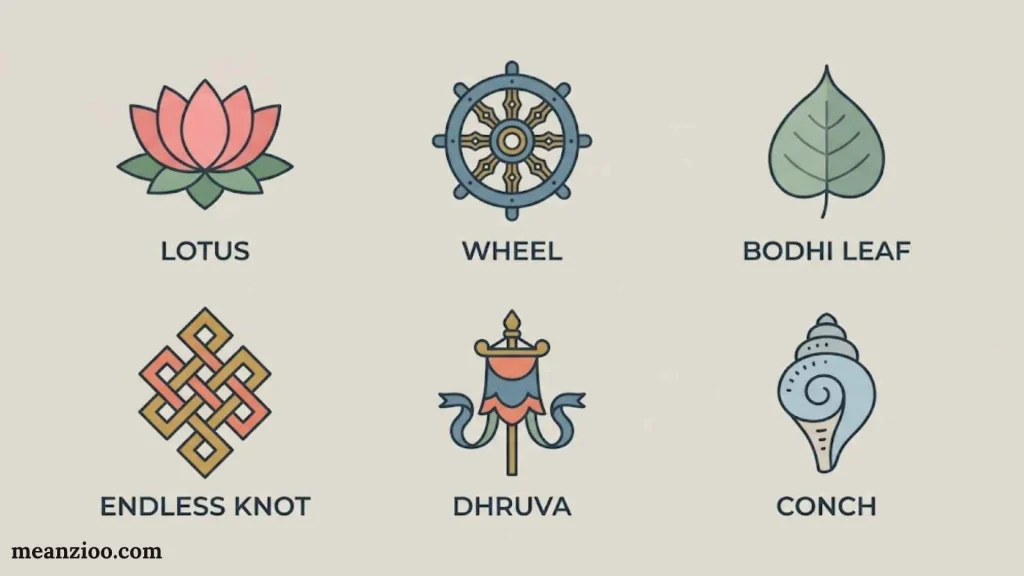
Images of the Buddha appear in meditation spaces around the world. The Buddha symbol is often associated with wisdom, compassion, mindfulness, and awakening, although the meaning depends on the image and its Buddhist context.
What Does the Buddha Represent?
The historical Buddha, commonly known as Gautama Buddha, taught a path concerned with understanding suffering and cultivating the insight needed to overcome it.
The word Buddha means an awakened or enlightened person. In Buddhist traditions, the Buddha’s teachings encourage ethical conduct, mental cultivation, wisdom, and freedom from the causes of suffering.
A Buddha image may remind practitioners of qualities such as patience, compassion, and awareness. However, Buddhism includes many traditions, and Buddhist images can serve different devotional, ritual, and contemplative purposes.
Common Buddhist Symbols Associated With the Buddha
Several symbols have close connections to Buddhist teachings:
- The Buddha image: Represents the Buddha or, depending on the context, qualities associated with awakening.
- The Bodhi tree: Recalls the tree associated with the Buddha’s awakening.
- The Dharma wheel: Represents the Buddha’s teachings and the path toward liberation.
- The lotus flower: Appears in Buddhist art as a symbol associated with purity and awakening.
These symbols have distinct histories. They shouldn’t be treated as interchangeable versions of the same design.
Using Buddha Imagery in Yoga Spaces
Some practitioners place Buddha images in meditation rooms as reminders of mindfulness and contemplative practice.
If you choose to display one, learn about its background and treat it respectfully. For many people, these images have religious significance beyond their decorative appeal.
A peaceful meditation space doesn’t require a Buddha statue. A simple room, a comfortable seat, and a few quiet minutes can be enough.
The Seven Chakra Symbols and Their Meanings
Chakra symbols represent energy centers within particular Indian spiritual and subtle-body frameworks. The Sanskrit word chakra means “wheel,” and chakra concepts developed within different Hindu and Buddhist traditions.
The seven-chakra system familiar in modern yoga is influential today, but it isn’t the only chakra system found in historical traditions. Modern illustrations also tend to standardize colors and symbols that can vary across sources.
The Seven Chakras at a Glance
| Chakra | Sanskrit name | Common modern association | Traditional element in common modern charts |
| Root | Muladhara | Grounding and stability | Earth |
| Sacral | Svadhisthana | Creativity and emotions | Water |
| Solar plexus | Manipura | Agency and confidence | Fire |
| Heart | Anahata | Love and compassion | Air |
| Throat | Vishuddha | Communication and expression | Space or ether |
| Third eye | Ajna | Insight and awareness | Varies by system |
| Crown | Sahasrara | Spiritual realization | Varies by system |
The associations in this table reflect a common contemporary presentation. Traditional texts and lineages may use different arrangements, symbols, and interpretations.
Root Chakra Symbol: Muladhara
The root chakra symbol is commonly associated with grounding, stability, and a sense of connection to the physical world.
In modern chakra illustrations, Muladhara often appears as a lotus with four petals and a square motif. Earth is its commonly associated element.
Practitioners may use this symbolism to reflect on stability, daily routines, or feeling grounded. These are spiritual and reflective applications rather than proof of a distinct physical energy center.
Sacral Chakra Symbol: Svadhisthana
The sacral chakra symbol is often linked with creativity, emotions, and relationships.
Modern illustrations commonly show a lotus with six petals and associate the chakra with water. Practitioners may use the symbol to reflect on emotional awareness, creative expression, and flexibility.
Solar Plexus Chakra Symbol: Manipura
The solar plexus chakra symbol is associated in contemporary yoga with personal agency, confidence, and determination.
Common illustrations feature a ten-petaled lotus and a fire-related motif. Meditation focused on Manipura may encourage reflection on boundaries, decision-making, and personal goals.
It doesn’t replace practical steps for building confidence or addressing emotional difficulties.
Heart Chakra Symbol: Anahata
The heart chakra symbol is commonly associated with love, compassion, and emotional connection.
Modern illustrations often feature a twelve-petaled lotus and intersecting triangles. Air is its commonly associated element.
Practitioners may use the symbol as a reminder to cultivate compassion toward themselves and others. Some also connect it with loving-kindness meditation.
Throat Chakra Symbol: Vishuddha
The throat chakra symbol is associated with communication, expression, and speaking truthfully in modern chakra teachings.
Its common imagery includes a sixteen-petaled lotus and a circle. Space or ether is often listed as its traditional element.
Reflecting on Vishuddha can prompt questions about listening carefully, expressing ideas clearly, and communicating honestly.
Third Eye Chakra Symbol: Ajna
The third eye chakra symbol is commonly linked with intuition, insight, and awareness.
Modern illustrations often show a lotus with two petals. Some teachings use this symbol as a focus for contemplation or visualization.
The third eye is a spiritual concept, not a literal anatomical eye or a scientifically established organ of intuition.
Crown Chakra Symbol: Sahasrara
The crown chakra symbol is associated with spiritual realization, transcendence, or connection with a greater reality in modern chakra teachings.
It is often depicted as a many-petaled or thousand-petaled lotus. Interpretations vary, and some systems describe Sahasrara differently from the other six chakras.
Practitioners may use the imagery to reflect on awareness, meaning, or spiritual understanding.
Chakra Colors and Symbol Designs
Modern chakra charts often assign a rainbow sequence of colors to the seven chakras, from red at the root to violet or white at the crown.
This familiar arrangement is useful as a contemporary visual aid. However, it shouldn’t be assumed that every historical chakra text uses the same colors or designs.
The broader chakra tradition involves spiritual concepts about the subtle body, rather than a universally agreed anatomical map. For a scholarly introduction, see this reference entry on chakras.
How Are Chakra Symbols Used in Meditation?
A chakra-based meditation may involve focusing attention on a symbol, repeating a mantra, or visualizing a particular area of the body.
For example, someone following a modern chakra framework might contemplate the heart chakra while reflecting on compassion.
Such practices can provide structure for personal reflection. However, chakra balancing and chakra healing are spiritual concepts, not scientifically established medical treatments. They shouldn’t replace appropriate healthcare.
Chin Mudra and Gyan Mudra: Yoga Hand Symbols
Yoga hand symbols, known as mudras, use specific hand positions or bodily gestures within contemplative, religious, and yogic practices. Practitioners may use them during seated meditation, breathing exercises, or other forms of yoga.
Two familiar examples are Chin Mudra and Gyan Mudra. Although teachers sometimes use these names interchangeably, some traditions distinguish between them.
What Is Chin Mudra?
Chin Mudra commonly involves touching the tip of the index finger to the tip of the thumb while extending the other three fingers.
The hands usually rest on the knees or thighs during seated meditation. Depending on the teaching tradition, the palms may face upward or downward.
The gesture is associated with awareness and contemplation. Some traditional interpretations connect the index finger with the individual self and the thumb with ultimate consciousness.
These interpretations reflect particular philosophical frameworks rather than a universal meaning shared by every yoga school.
What Is Gyan Mudra?
Gyan Mudra is another familiar meditation gesture. Its name is associated with knowledge or wisdom.
In many contemporary yoga classes, it looks almost identical to Chin Mudra. Some teachers distinguish the two through palm orientation or their symbolic explanations, while others use the names interchangeably.
| Feature | Chin Mudra | Gyan Mudra |
| Hand position | Thumb and index finger touch | Thumb and index finger touch |
| Other fingers | Usually extended and relaxed | Usually extended and relaxed |
| Common association | Awareness and consciousness | Knowledge and wisdom |
| Typical use | Seated meditation | Meditation and contemplative practice |
These descriptions reflect common modern teaching conventions. They aren’t universal rules across all lineages.
How to Practice a Meditation Mudra
You don’t need complicated preparation to use a hand gesture during meditation.
- Sit on a chair, cushion, or folded blanket.
- Rest your hands comfortably on your thighs or knees.
- Touch the thumb and index finger gently without squeezing.
- Keep the remaining fingers relaxed.
- Breathe naturally and focus on your breath or chosen meditation object.
The gesture can serve as a physical reminder to return your attention to the present moment. There’s no need to believe it automatically activates hidden energy or produces a particular healing effect.
The Sacred Number 108 in Yoga
The number 108 in yoga has religious and contemplative significance in several Hindu and Buddhist traditions. It appears in mantra repetition, prayer beads, and certain ritual practices.
Its importance comes from a combination of inherited religious customs and symbolic interpretations. There isn’t one explanation that accounts for every use of the number.
Why Is 108 Considered Sacred?
Some Hindu and Buddhist traditions associate 108 with religious teachings, ritual counts, or systems of spiritual classification.
Different explanations appear in different contexts. Some Buddhist interpretations connect the number with classifications of mental afflictions, while other traditions offer different symbolic accounts.
The important point is that 108 functions as a traditional sacred number. Its meaning doesn’t depend on proving a single mathematical explanation.
Why Do Mala Beads Often Have 108 Beads?
A japa mala is a string of beads used to count mantra repetitions or other forms of recitation.
Many malas contain 108 counting beads along with an additional bead often called the alternative bead. The extra bead commonly marks the beginning or end of a round rather than serving as another counting bead.
During practice, a person repeats a mantra once per bead. This reduces the need to count mentally and lets the practitioner focus more closely on the recitation.
Some malas contain fewer beads, such as 27 or 54, which can represent fractions of 108 or suit particular practices.
What Are 108 Sun Salutations?
A 108 Sun Salutations practice involves performing a sequence of Sun Salutations, usually repeated until the practitioner reaches the traditional count.
Some yoga communities organize these sessions around seasonal transitions, personal milestones, or group rituals. Others use them as a challenge involving sustained movement and concentration.
However, completing 108 rounds isn’t necessary for a meaningful yoga practice. The sequence can be physically demanding, especially for beginners or anyone with joint, shoulder, wrist, or back concerns.
If you decide to participate, adjust the movements to your ability, rest when needed, and stop if you experience pain, dizziness, or unusual discomfort.
Are There Scientific Reasons Behind the Number 108?
Popular explanations sometimes claim that the number 108 describes exact ratios between the Earth, Sun, and Moon. These claims usually involve approximate measurements and shouldn’t be presented as exact scientific facts.
The religious and cultural significance of 108 doesn’t require such claims to be true. Its established use in ritual and contemplative practice is a more reliable starting point for understanding its importance.
The Dharma Wheel: A Symbol of Buddhist Teachings
The Dharma wheel, also called the Dharmachakra, is an important Buddhist symbol representing the Buddha’s teachings.
The Sanskrit word dharma has several meanings depending on context. In Buddhism, it commonly refers to the Buddha’s teachings and the principles of practice associated with liberation from suffering.
The wheel’s circular form is often understood as an image of the teaching being set in motion.
What Do the Eight Spokes of the Dharma Wheel Mean?
The familiar eight-spoked Dharma wheel is associated with the Noble Eightfold Path, a central framework in Buddhist teaching.
The path includes:
- Right View: Developing a clearer understanding of experience and suffering.
- Right Intention: Cultivating intentions rooted in renunciation, goodwill, and harmlessness.
- Right Speech: Avoiding harmful or dishonest speech.
- Right Action: Acting ethically and avoiding harm.
- Right Livelihood: Choosing a way of earning a living consistent with ethical practice.
- Right Effort: Cultivating helpful mental qualities and reducing unhelpful ones.
- Right Mindfulness: Developing attentive awareness.
- Right Concentration: Cultivating mental focus through appropriate contemplative practices.
The exact interpretation of these factors can vary among Buddhist schools, but together they describe a path of ethical conduct, mental cultivation, and wisdom.
Is the Dharma Wheel a Yoga Symbol?
The Dharma wheel is primarily a Buddhist religious symbol, not a symbol exclusive to yoga.
Yoga and Buddhism developed within overlapping South Asian intellectual and contemplative environments, and some practices share broad themes such as concentration and liberation. Their philosophical teachings nevertheless differ in important ways.
Including the Dharma wheel in a guide to yoga-related symbols can help readers understand this wider context, provided its Buddhist identity remains clear.
The Swastika in Ancient Indian Traditions
The swastika is an ancient symbol that carries different meanings across cultures and historical periods. In Hinduism, Buddhism, and Jainism, it has long-standing associations with auspiciousness and well-being.
However, the symbol also has a very different modern history because Nazi Germany appropriated a version of it as an emblem of its racist ideology.
What Does the Swastika Mean in Hinduism and Buddhism?
In Hindu traditions, the swastika can represent good fortune, auspiciousness, and well-being. People may use it during religious ceremonies, festivals, or other cultural occasions.
In some Buddhist traditions, the symbol appears in religious art and may carry associations with auspiciousness or the Buddha.
Jain traditions also use the swastika as an important religious symbol, with interpretations specific to Jain teachings.
Although these traditions share the symbol’s general form, their religious contexts and interpretations are not identical.
How Does the Traditional Swastika Differ From the Nazi Symbol?
Nazi Germany appropriated a swastika design as an emblem of the Nazi Party. That association became inseparable from the regime’s antisemitism, persecution, aggressive warfare, and genocide.
Today, many people in Europe, North America, and elsewhere primarily recognize the symbol through its Nazi use. In Hindu, Buddhist, and Jain communities, however, the older religious symbol remains meaningful.
Context matters when interpreting it. Its appearance in a temple or traditional ceremony may reflect a longstanding religious use, whereas its use in Nazi imagery represents a racist political ideology.
A responsible discussion must acknowledge both histories without treating them as equivalent.
Mala Beads: A Traditional Tool for Meditation
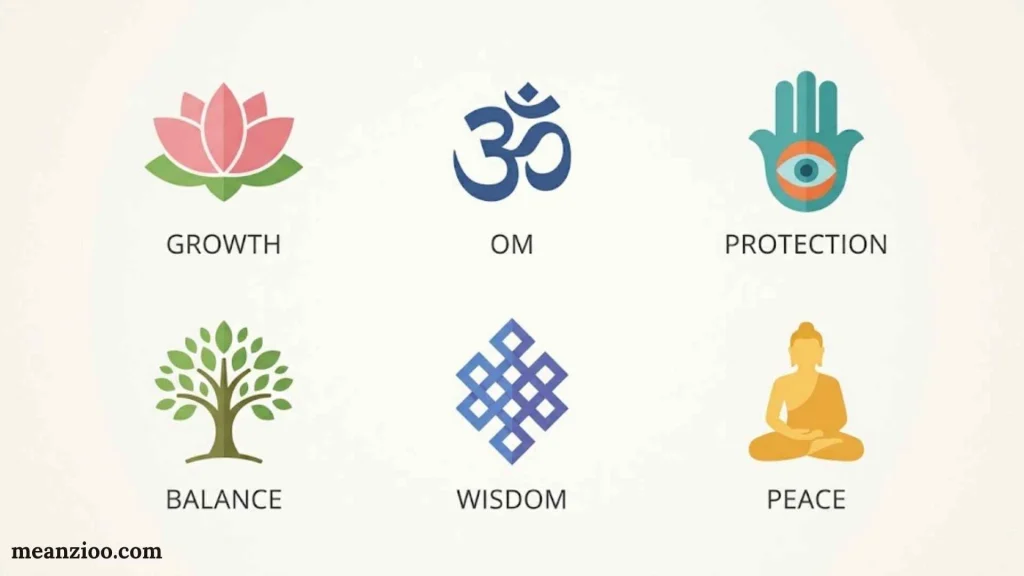
Mala beads deserve their own discussion because they connect the symbolism of 108 with a practical meditation method.
A mala is a string of beads used in certain Hindu, Buddhist, and other spiritual practices. The Sanskrit word mala means “garland.”
Although modern yoga shops often sell malas as necklaces or bracelets, their traditional role extends beyond jewelry. Practitioners use them to count mantras, prayers, or other repetitions.
What Do Mala Beads Symbolize?
The meaning of a mala depends on the practice in which someone uses it.
For some practitioners, it represents devotion and commitment to a spiritual discipline. For others, its most immediate purpose is practical: the beads provide a physical way to keep track of repetitions.
A mala can also serve as a personal reminder to make time for meditation. However, its material doesn’t automatically give it a particular spiritual power.
How to Meditate With Mala Beads
If you want to try this practice, begin with a simple routine.
- Choose a comfortable seated position.
- Decide whether you’ll repeat a mantra, prayer, or another suitable phrase.
- Hold the mala in a way that feels comfortable and follows the conventions of your tradition, if applicable.
- Move one bead for each repetition.
- Continue at a steady pace without rushing to finish.
- When you reach the alternative bead, follow the customary method for your practice. In many traditions, practitioners turn the mala around rather than crossing over that bead.
You can also use a mala to count breaths if that fits your meditation routine.
Common Mala Materials
Malas come in a variety of materials, including:
- Rudraksha seeds: Used in several Hindu devotional and yogic traditions.
- Sandalwood: Valued for its fragrance and traditional use in devotional objects.
- Wooden beads: A practical option for regular meditation.
- Gemstones: Used in contemporary jewelry and some spiritual practices.
- Other natural materials: Including seeds and beads chosen for cultural, personal, or practical reasons.
People sometimes assign specific spiritual properties to gemstones such as amethyst, rose quartz, or obsidian. These associations should be understood as spiritual or cultural beliefs rather than scientifically established effects.
How to Choose and Use Yoga Symbols in Your Practice
You don’t need to study every symbol before incorporating one into your routine. Start with a symbol that interests you, learn its background, and decide how you want to engage with it.
Choose a Yoga Symbol Based on Your Intention
Different symbols may suit different forms of reflection.
| Your intention | Symbol to explore | How to use it |
| Focus during meditation | Om | Chant or silently repeat the syllable |
| Visual concentration | Mandala | Gently observe a design |
| Reflecting on growth | Lotus flower | Contemplate its imagery and traditional associations |
| Exploring subtle-body teachings | Chakra symbols | Follow a specific chakra meditation framework |
| Supporting seated meditation | Chin or Gyan Mudra | Rest your hands comfortably in the gesture |
| Counting mantra repetitions | Mala beads | Move one bead with each repetition |
| Learning Buddhist teachings | Dharma wheel | Reflect on the Noble Eightfold Path |
These are suggestions, not rules. You can practice yoga without using any particular symbol.
Ways to Incorporate Symbols Into Meditation
A symbol works best when you use it intentionally rather than treating it as another decorative object.
Try one of these simple approaches:
- Visual focus: Place a mandala or another meaningful image where you can see it comfortably.
- Mantra practice: Repeat Om or a mantra appropriate to your tradition.
- Reflective journaling: Write about what a symbol means to you after learning its cultural background.
- Hand gestures: Use a familiar mudra while sitting quietly.
- Breath awareness: Let a symbol remind you to return your attention to your breathing.
- Mala meditation: Count repetitions with beads when you want a structured practice.
Start with five minutes if you’re new to meditation. You can extend the session gradually if it feels comfortable.
How to Use Sacred Symbols Respectfully
Spiritual symbols often carry meanings that extend beyond their appearance. Learning their backgrounds helps prevent misunderstandings.
Keep these principles in mind:
- Research the religious or cultural tradition associated with a symbol.
- Avoid assuming that Hindu, Buddhist, Jewish, and Muslim symbols all have the same meaning.
- Distinguish a symbol’s documented traditional role from modern wellness interpretations.
- Be thoughtful when displaying religious imagery as decoration.
- Avoid claiming that a symbol guarantees protection, success, healing, or enlightenment.
Respectful use doesn’t require you to share every belief associated with a symbol. It simply means recognizing that the symbol may hold deep significance for other people.
Do Yoga Symbols Have Healing Powers?
Many practitioners find yoga symbols meaningful because they help organize attention, express intentions, or connect with a spiritual tradition.
For example, someone might use a lotus image as a reminder of resilience during a difficult period. Another person may find that chanting a mantra helps structure a quiet meditation session.
These experiences can be personally valuable. However, they don’t establish that symbols can cure illness, remove invisible blockages, or produce guaranteed spiritual outcomes.
It’s helpful to distinguish between symbolic or spiritual meaning and scientifically demonstrated medical effects. Use symbols as part of a meaningful personal practice without relying on them as substitutes for appropriate healthcare.
Frequently Asked Questions About Yoga Symbols
What Are the Most Common Yoga Symbols?
Commonly recognized symbols include Om, the lotus flower, mandalas, chakra symbols, and meditation mudras. Mala beads and the number 108 also feature in certain yoga and contemplative practices. Some guides include the Hamsa and Buddha imagery, although these belong to broader cultural or religious traditions rather than yoga alone.
What Is the Most Powerful Yoga Symbol?
No single symbol is universally recognized as the most powerful. Om has particular importance in Hindu traditions, while chakra symbols, mandalas, and mudras serve different purposes. The significance of a symbol depends on its tradition, interpretation, and role in a person’s practice.
What Does the Om Symbol Mean in Yoga?
The Om symbol represents a sacred syllable associated with prayer, meditation, and philosophical reflection in Hindu traditions. Some interpretations connect it with ultimate reality and consciousness. Practitioners may chant Om or use it as a focus for meditation.
Which Yoga Symbols Represent Peace and Balance?
The mandala is often associated with wholeness and harmony, while the lotus can represent spiritual growth. Modern chakra imagery may also relate to balance within particular spiritual frameworks. These meanings vary, so no symbol guarantees a peaceful or balanced state.
Are Chakra Symbols Religious Symbols?
Chakra symbols come from Indian spiritual traditions that include Hindu and Buddhist contexts. Modern yoga frequently uses a seven-chakra system with familiar colors and designs, but historical frameworks vary. These symbols represent spiritual concepts rather than universally established anatomical structures.
Are Yoga Symbols the Same as Buddhist Symbols?
No. Yoga-related symbols and Buddhist symbols sometimes overlap because of shared historical and cultural environments, but they aren’t interchangeable. Om is especially important in Hindu traditions, while the Dharma wheel is distinctly associated with Buddhist teachings. The lotus appears in both traditions with context-dependent meanings.
Can Beginners Use Yoga Symbols During Meditation?
Yes. Beginners can use a mandala for visual focus, repeat a suitable mantra, or rest their hands in a comfortable mudra. Start simply and learn about the symbol’s background as you go. You don’t need to adopt a particular religious belief to practice basic focused attention.
What Is the Difference Between a Yoga Symbol and a Mudra?
A yoga symbol can be a visual design, sacred sound, number, or other representation. A mudra is a gesture or bodily configuration used in particular spiritual or yogic practices. Chin Mudra and Gyan Mudra are familiar examples involving the hands.
What Is the Significance of 108 in Yoga?
The number 108 has sacred significance in several Hindu and Buddhist traditions. It appears in mantra repetition, malas with 108 counting beads, and practices such as 108 Sun Salutations. Its interpretations vary, and popular astronomical explanations shouldn’t be confused with exact scientific measurements.
Is the Hamsa Hand a Yoga Symbol?
The Hamsa is better understood as a cross-cultural protective symbol than as a symbol originating exclusively in yoga. It appears in Jewish, Muslim, and other cultural settings. Its presence in yoga studios and wellness products reflects its broader modern use.
Final Thoughts on Yoga Symbols and Their Meanings
Yoga symbols offer different ways to explore ideas such as awareness, wisdom, compassion, and spiritual growth. Some work through sound, others through images or gestures, and still others through numbers and ritual objects.
The Om symbol can provide a focus for chanting. A mandala offers a visual point of contemplation, while lotus imagery can invite reflection on growth and awakening. Chakra symbols and mudras provide frameworks used in particular yogic and spiritual practices.
Their meanings aren’t all the same, and not every symbol originated in yoga. Learning the cultural and religious context behind each one makes it easier to appreciate what it represents.
Start with one symbol that genuinely interests you. Explore its history, understand its traditional meaning, and decide whether it has a place in your practice.
A symbol doesn’t need to promise extraordinary powers to be meaningful. Sometimes, a simple image or gesture is enough to remind you to pause, pay attention, and approach your day with greater intention.

I’m Ryan Mitchell, and I write about modern English, trending slang, and online expressions. I enjoy explaining the meanings, origins, and real-life usage of popular words in a simple way. I believe learning slang is an important step toward understanding today’s English-speaking culture. Through my work, I aim to help readers speak more naturally and stay updated with the latest language trends.
 Charlotte Hayes