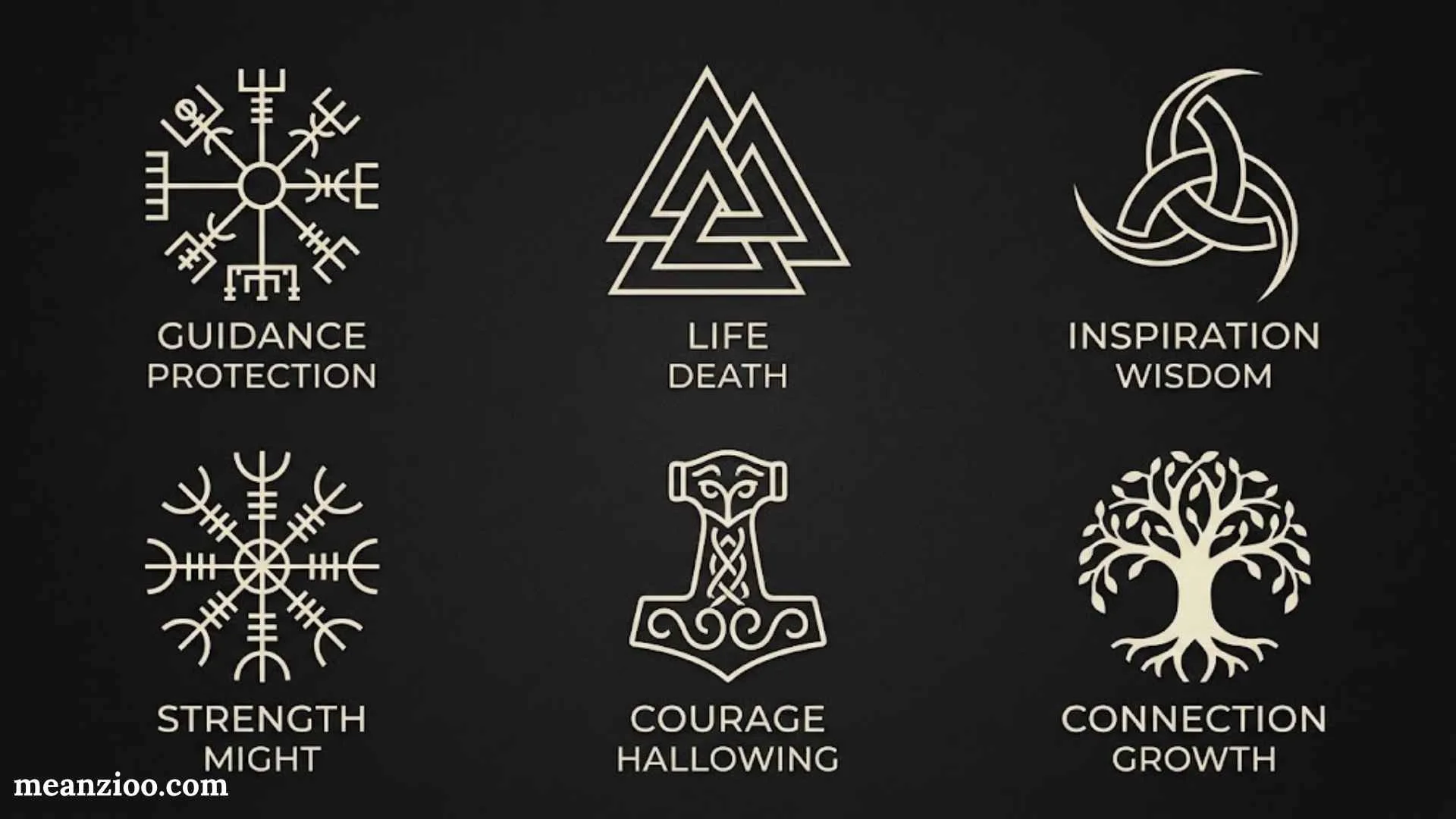
Protection Viking symbols continue to attract people who want to understand Norse mythology, ancient runes, warrior traditions, and spiritual symbolism. From Thor’s hammer to the famous Helm of Awe, these designs carry stories about strength, courage, faith, and humanity’s desire for protection.
However, not every symbol described online as a Viking protection rune comes directly from the Viking Age. Some designs have clear archaeological connections, while others appear in later Icelandic magical traditions or gained their familiar meanings through modern spiritual practices.
Understanding these differences makes the subject much more interesting. You can explore the symbols’ historical origins without confusing documented facts with popular interpretations.
This guide examines seven major Norse protection symbols, explains the meanings commonly associated with them, and explores how ancient Scandinavian traditions influence modern tattoos, jewelry, and personal symbolism.
What Are Viking Protection Symbols?
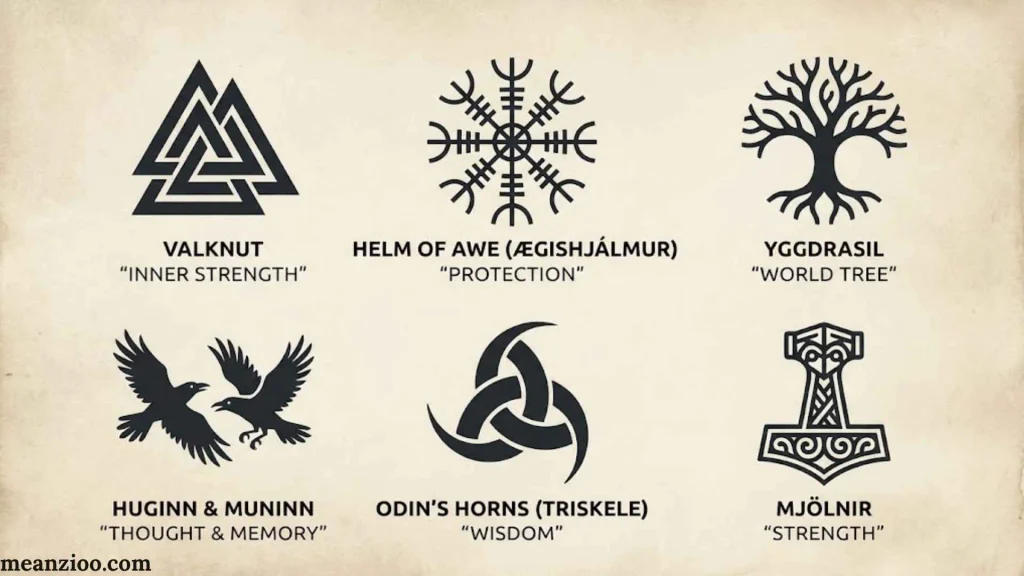
Viking protection symbols are runes, mythological emblems, and other designs that people associate with safety, strength, spiritual defense, and overcoming danger. These symbols come from different periods of Scandinavian and broader Germanic history, so they shouldn’t all be treated as products of one culture or century.
The Vikings lived during the Viking Age, generally dated from approximately 793 to 1066 CE. Their world included seafaring communities, traders, warriors, farmers, craftspeople, and settlers across Scandinavia and beyond.
Religion and mythology played important roles in many people’s lives. Norse stories described gods who defended their communities, magical objects that possessed extraordinary qualities, and supernatural forces that shaped human experiences.
Runes also belonged to this cultural landscape. Yet Viking runes were primarily characters used to write languages, not a collection of magical icons designed exclusively for protection.
The distinction matters because several different types of symbols appear in modern discussions:
- Runes: Characters from historical Germanic writing systems, including the Elder Futhark and Younger Futhark.
- Norse mythology symbols: Objects and images associated with gods, legendary beings, and mythological stories.
- Magical staves: Designs associated with particular magical traditions, including those documented in later Icelandic manuscripts.
- Protective amulets: Objects worn or carried for religious, symbolic, or potentially magical purposes.
- Modern Norse symbols: Contemporary designs inspired by historical artifacts, mythology, or modern spiritual interpretations.
Some archaeological discoveries provide direct evidence that people used objects with possible protective or magical purposes. For example, the Swedish History Museum describes a Viking Age comb inscribed with runic sequences that researchers interpret as a possible protective charm. Other inscriptions have clearer everyday purposes, such as identifying an object’s owner.
The best approach is to examine each symbol individually. Its history, original function, and modern meaning may differ considerably.
7 Powerful Protection Viking Symbols and Their Meanings
These seven symbols offer a useful starting point for understanding Norse protection symbols, including historically documented objects and runes whose protective meanings are more prominent in contemporary interpretations.
Algiz (ᛉ): The Rune Commonly Associated With Protection
The Algiz rune (ᛉ) is one of the most recognizable designs in modern discussions of Viking protection runes. Its branching shape resembles a central stem with two arms extending upward and outward.
Contemporary rune enthusiasts often associate Algiz with guardianship, personal safety, spiritual defense, and awareness of danger. The shape itself lends itself to interpretations involving an outstretched hand, protective branches, or a person raising their arms.
However, these familiar meanings require historical context.
Algiz belongs to the 24-character Elder Futhark, an early Germanic runic alphabet. The Viking Age used a later, reduced alphabet called the Younger Futhark, which contained 16 characters. Algiz’s Elder Futhark form therefore shouldn’t be presented as a standard Viking Age rune with an established, universally recognized protective meaning.
The rune’s exact historical interpretation and relationship to later forms remain subjects of scholarly discussion. Modern spiritual traditions have developed their own symbolic associations, which don’t automatically establish what Viking Age people believed.
Common modern associations of Algiz include:
- Protection: A reminder to remain alert and safeguard what matters.
- Guardianship: A symbol of looking after yourself and others.
- Spiritual defense: An emblem used in contemporary spiritual practice.
- Awareness: A reminder to recognize risks before acting.
- Resilience: A visual expression of standing firm during difficult times.
Today, people may choose Algiz for rune jewelry, artwork, or tattoos because they connect with its protective interpretation. Others simply appreciate its distinctive shape and historical connection to Germanic writing.
If you want a rune for protection, Algiz is a common modern choice. Just remember that its popularity doesn’t prove it served as a universal protective charm among historical Vikings.
Ægishjálmur: The Helm of Awe
The Helm of Awe, also written Ægishjálmur or Aegishjalmur, is one of the most recognizable Norse-inspired protective symbols. Its symmetrical design typically features a central point surrounded by several outward-facing arms resembling tridents or branching spokes.
Unlike Algiz, Ægishjálmur isn’t a single rune. It’s a magical stave, a designed symbol associated with Icelandic magical traditions.
The name is commonly translated as “Helm of Awe.” The word awe conveys a sense of overwhelming power or fear, which helps explain the symbol’s associations with intimidation and defense.
In modern interpretations, the Helm of Awe represents the ability to face threats confidently, resist intimidation, and protect oneself from adversity. Its striking, symmetrical form also makes it popular in contemporary Norse-inspired jewelry, tattoos, and artwork.
Nevertheless, its historical context deserves careful attention.
The Helm of Awe is associated with later Icelandic magical texts and traditions rather than being securely established as a standard Viking Age emblem. The connection between Ægishjálmur and the dragon Fáfnir also appears in medieval legendary literature, including the Völsunga saga tradition.
These sources preserve important cultural material, but medieval literary references don’t automatically establish that every modern version of the symbol was widely used during the Viking Age.
What the Helm of Awe commonly represents today:
- Protection: A symbolic barrier against perceived threats.
- Courage: Confidence when facing difficult situations.
- Intimidation: The ability to stand firm against an opponent.
- Mental strength: Determination under pressure.
- Personal empowerment: A reminder to approach challenges with resolve.
People often choose Ægishjálmur as a tattoo because of its bold geometry and association with strength. Others use it in Norse-inspired decorative designs.
If historical accuracy matters to you, identify it as an Icelandic magical stave rather than a rune from the Elder or Younger Futhark. That small distinction makes your understanding of the symbol more accurate.
Tiwaz (ᛏ): The Rune Associated With Tyr
The Tiwaz rune (ᛏ) resembles an upright arrow, with a vertical stem and two diagonal branches forming a point at the top. Modern interpretations frequently connect it with courage, justice, honor, determination, and victory.
Its historical background gives these associations an interesting foundation.
Tiwaz belongs to the Elder Futhark and is linguistically connected with the Germanic divine name represented by Old Norse Týr. Týr appears in Norse mythology as a god associated with martial courage and the binding of the monstrous wolf Fenrir.
In the myth, the gods attempt to restrain Fenrir with a magical binding. Týr places his hand in the wolf’s mouth as a pledge of good faith. When Fenrir discovers that the gods have trapped him, he bites off Týr’s hand.
The story has made Týr an enduring figure associated with sacrifice, commitment, and courage. These themes help explain why modern practitioners often interpret Tiwaz as a symbol of integrity and disciplined strength.
Still, the connection between the rune’s historical name and the god doesn’t prove that Viking warriors universally used it as a magical shield.
Common modern interpretations of Tiwaz include:
- Courage: Facing danger without abandoning your principles.
- Justice: Acting fairly and accepting responsibility.
- Honor: Keeping promises and maintaining personal integrity.
- Victory: Pursuing a goal with discipline and determination.
- Strength: Standing firm when circumstances become difficult.
For someone looking for Viking symbols for strength, Tiwaz offers a meaningful combination of historical runic roots and modern symbolic interpretation.
It can also appeal to people who value fairness, leadership, and personal accountability rather than protection understood solely as defense against physical threats.
Eihwaz (ᛇ): The Rune of Endurance and Resilience
The Eihwaz rune (ᛇ) is often associated in modern rune interpretation with endurance, resilience, transformation, and the ability to withstand adversity.
Its conventional name is linked to the yew tree. Yew trees have long lives, and their wood has practical qualities that made it useful for various purposes, including traditional bow-making.
These characteristics provide a natural basis for modern symbolic interpretations involving persistence and durability. However, the specific spiritual meanings commonly assigned to Eihwaz today shouldn’t automatically be treated as established Viking Age beliefs.
In contemporary spiritual practice, the rune may represent the strength needed to move through uncertainty without giving up. Rather than suggesting that life will remain free of hardship, its modern interpretation often emphasizes the ability to endure hardship and emerge with greater understanding.
Eihwaz is commonly associated with:
- Endurance: Continuing through demanding circumstances.
- Resilience: Recovering after setbacks.
- Stability: Maintaining your principles when life changes.
- Perseverance: Remaining committed to a worthwhile goal.
- Transformation: Treating difficult experiences as opportunities for growth.
These qualities make Eihwaz relevant to people who want a symbol of inner strength. Someone recovering from a difficult period might connect with its modern meaning because it represents persistence rather than an expectation of effortless success.
However, be cautious with claims that Eihwaz was historically carved on doorways or weapons as a standard method of protection. Such specific practices require evidence from actual inscriptions or reliable historical sources.
If you appreciate Norse symbols for courage and perseverance, Eihwaz can be a compelling modern emblem. Its appeal lies in its connection to an ancient runic tradition and the enduring human idea of standing strong through adversity.
Berkana (ᛒ): The Birch-Associated Rune of Growth and Renewal
The Berkana rune (ᛒ) is associated with the birch tree in conventional rune-name interpretations. Modern spiritual traditions commonly connect it with growth, renewal, nurturing, fertility, and new beginnings.
Unlike symbols primarily associated with warriors or confrontation, Berkana often appears in contemporary interpretations focused on care and development.
The birch tree provides a natural image for these ideas. Birch is a recognizable tree in northern European landscapes, and its growth can serve as a useful metaphor for renewal and fresh starts.
Still, the popular claim that Berkana was a specific Viking rune for protecting mothers, children, or households requires caution. Its modern associations don’t establish that historical Norse families routinely carved it onto cradles or clothing for those purposes.
Modern interpretations of Berkana include:
- Growth: Developing skills, relationships, and personal qualities.
- Renewal: Beginning again after a challenging period.
- Nurturing: Supporting people who depend on your care.
- Family: Expressing a personal commitment to loved ones.
- Well-being: Representing the conditions needed for a stable life.
Berkana may appeal to someone looking for Viking symbols for family and home. It can also represent a new chapter, whether that means building a family, starting a project, or working toward personal growth.
As with other runes, its symbolic value today should remain distinct from claims about its original historical function.
Thor’s Hammer (Mjölnir): A Historically Grounded Symbol of Protection
Thor’s hammer, Mjölnir, is among the strongest historical examples of a Norse symbol associated with divine power and protection.
In Norse mythology, Thor is the thunder god who defends the gods and their world against dangerous forces. His hammer, Mjölnir, is a powerful weapon used against giants and other enemies. Its name is commonly interpreted as meaning something like “the crusher.”
Unlike the modern protective interpretation of some individual runes, Mjölnir has a substantial archaeological record as a Viking Age pendant.
The Swedish History Museum documents hammer-shaped amulets and iron rings carrying small Thor’s hammers. Such objects appear in burial contexts and settlement sites. Researchers consider them evidence of Norse religious practice, although the precise purpose of every object cannot always be established.
These discoveries make Thor’s hammer especially important when discussing authentic Viking protective symbols. They demonstrate that people made and used hammer-shaped objects during the Viking Age, rather than merely showing that later generations imagined them.
The evidence doesn’t mean every wearer had identical beliefs. A pendant might express religious devotion, function as an amulet, communicate identity, or serve several purposes at once.
Thor’s hammer commonly represents:
- Protection: The defense of people and communities against danger.
- Strength: Power in the face of adversity.
- Courage: The willingness to confront difficult challenges.
- Norse faith: A connection with Thor and pre-Christian Scandinavian religion.
- Cultural identity: An enduring symbol of Norse heritage.
Mjölnir pendants also offer an important historical clue. During the Viking Age, hammer pendants existed alongside Christian cross pendants in Scandinavia. This material evidence reflects a period when religious beliefs and cultural practices were changing.
For anyone who wants a symbol with a strong archaeological connection, Thor’s hammer is a particularly good choice. Its mythological associations are meaningful, and its use as a Viking Age pendant is supported by surviving objects.
The Valknut: A Norse Motif With an Uncertain Meaning
The Valknut is a recognizable design formed from three interlocking triangles. It appears in some Norse-associated artistic and archaeological contexts and has become popular in modern Viking-inspired imagery.
Its precise historical meaning remains uncertain.
The design is frequently associated with Odin, death, warriors, and the transition between life and the afterlife. These interpretations often draw on the appearance of the motif in contexts connected with Norse imagery and on broader ideas about Odin’s relationship with fallen warriors.
However, researchers cannot confidently establish one definitive meaning for the Valknut. The name itself is a modern term, and claims that it was a universally recognized Viking protection symbol go beyond what the evidence securely demonstrates.
Why include it in an article about protection? Because many modern enthusiasts connect the Valknut with courage, spiritual identity, and the willingness to face life’s uncertainties. Others interpret it as a symbol of the relationship between life, death, and fate.
Those meanings can be important to modern wearers without being treated as proven historical facts.
Common contemporary interpretations include:
- Connection with Odin: An association with Norse mythology and wisdom.
- Warrior identity: A modern expression of interest in Norse warrior culture.
- Fate and mortality: Reflection on life’s limits and uncertainties.
- Personal strength: A reminder to face difficult truths with courage.
The Valknut is best described as a Norse-associated symbol with an uncertain historical meaning, not a confirmed rune for protection. If you choose it for a tattoo or pendant, understanding that uncertainty is part of understanding the symbol itself.
Other Norse Symbols Associated With Strength and Protection
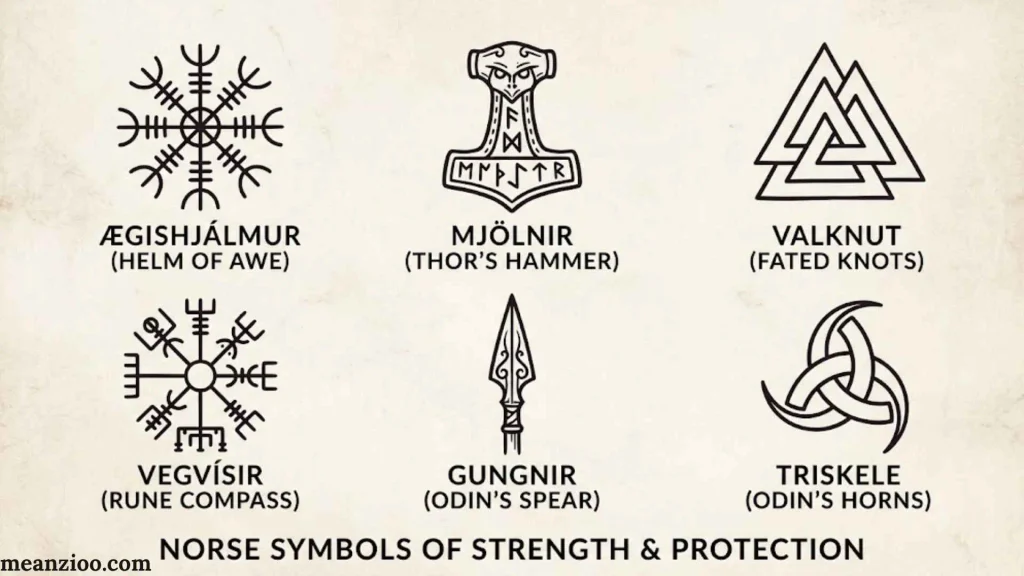
The seven symbols above aren’t the only designs relevant to this subject. Norse mythology contains other objects and images that modern audiences connect with protection, endurance, and spiritual meaning.
Gungnir: Odin’s Spear
Gungnir is the spear associated with Odin, one of the central gods in Norse mythology. It appears in mythological narratives as a remarkable weapon connected with the god’s authority and power.
Modern Norse-inspired designs sometimes use Gungnir to represent leadership, determination, precision, or the willingness to make difficult decisions.
Its connection to protection is indirect. Gungnir is a mythological weapon, not a rune or a universally documented protective charm.
For modern symbolism, it may suit someone who values decisive action, personal responsibility, or the pursuit of knowledge.
Yggdrasil: The World Tree
Yggdrasil, often described as the World Tree, occupies a central place in Norse cosmology. Mythological accounts portray a great tree connecting different parts of the cosmos and linking the worlds inhabited by gods and other beings.
Today, Yggdrasil is commonly interpreted as a symbol of connection, continuity, balance, and resilience.
Its branches and roots make it an appealing image for people who want to represent family connections, personal development, or their place within a larger community.
Although contemporary designs sometimes describe Yggdrasil as a protection symbol, its mythological role is broader than that. It represents the structure and interconnectedness of the Norse cosmos rather than serving simply as a protective emblem.
Viking Shields and Protective Motifs
Shields offer a different perspective on protection because their primary function was practical. Viking Age warriors used shields to defend themselves in combat, and surviving artifacts and artistic depictions help researchers study their construction and use.
A shield can also represent defense in a broader symbolic sense. Modern Norse-inspired artwork may use shield imagery to express loyalty, courage, and the desire to protect loved ones.
However, a decorated shield shouldn’t automatically be interpreted as a magical object. Any claim about a particular protective motif needs to be assessed using evidence from the relevant artifact, inscription, or historical source.
The distinction is straightforward: a shield physically protects its bearer, while a symbol may represent protection or express a belief about it. Sometimes those ideas overlap, but they aren’t identical.
The History of Viking Protection Runes
To understand Viking runes properly, it helps to look beyond their modern meanings. Runes were part of a writing tradition that existed in Scandinavia for centuries before the Viking Age.
Archaeologists have found runic inscriptions on stones, weapons, combs, jewelry, and other objects. Many inscriptions record names or messages rather than spells. Others provide evidence of beliefs and practices that are harder to interpret.
What Were Runes Originally Used For?
Runes were characters used to write Germanic languages. Their angular shapes suited materials such as wood, bone, and stone, where straight lines were often easier to carve than rounded forms.
The earliest runic writing appeared during the first centuries CE. By the Viking Age, runes had become a familiar part of Scandinavian communication.
People used them in several ways:
- Personal identification: Inscriptions could name an object’s owner or maker.
- Memorials: Runestones often commemorated deceased relatives and recorded family relationships.
- Communication: Short inscriptions could carry messages or record events.
- Ownership and craftsmanship: Runes sometimes identified people connected with objects.
- Religious and magical purposes: Some inscriptions and historical accounts suggest that runes could be used in rituals, protective formulas, or other magical practices.
The Danish National Museum explains that medieval Icelandic sagas describe runic inscriptions used to protect people from misfortune, influence objects, and perform magical acts. However, most surviving inscriptions contain more ordinary messages.
One especially interesting example comes from the Swedish History Museum’s collection. A copper plate from Södra Kvinneby in Öland carries a lengthy runic inscription that invokes Thor’s protection for its owner. Researchers have proposed different readings of parts of the inscription, but the object provides concrete evidence that at least some people used inscribed amulets in protective or magical contexts.
This is a more reliable basis for discussing historical Norse protection practices than simply assigning magical powers to every rune in a modern chart.
Elder Futhark vs. Younger Futhark
The Elder Futhark and Younger Futhark are two important runic alphabets. Understanding the difference helps explain why some popular Viking rune designs need careful historical labeling.
The Elder Futhark contained 24 characters and was used during the early Germanic period. The Younger Futhark developed later and contained 16 characters, becoming the main runic alphabet during the Viking Age.
| Feature | Elder Futhark | Younger Futhark |
| Number of runes | 24 | 16 |
| Main historical context | Early Germanic period | Viking Age Scandinavia |
| Approximate period | 2nd–8th centuries CE | Around the late 8th century onward |
| Common use | Names, inscriptions, and other writing | Memorial stones, everyday inscriptions, and other writing |
| Modern relevance | Frequently used in modern rune symbolism | More directly associated with Viking Age runic writing |
The difference is more than a matter of appearance. The two alphabets developed in different historical and linguistic contexts.
For example, Algiz is an Elder Futhark rune. Its familiar modern form appears frequently in contemporary discussions of protection, but readers shouldn’t assume that Viking Age Scandinavians used that same character in precisely the same way.
The Younger Futhark also used some characters to represent several sounds. This feature can make inscriptions difficult to interpret, especially when parts of an inscription are damaged or missing.
When examining ancient runic symbols, always consider the alphabet, date, language, and physical object. These details help separate historically grounded interpretations from modern speculation.
Did Vikings Actually Use Runes for Protection?
Yes, some historical evidence supports the use of runes in magical or protective contexts. However, that doesn’t mean every rune had a protective purpose or that every Viking shared the same beliefs.
The evidence comes from different sources, each with its own limitations.
Archaeological objects can show that people carved runes onto particular materials or carried inscribed objects. Their exact intentions may remain uncertain unless the inscription provides a clear message.
Medieval literature offers another source of information. Sagas describe magical uses of runes, but these texts were written down in particular literary and historical contexts. They cannot automatically establish that every practice described was common throughout the Viking Age.
The Södra Kvinneby amulet is especially useful because its inscription includes an appeal for divine protection. It shows that protective runic practices were not simply a modern invention, even though many current interpretations go beyond what surviving evidence can establish.
A careful conclusion is more useful than either extreme:
- It would be inaccurate to claim that runes were never used for magical purposes.
- It would also be inaccurate to claim that all runes functioned as protective charms.
- Some objects and texts support protective or magical interpretations.
- The meaning of a particular rune depends on its historical and linguistic context.
This distinction is essential when researching Norse protection symbols or choosing a design based on historical authenticity.
How Vikings and Norse People Used Protective Objects
Protection wasn’t limited to written characters. People could also seek safety through religious devotion, personal objects, practical equipment, and beliefs about supernatural forces.
The evidence varies from one object to another, so it’s important not to treat every artifact as proof of the same custom.
Amulets and Pendants
Amulets are among the most interesting discoveries associated with Viking Age religion. Small objects could be worn around the neck, attached to rings, or carried as personal possessions.
Thor’s hammer pendants are a particularly well-documented example. Archaeologists have recovered hammer-shaped objects made from materials including silver and iron. Museums also document hammer pendants attached to larger rings found in settlement and burial contexts.
These objects connect the archaeological record with Norse mythology. Thor’s hammer was a recognizable attribute of the god, and its use as a pendant suggests that the image carried significance for at least some wearers.
Researchers have proposed that hammer amulets could express religious devotion, provide symbolic protection, or serve other purposes within Norse religious life. The exact meaning of every pendant isn’t known.
It’s therefore reasonable to describe Mjölnir as a historically grounded Norse symbol associated with divine strength and protection. It’s less reliable to claim that every wearer expected the pendant to prevent a specific danger.
Weapons, Shields, and Other Personal Objects
Weapons and protective equipment had practical value in Viking Age society. Swords, spears, shields, helmets, and other equipment helped people perform tasks that ranged from warfare to hunting and everyday work.
Some surviving objects carry inscriptions. Others contain decorative designs whose meanings remain open to interpretation.
Runic inscriptions on personal objects demonstrate that writing wasn’t limited to monumental stones. The Viking Ship Museum in Denmark describes runes found on objects such as coins, brooches, weapons, and tools. Many identify owners or makers.
A weapon bearing a rune doesn’t automatically prove that its owner believed the character offered supernatural protection. To establish such a claim, researchers need stronger evidence, such as a readable inscription or a reliable historical account.
This distinction also helps when evaluating modern products. A sword decorated with Algiz may be a contemporary design inspired by modern rune symbolism rather than a faithful reproduction of a documented Viking artifact.
Magical Staves and Medieval Icelandic Traditions
A magical stave is a designed symbol associated with particular magical practices. Ægishjálmur is one of the best-known examples discussed in modern Norse-inspired spirituality.
These symbols are often grouped with Viking runes online, but the categories aren’t interchangeable.
The runic alphabets developed during the early Germanic period and continued to evolve through the medieval era. Icelandic magical manuscripts preserve additional traditions that must be studied in their own historical context.
The Völsunga saga and other medieval sources also preserve Norse legendary material, including stories about heroes, gods, dragons, and extraordinary objects. Such literature can reveal cultural ideas, but a literary description doesn’t necessarily prove that a symbol was commonly worn by Viking warriors.
For accurate research, distinguish among:
- Historical runic inscriptions.
- Norse mythological objects and motifs.
- Magical symbols recorded in later manuscripts.
- Contemporary designs inspired by those traditions.
This approach provides a clearer picture of the past and makes the article more useful to readers who want more than a collection of attractive symbols.
Which Viking Symbol Is Best for Protection?
There isn’t an objectively strongest Viking protection symbol. The best choice depends on whether you’re interested in archaeological evidence, Norse mythology, or a modern spiritual interpretation.
Some symbols have particularly strong historical connections. Others are popular because their modern meanings align with protection, courage, or resilience.
| Symbol | Common modern meaning | Historical grounding |
| Algiz (ᛉ) | Guardianship and spiritual protection | An Elder Futhark rune; its familiar protective meaning is largely a modern interpretation |
| Ægishjálmur | Awe, intimidation, and magical defense | Associated with later Icelandic magical traditions |
| Tiwaz (ᛏ) | Courage, justice, and victory | An Elder Futhark rune linguistically connected with Týr |
| Eihwaz (ᛇ) | Endurance and resilience | An Elder Futhark rune conventionally associated with the yew |
| Berkana (ᛒ) | Growth, nurturing, and renewal | An Elder Futhark rune conventionally associated with birch |
| Mjölnir | Divine strength and protection | Supported by archaeological evidence for Viking Age hammer pendants |
| Valknut | Odin, death, and warrior imagery in common interpretations | A Norse-associated motif whose precise historical meaning remains uncertain |
Best Viking Symbol for Personal Strength
Tiwaz and Mjölnir are strong choices for people who associate protection with courage and determination.
Tiwaz offers a connection to a historical runic alphabet and the name of the Norse god Týr. Mjölnir draws on Thor’s mythological role as a defender and on archaeological evidence for Viking Age pendants.
Choose Tiwaz if you connect with integrity, discipline, and courage. Consider Mjölnir if you prefer a symbol rooted in Norse mythology and supported by surviving artifacts.
Best Norse Symbol for Spiritual Protection
Algiz and Ægishjálmur are popular modern choices for spiritual protection.
Algiz is often interpreted as a sign of guardianship, while Ægishjálmur is associated with awe and magical defense. However, their current popularity shouldn’t be confused with evidence that historical Vikings used them as universally recognized protective symbols.
If you choose either design, research its background and treat its spiritual significance as a matter of personal belief.
Best Viking Symbol for Family and Home
Berkana and Yggdrasil may appeal to people who connect protection with nurturing, stability, and family relationships.
Berkana is commonly interpreted today through themes of growth and renewal. Yggdrasil offers a broader mythological image of interconnectedness and continuity.
Neither should be presented as a proven Viking household-protection emblem. Their usefulness lies in the meanings modern people associate with them.
How to Choose a Viking Protection Symbol
Choosing a symbol becomes easier when you know what you want it to represent. A meaningful design should reflect your interests and values rather than simply looking ancient or mysterious.
Start With the Meaning You Want to Express
Think about what protection means to you. It might involve courage during difficult times, care for your family, religious devotion, or a connection to Norse history.
Different symbols may suit different intentions.
- For courage and determination, explore Tiwaz and its association with Týr.
- For mythological strength and defense, consider Mjölnir.
- For modern spiritual protection, research Algiz and Ægishjálmur.
- For resilience and perseverance, explore the contemporary interpretation of Eihwaz.
- For growth and renewal, consider Berkana.
- For connection and continuity, explore Yggdrasil.
These suggestions describe symbolic associations, not guaranteed outcomes. No rune or pendant can be relied on to prevent accidents, illness, violence, or other real-world dangers.
Check Historical Authenticity Before Choosing a Design
Online articles and product descriptions sometimes combine symbols from different centuries under the broad label of Viking culture. That can make it difficult to tell whether a design reflects the Viking Age, a later medieval tradition, or a modern invention.
Before choosing a symbol, ask a few questions:
- Does the design appear on a documented archaeological object?
- Which historical period does the object belong to?
- Is the symbol a rune, a mythological image, or a magical stave?
- Does a historical inscription explain its meaning?
- Is the meaning based on academic research or modern spiritual interpretation?
For example, a Mjölnir pendant modeled on an excavated Viking Age artifact has a different historical basis from a contemporary design that combines Algiz with Ægishjálmur.
Both may be meaningful to a modern wearer. They simply shouldn’t be described as equally well documented examples of Viking Age symbolism.
Consider Cultural Context
Norse symbols can express religious beliefs, family heritage, historical interests, or personal identity. Their significance often depends on how people understand and use them.
Learning about a symbol’s background helps you avoid misleading claims and choose a design you genuinely appreciate.
It’s also worth remembering that a symbol’s modern popularity doesn’t establish a single original meaning. Historical societies were diverse, and their beliefs changed across time and place.
Modern Uses of Viking Protection Symbols
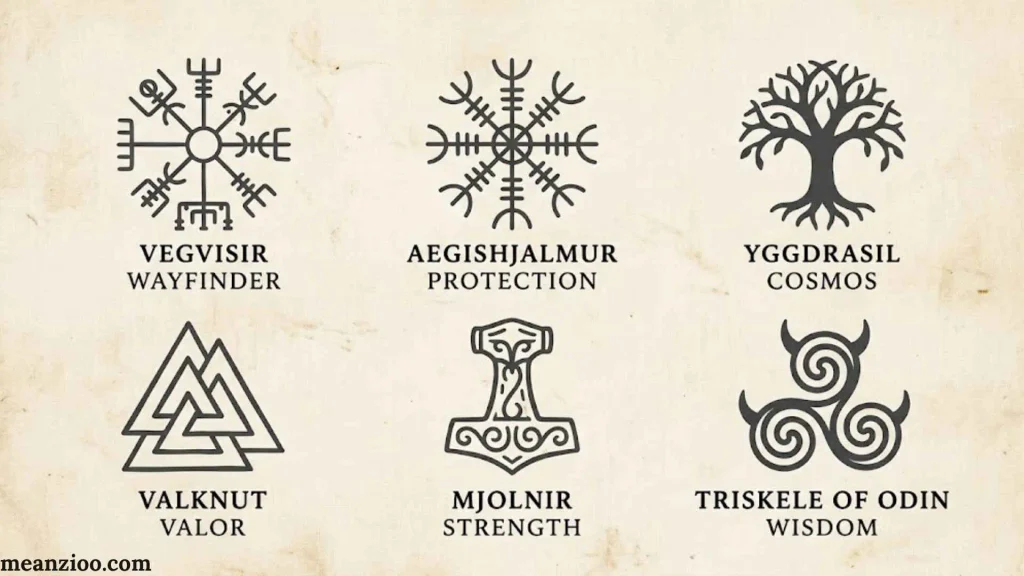
Today, Viking protective symbols appear on tattoos, necklaces, rings, clothing, home decorations, and personal accessories. Their popularity reflects continuing interest in Norse mythology, Scandinavian history, and the visual appeal of runic designs.
Modern use is not the same as historical use, but it can still be meaningful.
Viking Protection Rune Tattoos
Viking rune tattoos are popular among people drawn to Norse mythology, personal symbolism, or Scandinavian heritage. Some choose a single rune, while others prefer mythological imagery such as Mjölnir.
Before getting a tattoo, research the design’s historical background and the meaning you intend to express.
A few practical considerations can help:
- Verify the symbol: Make sure the design matches the rune or emblem you intend to use.
- Understand its origins: Check whether it comes from the Viking Age, a later manuscript, or modern spiritual practice.
- Review the artwork: Ask the tattoo artist to confirm the design’s orientation and details.
- Choose your meaning carefully: Decide what the symbol represents to you rather than relying on an unsupported online description.
- Think long term: A tattoo is permanent, so take time to research the imagery before committing.
You may also encounter combined designs called bind runes. These combine two or more runic characters into a single design. Historical examples exist, but many bind-rune compositions sold today are modern creations. Don’t assume a contemporary combination is an ancient protective formula unless evidence supports that claim.
Norse Jewelry and Protective Pendants
Viking protective jewelry gives people a way to wear symbols connected with mythology, history, or personal values.
Common options include:
- Mjölnir necklaces: Hammer-shaped pendants inspired by Thor’s mythological weapon.
- Rune pendants: Jewelry featuring runic characters or modern rune-inspired designs.
- Norse rings: Rings decorated with mythological motifs or contemporary runic patterns.
- Engraved bracelets: Accessories carrying a chosen symbol or short inscription.
- Norse-inspired medallions: Decorative pieces based on historical artifacts or modern interpretations.
When shopping for Norse jewelry, check whether the seller identifies a historical source for the design. A replica based on an archaeological find differs from a modern interpretation inspired by several traditions.
Jewelry can serve as a reminder of personal values, religious beliefs, or cultural interests. However, its symbolic meaning doesn’t establish that it provides supernatural protection.
Viking Symbols for Home Decor and Personal Expression
Norse-inspired designs also appear in wall art, carved objects, prints, and decorative accessories. Some people use them to express an interest in mythology, while others appreciate their geometry and connection to Scandinavian history.
Yggdrasil may appeal to someone who values connection and continuity. Mjölnir may represent strength or religious identity. A historically informed runic inscription can also make an interesting decorative piece.
If you want an authentic historical design, look for reproductions based on documented artifacts rather than generic products labeled “ancient Viking magic.”
A little research can make the difference between a meaningful historical reference and an attractive but inaccurately described decoration.
Common Misconceptions About Viking Protection Symbols
Popular articles often make Norse symbolism sound more straightforward than the historical evidence allows. Understanding a few common misconceptions helps you separate reliable information from exaggerated claims.
Every Rune Is a Protection Rune
Runes primarily served as writing characters. Although archaeological finds and historical texts support the use of runes in some magical contexts, most surviving inscriptions don’t function as simple protective symbols.
A rune’s modern spiritual meaning may differ from its historical linguistic role.
The Helm of Awe Is a Viking Rune
Ægishjálmur is a magical stave, not a single character from a runic alphabet. Its association with Icelandic magical traditions makes it relevant to Norse-inspired symbolism, but it shouldn’t automatically be treated as a standard Viking Age rune.
Algiz Definitely Meant Protection to the Vikings
Algiz is widely described today as a protection rune. However, its exact historical interpretation and the origins of its modern protective meaning require caution.
It’s more accurate to describe protection as a common contemporary interpretation than as a universally established Viking Age belief.
Every Norse Symbol Has One Fixed Meaning
Symbols can acquire different meanings across centuries. A design may appear in mythology, religious practice, artistic decoration, and contemporary spirituality without carrying precisely the same significance in each context.
The Valknut is a useful example. Although modern interpretations often associate it with Odin and fallen warriors, its exact historical meaning remains uncertain.
Viking Protection Symbols Guarantee Safety
A symbol can provide personal meaning, comfort, or a reminder of important values. However, there is no reliable scientific evidence that Norse runes or magical staves provide supernatural protection.
Symbols should never replace practical safety measures, medical care, or other actions needed to address real-world risks.
All Norse Protection Symbols Originated During the Viking Age
Norse-inspired symbols come from different historical periods. Some runes predate the Viking Age, while certain magical staves are documented in later Icelandic traditions.
A design can belong to the wider history of Norse culture without being a symbol that Viking Age people commonly used.
Frequently Asked Questions About Protection Viking Symbols
What is the most powerful Viking protection symbol?
There is no objectively most powerful Viking protection symbol. Mjölnir has a strong archaeological connection to Viking Age religious practice, while Algiz and Ægishjálmur are popular modern choices for spiritual protection.
The best choice depends on whether you prioritize historical evidence, mythological meaning, or contemporary spiritual symbolism.
Which Viking rune represents protection?
Algiz (ᛉ) is one of the runes most commonly associated with protection today. Modern interpretations connect it with guardianship, awareness, and spiritual defense.
However, its familiar protective meaning isn’t conclusively established as a universal belief during the Viking Age.
What does the Helm of Awe symbolize?
The Helm of Awe (Ægishjálmur) is commonly associated with awe, intimidation, courage, and magical protection. It belongs to the tradition of magical staves rather than the runic alphabet.
Its documented context is associated with later Icelandic magical traditions, so claims about widespread Viking Age use should be treated cautiously.
What does the Tiwaz rune represent?
Tiwaz (ᛏ) is an Elder Futhark rune linguistically associated with the Germanic divine name represented by Old Norse Týr.
Modern interpretations connect it with courage, justice, honor, determination, and victory. Those associations draw on its linguistic and mythological background but don’t prove that it served as a universal protective charm.
Which Norse symbol represents strength and courage?
Mjölnir and Tiwaz are strong options for modern symbolic interpretations of strength and courage.
Mjölnir represents Thor’s power and defensive role in Norse mythology. Tiwaz is associated with Týr and is commonly interpreted today through themes of integrity, discipline, and determination.
Did Vikings wear protective rune necklaces?
Archaeological evidence shows that Viking Age people wore pendants, including hammer-shaped amulets associated with Thor. Some runic objects also appear to have had protective or magical purposes.
However, not every pendant contained runes, and not every inscribed object served as an amulet. The intended purpose must be evaluated using evidence from each object.
What is the difference between Viking runes and Norse magical symbols?
Viking runes are characters from historical runic alphabets used to write Germanic languages. Norse magical symbols may include designs from later Icelandic traditions, while mythological symbols represent gods, legendary objects, or concepts from Norse stories.
Algiz is a rune, Ægishjálmur is a magical stave, and Mjölnir is Thor’s mythological hammer.
Can you use Viking protection symbols in tattoos?
Yes. Many people choose Norse-inspired tattoos to express personal values, historical interests, or spiritual beliefs.
Before choosing a design, research its origin and meaning. If historical accuracy matters to you, verify whether the symbol comes from a documented artifact or a later interpretation.
Are Viking protection symbols religious?
Some Norse symbols have direct connections to pre-Christian Scandinavian religion. Mjölnir, for example, represents Thor’s hammer and appears in archaeological finds associated with Viking Age religious practice.
Other designs have uncertain meanings or gained their familiar spiritual interpretations in more recent traditions. Their religious significance depends on the symbol and how people use it.
Do Viking protection symbols really protect you?
People may find personal comfort, confidence, or spiritual meaning in these symbols. However, no reliable scientific evidence establishes that a rune, pendant, or magical stave provides supernatural protection.
You can appreciate a symbol’s historical or personal significance while taking practical steps to protect yourself and others.
Conclusion: Understanding the Meaning Behind Viking Protection Symbols
Protection Viking symbols bring together several fascinating parts of Scandinavian history, including runic writing, Norse mythology, religious objects, and later magical traditions. Their meanings are often more complex than popular symbol lists suggest.
Algiz remains a popular modern choice for protection, while Ægishjálmur is associated with awe and magical defense. Tiwaz offers connections to Týr, courage, and justice. Eihwaz and Berkana feature prominently in modern interpretations of endurance and renewal.
Meanwhile, Thor’s hammer (Mjölnir) stands out because archaeological discoveries provide direct evidence of hammer-shaped pendants in Viking Age contexts. The Valknut, Yggdrasil, and Gungnir offer other ways to explore Norse mythology, although their modern symbolic uses shouldn’t be confused with proven protective functions.
The most important lesson is to distinguish historical evidence from contemporary interpretation. A symbol doesn’t need a perfectly documented magical meaning to be personally meaningful, but its history deserves an accurate explanation.
Whether you’re researching Viking protection runes, choosing a Norse-inspired tattoo, or exploring Scandinavian heritage, start with the symbol’s origins. Then choose the meaning that genuinely resonates with you.

Hi, I’m Charlotte Hayes. I love writing about the newest English slang, pop culture phrases, and digital communication. I spend my time exploring how language evolves across social media, gaming, and everyday conversations. I enjoy sharing easy-to-understand guides that help learners keep up with modern English. My goal is to make every article useful, accurate, and enjoyable for readers around the world.
Books:
- Everyday Slang Dictionary
- Fluent Through Informal English
 Ryan Mitchell