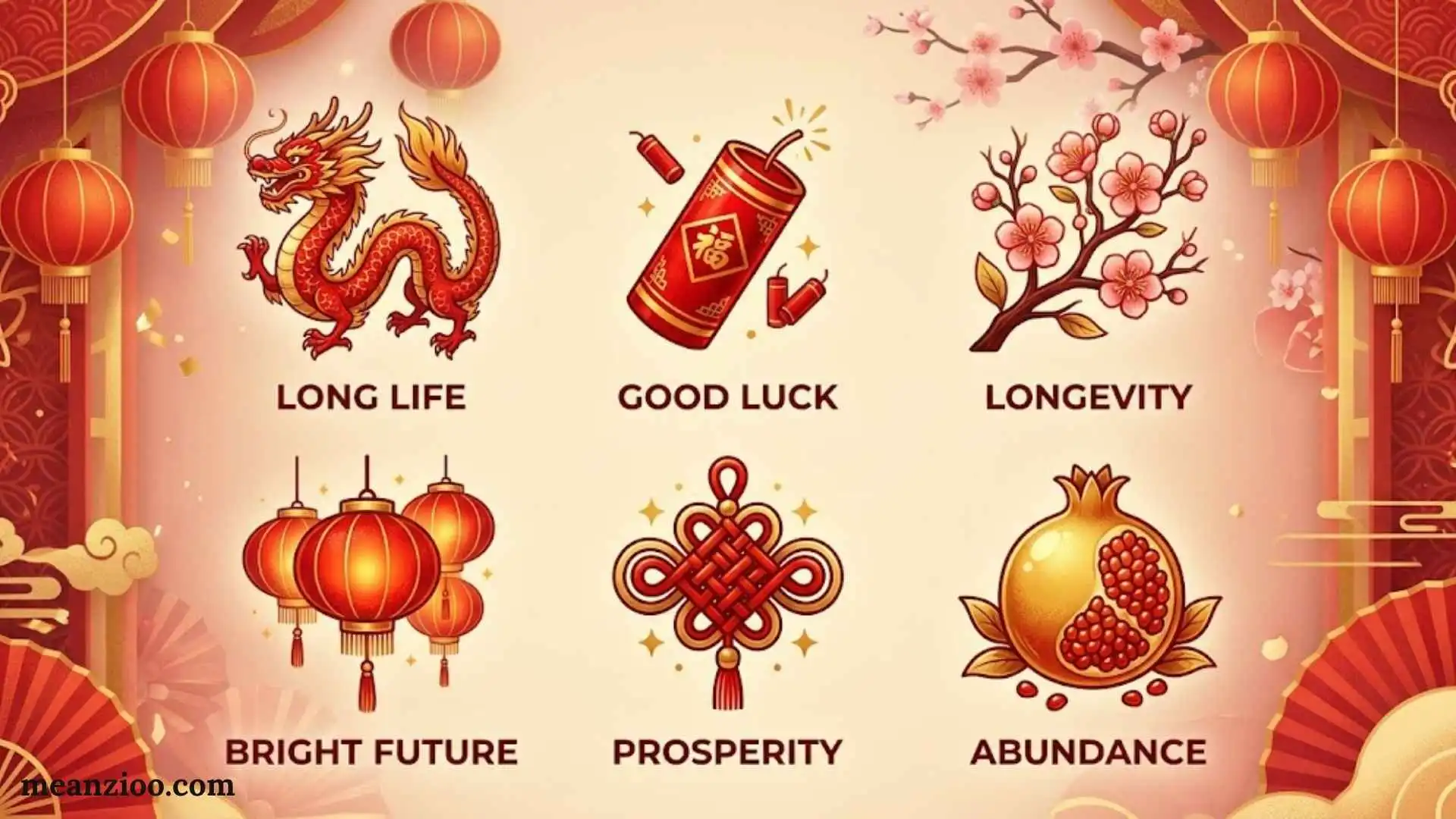
Chinese New Year transforms homes, streets, and public spaces with bright red lanterns, golden decorations, festive foods, and traditional performances. Yet these colorful details represent much more than a celebration. Each one carries a message about happiness, prosperity, family, or hope for the year ahead.
Known as the Spring Festival in China, Chinese New Year marks the beginning of a new year on the traditional Chinese lunisolar calendar. Families gather for reunion dinners, exchange red envelopes, decorate their doorways, and share foods that express their wishes for good fortune. The holiday also features traditional art, flowers, zodiac animals, and performances that connect modern celebrations with Chinese cultural heritage.
Understanding Chinese New Year symbols and meanings helps you appreciate why people display certain characters, prepare particular dishes, and follow specific customs. Some symbols draw their meaning from Chinese-language wordplay, while others come from folklore, historical traditions, or the appearance of an object.
From the famous red envelope to the auspicious character 福 (fú), here’s what the most recognizable Chinese New Year symbols represent and how people use them during the Spring Festival.
What Do Chinese New Year Symbols Mean?
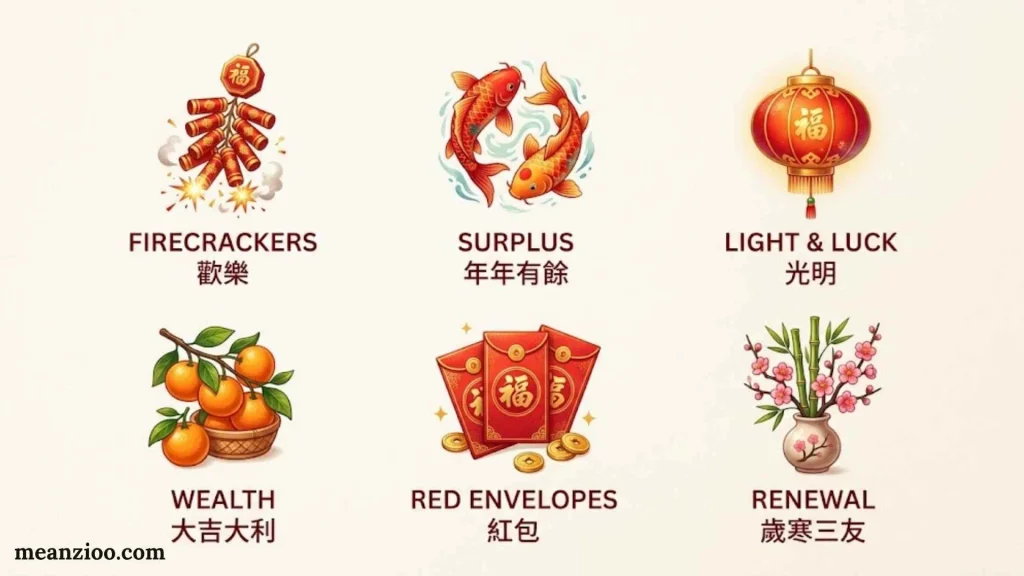
Chinese New Year symbolism expresses hopes for a fortunate year through colors, words, objects, food, plants, and traditional performances. Many symbols communicate wishes for wealth, health, longevity, happiness, protection, and family unity.
These meanings often come from three sources:
- Language and wordplay: Some Chinese words sound like other words associated with good fortune. Fish, for example, is associated with surplus because 鱼 (yú), meaning fish, sounds like 余 (yú), meaning surplus or what remains.
- Appearance and shape: Round foods can represent completeness and togetherness, while golden-colored decorations evoke wealth.
- Folklore and cultural traditions: Firecrackers, lion dances, and red decorations connect with traditional beliefs about protection and welcoming good fortune.
Not every symbol carries the same meaning in every region. Northern and southern Chinese communities may follow different food traditions, and individual families often maintain their own customs.
The Smithsonian’s National Museum of Asian Art explains how decorations, reunion dinners, symbolic foods, and lanterns form important parts of Lunar New Year celebrations.
The Most Important Chinese New Year Symbols and Their Meanings
The following table provides a quick guide to some of the most widely recognized Chinese New Year good luck symbols.
| Chinese New Year symbol | Meaning | Common use |
| Red color | Happiness, good fortune, and celebration | Clothing, decorations, and gifts |
| Gold and yellow | Wealth and prosperity | Ornaments and festive displays |
| Red envelopes | Blessings and lucky money | Gifts to children and younger relatives |
| 福 character | Good fortune and blessings | Door and wall decorations |
| Red lanterns | Festivity and auspicious wishes | Homes, streets, and public spaces |
| Chinese dragon | Power, authority, and auspiciousness | Performances and artwork |
| Lion dance | Celebration and traditional protective symbolism | Festivals and business openings |
| Fish | Abundance and surplus | Reunion dinner |
| Dumplings | Wealth and prosperity | Festive family meals |
| Nian gao | Growth and advancement | New Year meals and gifts |
| Tangyuan | Reunion and completeness | Lantern Festival |
| Plum blossoms | Perseverance and renewal | Seasonal floral displays |
| Kumquat trees | Wealth and good fortune | Home decorations and gifts |
| Chinese couplets | Blessings and good wishes | Doorways and entrances |
| Zodiac animals | The year’s zodiac designation and associated symbolism | Decorations, cards, and gifts |
These symbols appear in many Chinese New Year traditions, although their popularity and interpretation vary across communities.
Chinese New Year Colors and Their Symbolism
Color is one of the first things people notice during the Spring Festival. Red and gold dominate many traditional decorations because they communicate auspicious wishes and create a festive atmosphere.
Red: Good Luck, Happiness, and Protection
Red is the most recognizable color associated with Chinese New Year celebrations. You’ll see it on lanterns, paper decorations, envelopes, clothing, banners, and greeting cards.
Its traditional associations include happiness, good fortune, vitality, and protection against misfortune. Red also connects with the popular New Year legend of Nian, a frightening creature said to threaten villages. In one version of the story, villagers discover that Nian fears the color red, loud noises, and bright lights.
This legend helps explain why red decorations and firecrackers became closely associated with the holiday. Although the story belongs to folklore rather than established historical fact, it remains a familiar explanation for several festive customs.
Red appears in practical ways throughout the celebration:
- Families hang red paper couplets beside their doors.
- Children and younger relatives receive money in red envelopes.
- Businesses display red and gold decorations to welcome customers.
- Homes feature red lanterns, paper cuttings, and auspicious characters.
Red’s importance extends beyond decoration. It creates a visual connection between different parts of the holiday, from gift-giving to family gatherings.
Gold and Yellow: Wealth and Prosperity
Gold symbolizes wealth, abundance, and prosperity in many Chinese cultural symbols and festive designs. Its metallic appearance evokes precious metals and material success.
During Chinese New Year, gold often appears alongside red on envelopes, ornaments, paper decorations, and greeting cards. The combination creates a traditional festive look while expressing hopes for financial stability and a prosperous year.
Golden citrus fruits, such as kumquats, also contribute to this symbolism. Their color and abundance make them popular decorative plants during the Spring Festival.
Are Other Colors Considered Unlucky?
White and black can carry associations with mourning in some Chinese cultural contexts. As a result, people may avoid using them as the dominant colors for celebratory gifts or decorations.
However, color symbolism depends on context. White can represent purity in other settings, and black appears in many forms of Chinese art and clothing. These associations shouldn’t be treated as universal rules for every Chinese family.
Traditional Chinese New Year Decorations and Their Meanings
Chinese New Year decorations do more than brighten a room. Many display written blessings, auspicious images, and traditional artwork intended to welcome a fortunate year.
Red Lanterns: Celebration and Good Fortune
Red lanterns are among the most recognizable symbols of the Spring Festival. Families, shops, temples, and public spaces display them to create a warm, celebratory atmosphere.
Their red color connects with happiness and good fortune, while their presence signals that the holiday has arrived. Lanterns also play a central role in the Lantern Festival, which falls on the fifteenth day of the first lunar month and traditionally concludes the main Spring Festival period.
Modern lanterns come in many forms, including traditional paper designs, illuminated street displays, and decorative versions made from fabric or plastic. Their materials may change, but their festive role remains familiar.
The 福 Character: Blessings and Good Fortune
The Chinese character 福 (fú) means good fortune, blessings, and happiness. It is one of the most common written symbols used during Chinese New Year.
Families often display the character on red paper at entrances, above doorways, or on interior walls. It may appear alone or as part of a larger decorative design.
One particularly recognizable custom involves hanging 福 upside down.
The Chinese expression for “upside down,” 倒 (dào), sounds like 到 (dào), meaning “to arrive.” This creates a playful expression suggesting that good fortune has arrived.
The decoration is a simple example of how Chinese New Year symbolism uses language to communicate a wish. Rather than relying only on an image, the character combines written meaning, pronunciation, and cultural tradition.
Chinese New Year Couplets: Wishes Written on Red Paper
Chinese New Year couplets, known as 春联 (chūnlián), are pairs of poetic lines traditionally displayed on either side of a doorway. A shorter horizontal inscription often appears above the entrance.
These couplets express wishes for prosperity, peace, health, success, and happiness. They commonly use parallel wording, balanced phrases, and traditional calligraphy.
The red paper represents the festive season, while the written message communicates the household’s hopes for the coming year.
For example, a couplet might wish a family peace throughout the seasons and prosperity in their home. The exact wording varies, but the purpose remains the same: to welcome the new year with positive intentions.
Chinese Paper Cuttings and Window Decorations
Traditional Chinese paper-cutting, called 剪纸 (jiǎnzhǐ), turns simple sheets of paper into detailed decorative designs.
Artists fold, cut, or shape red paper into flowers, animals, auspicious characters, and intricate patterns. Families often display these decorations on windows and doors during the Spring Festival.
Common designs include:
- Fish representing abundance and surplus.
- Flowers associated with spring and renewal.
- Zodiac animals representing the coming year.
- Characters expressing happiness, prosperity, and longevity.
Paper cuttings demonstrate how traditional Chinese art combines visual beauty with symbolic meaning. A small piece of paper can communicate a detailed wish for the household.
Chinese New Year Paintings
Traditional New Year prints, known as 年画 (niánhuà), depict auspicious scenes intended to bring happiness and good fortune to homes and businesses.
The images may feature children, flowers, animals, legendary figures, deities, or scenes of prosperous family life. Some prints emphasize wealth and longevity, while others depict folklore or everyday celebrations.
According to the Smithsonian’s guide to Chinese New Year prints, traditional prints became an important form of festive folk art, with techniques and regional styles passed down through generations.
These prints also preserve historical details about how people imagined and celebrated the New Year.
Chinese New Year Animals and Their Symbolic Meanings
Animals occupy an important place in Chinese cultural symbols. Dragons, lions, and zodiac animals appear in artwork, decorations, performances, and stories.
The Chinese Dragon: Power and Auspiciousness
The Chinese dragon differs from many Western depictions of dragons. Instead of serving primarily as a dangerous monster, it traditionally represents power, authority, auspiciousness, and vitality.
Dragons appear in Chinese mythology, architecture, textiles, paintings, and ceremonial objects. Historically, the dragon also became associated with imperial authority.
During Chinese New Year, dragon imagery appears in decorations and performances. The dragon dance is especially popular at public festivals, where a team of performers manipulates a long dragon costume using poles.
The dancers coordinate their movements to make the dragon appear to twist, rise, and glide through the air. Drums and cymbals accompany the performance, creating an energetic spectacle.
The dragon’s symbolic power makes it a natural centerpiece for a celebration focused on welcoming a promising new year.
The Chinese Lion: Protection and Celebration
The lion dance is another major feature of many Chinese New Year celebrations. Unlike the dragon dance, which uses a long body carried by several performers, a traditional lion costume is generally operated by two dancers.
One performer controls the head, while the other moves the body and tail. Together, they imitate the lion’s movements through playful, rhythmic, and sometimes acrobatic routines.
Drums, cymbals, and gongs provide the music. In some performances, the lion interacts with lettuce or other objects arranged as part of a ritual or theatrical sequence.
The lion dance is associated with celebration, auspicious beginnings, and traditional beliefs about warding off harmful influences. Businesses may invite performers during New Year festivities to express hopes for success and prosperity.
Although lion and dragon dances often appear at the same event, they are distinct traditions with different costumes, movements, and symbolism.
The Twelve Chinese Zodiac Animals
The Chinese zodiac follows a repeating cycle of twelve animals. Each year is associated with one animal, and the zodiac appears in traditional calendars, artwork, decorations, and New Year greetings.
The twelve animals are:
| Zodiac animal | Common traditional associations |
| Rat | Resourcefulness and adaptability |
| Ox | Diligence and reliability |
| Tiger | Courage and strength |
| Rabbit | Gentleness and grace |
| Dragon | Power and auspiciousness |
| Snake | Wisdom and insight |
| Horse | Energy and perseverance |
| Goat or Sheep | Harmony and gentleness |
| Monkey | Cleverness and ingenuity |
| Rooster | Punctuality and confidence |
| Dog | Loyalty and protection |
| Pig | Abundance and contentment |
These associations come from traditional interpretations, stories, and popular zodiac descriptions. They shouldn’t be treated as scientifically established personality traits or reliable predictions about someone’s future.
The zodiac year doesn’t necessarily begin on January 1. Chinese New Year follows the traditional lunisolar calendar, so its date changes on the Gregorian calendar each year.
For example, 2026 is the Year of the Horse, according to the Smithsonian’s Lunar New Year guide.
Zodiac animals frequently appear on greeting cards, ornaments, calendars, clothing, and gift packaging. Families may choose decorations featuring the year’s animal to mark the occasion.
Chinese New Year Food Symbols and Their Meanings
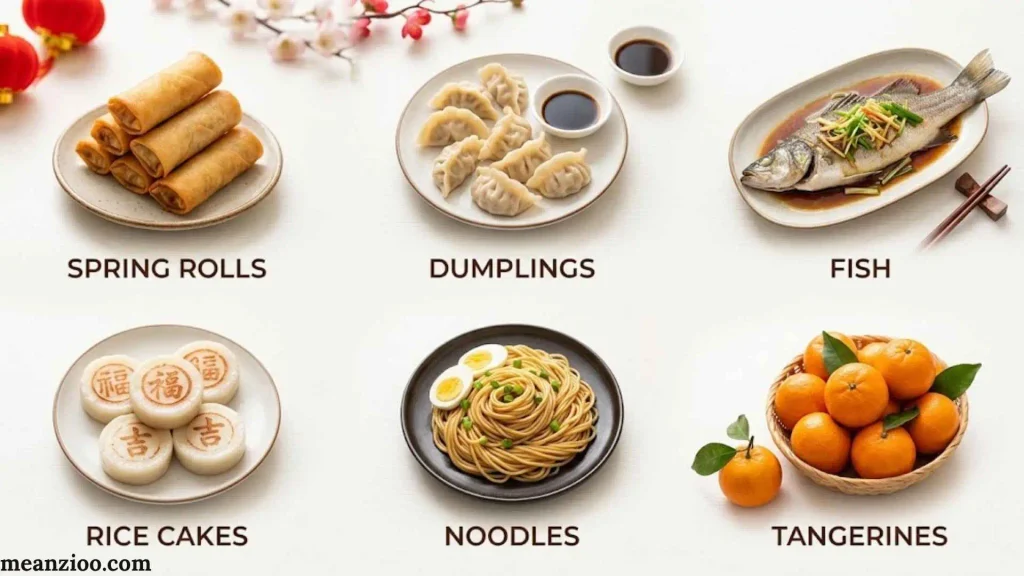
Food is one of the richest parts of Chinese New Year symbolism. Traditional dishes express hopes for wealth, abundance, progress, longevity, and family togetherness.
The meanings often depend on a dish’s shape, name, or place in a regional tradition. Not every family prepares the same foods, and recipes differ throughout China and the wider Chinese diaspora.
Fish: Abundance and Surplus
Fish is one of the most widely recognized Chinese New Year food symbols. Its meaning comes partly from a Chinese-language pun.
The word 鱼 (yú), meaning fish, sounds like 余 (yú), meaning surplus or what remains. Serving fish therefore expresses the hope that a household will enjoy enough resources throughout the coming year.
Many families serve fish during the New Year’s Eve reunion dinner. Some traditions emphasize leaving part of the fish uneaten, symbolizing a surplus that carries into the next year.
The fish’s preparation and presentation vary by region. What matters symbolically is the wish for abundance, not a single required recipe.
Dumplings: Wealth and Prosperity
Chinese dumplings, known as 饺子 (jiǎozi), are especially important in many northern Chinese New Year traditions.
Their symbolic meaning comes from their resemblance to historical Chinese gold and silver ingots, called 元宝 (yuánbǎo). Because these ingots represented wealth, dumplings became associated with prosperity and financial good fortune.
Families may gather to prepare dumplings before the New Year. Making them together turns food preparation into a shared activity and gives relatives an opportunity to spend time together.
Fillings vary and may include pork, vegetables, shrimp, or other ingredients. Some families maintain specific recipes passed down through generations.
Spring Rolls: Golden Wealth
Spring rolls are another food associated with prosperity. Their golden color after frying can resemble gold bars, making them a fitting dish for a holiday filled with wishes for wealth.
They are particularly familiar in several southern Chinese and regional food traditions, although recipes and serving customs vary.
Their symbolism illustrates a recurring pattern in Chinese New Year food: appearance can carry meaning. A golden, crisp roll can evoke precious metal without requiring any written explanation.
Nian Gao: Growth and Progress
Nian gao, written 年糕 (nián gāo), is a traditional rice cake made with glutinous rice or glutinous rice flour.
The name offers a meaningful linguistic connection. 年 (nián) means year, while 糕 (gāo) sounds like 高 (gāo), meaning high or tall. The wordplay connects the cake with hopes for advancement, improvement, and success in the coming year.
Depending on the region, nian gao may be sweet or savory. Some versions are soft and sticky, while others are sliced and cooked in a pan.
The dish appears during the Spring Festival because its name and traditional role express a wish for progress.
Tangyuan: Family Reunion and Completeness
Tangyuan, written 汤圆 (tāngyuán), are round glutinous rice balls commonly served in a sweet broth.
Their round shape symbolizes completeness and togetherness. The name also connects with the idea of reunion, making tangyuan especially meaningful during family celebrations.
Tangyuan are strongly associated with the Lantern Festival, which falls on the fifteenth day of the first lunar month. Families may enjoy them as part of the closing celebrations of the Spring Festival period.
Fillings vary and may include black sesame, red bean paste, or peanuts. Some versions have no filling at all.
The dish’s symbolism comes from both its rounded form and its role in shared family meals.
Oranges, Tangerines, and Pomelos: Prosperity and Good Fortune
Citrus fruits are popular during the Spring Festival because of their color, abundance, and linguistic associations.
Oranges and tangerines often evoke gold because of their bright color. In some Chinese-language traditions, the names of particular citrus fruits also resemble words associated with luck or prosperity.
Pomelos are another familiar New Year fruit. Depending on the language and regional custom, they can carry associations with abundance, prosperity, and family well-being.
People may place citrus fruits in decorative bowls, bring them when visiting relatives, or exchange them as gifts. Their attractive appearance makes them both practical refreshments and festive decorations.
Longevity Noodles: Wishes for a Long Life
Longevity noodles are associated with long life because of their length. They may be served during birthdays and other celebrations, including some New Year meals.
Traditionally, the noodles are kept long rather than cut into short pieces. This presentation reinforces the wish for a long and healthy life.
Longevity noodles aren’t a universal Chinese New Year dish, but they demonstrate how the physical features of food can communicate an auspicious message.
Whole Chicken: Completeness and Family Unity
In some regional traditions, a whole chicken is served during the New Year meal to represent completeness and family unity.
The presentation of the entire bird can suggest that the family remains connected as it enters the new year. Chicken dishes also form part of many celebratory meals throughout Chinese culture.
As with other symbolic foods, the meaning depends on the region, family tradition, and wider meal customs.
Chinese New Year Flowers and Plants
Plants bring the colors and textures of spring into homes during the Spring Festival. Many also carry established associations with resilience, beauty, prosperity, or renewal.
Plum Blossoms: Perseverance and Renewal
Plum blossoms are among the most meaningful flowers in Chinese art and seasonal culture. They bloom during cold weather, sometimes before winter has fully passed.
Their ability to flower in difficult conditions makes them symbols of perseverance, resilience, and hope. They also suggest that spring is approaching even when the weather remains cold.
Plum blossoms appear in paintings, poetry, decorative arrangements, and New Year displays. Their symbolism extends beyond the holiday, connecting them with broader Chinese ideas about endurance and moral strength.
Peach Blossoms: Romance and Vitality
Peach blossoms are associated with spring, vitality, beauty, and romance in various Chinese traditions.
In some southern Chinese communities, people display peach blossoms during the New Year period. Their fresh blooms express hopes for new opportunities and positive relationships.
Peach trees also appear in Chinese mythology and folklore, where peaches can carry associations with longevity. However, peach blossom symbolism and peach fruit symbolism aren’t identical in every context.
Kumquat Trees: Wealth and Prosperity
Kumquat trees are popular Chinese New Year flowers and plants despite being fruit-bearing shrubs or small trees rather than flowering decorations alone.
Their small orange fruits resemble miniature gold coins. This appearance makes them a natural symbol of prosperity and abundance.
Families may display potted kumquat trees near entrances or in living rooms. Businesses also use them as festive decorations to express hopes for commercial success.
The fruit’s golden color and plentiful appearance make kumquats one of the most recognizable plant-based prosperity symbols.
Orchids: Refinement and Beauty
Orchids have a long history in Chinese art and cultural thought. They are often associated with refinement, elegance, and virtue.
During the New Year season, orchids may appear in floral displays or be given as gifts. Their exact symbolism depends on the variety, color, and context.
Although orchids can communicate good wishes, they aren’t exclusively New Year symbols. Their broader cultural significance extends throughout Chinese art and floral traditions.
Lucky Bamboo: Growth and Prosperity
Lucky bamboo is a popular modern gift associated with growth, resilience, and good fortune.
Despite its name, the plant commonly sold as lucky bamboo isn’t true bamboo. It is a species of Dracaena, often arranged in decorative stalks or spirals.
Its popularity comes partly from its clean appearance and reputation as an easy-care indoor plant. People may give it during the New Year to express wishes for prosperity and continued progress.
Lucky bamboo is especially familiar in contemporary gift culture, although it doesn’t hold the same traditional significance in every household.
Chrysanthemums and Pussy Willow
Chrysanthemums have broader associations with longevity, endurance, and autumn in Chinese culture. They may appear in floral arrangements, although their use during Chinese New Year varies.
Pussy willow branches are popular in some regional springtime displays. Their soft buds and early growth suggest renewal and the arrival of a new season.
These plants demonstrate that Chinese New Year flower meanings aren’t uniform. Some have strong associations with the holiday, while others belong to broader seasonal or artistic traditions.
Chinese New Year Gifts and Symbols of Good Fortune
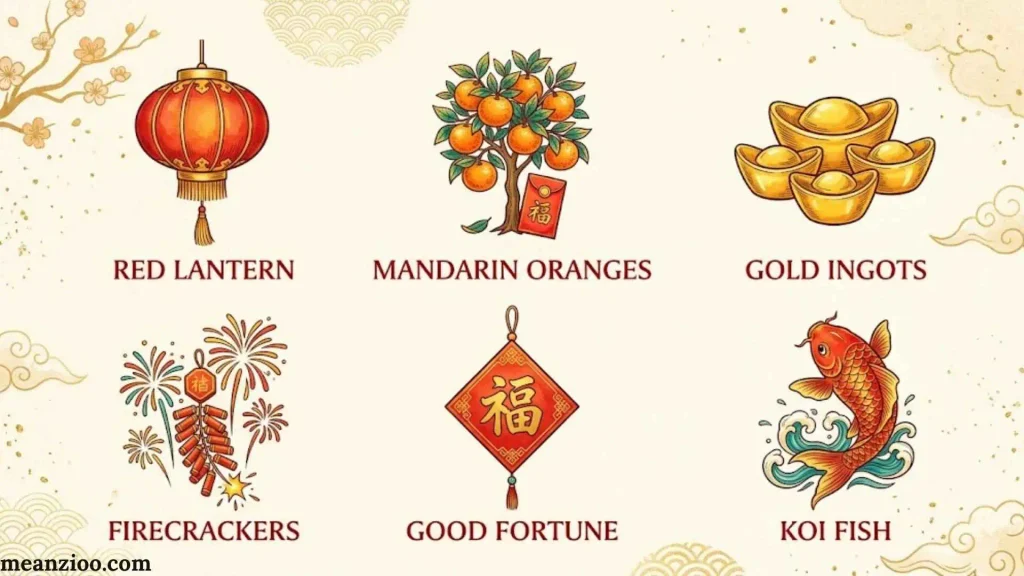
Gift-giving helps families and friends express their wishes for the year ahead. Red envelopes, citrus fruits, and other thoughtful presents communicate care, respect, and hopes for happiness.
Red Envelopes and Lucky Money
Red envelopes, known as 红包 (hóngbāo), are among the best-known Chinese New Year good luck symbols.
Adults often give money in red envelopes to children and younger relatives. The money is commonly called 压岁钱 (yāsuìqián), a traditional New Year gift associated with blessings and protection for younger family members.
The red envelope matters as much as the money inside. Its color reinforces the festive association with happiness and good fortune, while the gift itself expresses affection and goodwill.
Red envelopes are also exchanged in some other social contexts, including weddings and other celebrations. Digital red envelopes have extended the tradition to messaging platforms and online payments.
A few etiquette points are worth remembering:
- Use clean, presentable envelopes.
- Consider the recipient’s age and the relationship when choosing an amount.
- Avoid assuming that every family follows the same monetary expectations.
- Follow local customs when giving gifts to relatives, friends, or hosts.
The tradition is ultimately about expressing blessings, not simply transferring money.
Lucky Numbers and Gift Amounts
Numbers can carry symbolic meanings because of Chinese-language pronunciation and cultural associations.
The number eight is commonly associated with prosperity because its pronunciation, bā, resembles the sound of fā in 发 (fā), a character associated with prosperity or becoming wealthy in relevant expressions.
The number four is often avoided in certain gift and commercial contexts because its pronunciation, sì, resembles the word for death, 死 (sǐ).
These associations influence some choices involving gift amounts, addresses, and product pricing. However, preferences vary, and not everyone follows numerical superstitions.
New Clothes and Fresh Beginnings
Wearing new clothes during Chinese New Year represents renewal and a fresh start for many families.
People may choose bright colors or festive designs to mark the occasion. Children often receive new clothing as part of holiday preparations, while adults may purchase special outfits for family visits and celebrations.
New clothes aren’t mandatory. Their symbolism reflects the broader idea of entering the year with a positive outlook and leaving the previous year’s difficulties behind.
Fruit Gifts and New Year Visits
When visiting relatives or friends, people may bring citrus fruits, sweets, or other suitable gifts.
These offerings express respect and good wishes. Fruit baskets are particularly convenient because they can combine attractive presentation with symbolic meaning.
The best choice depends on the recipient’s preferences and local customs. A thoughtful, appropriate gift is more meaningful than one chosen only because it supposedly guarantees good luck.
Chinese New Year Traditions and Their Symbolic Meanings
Many Chinese New Year customs combine practical preparations with symbolic intentions. Cleaning, cooking, visiting relatives, and exchanging greetings all help mark the transition into a new year.
The Reunion Dinner: Family Unity
The reunion dinner, known as 年夜饭 (niányèfàn), is one of the most important meals of the Spring Festival.
Families gather on Chinese New Year’s Eve to share food, catch up, and welcome the coming year. For people who live far apart, traveling home for the dinner can become one of the holiday’s most meaningful rituals.
The meal may include fish, dumplings, chicken, rice cakes, or other dishes associated with the family’s regional background.
Each dish can contribute a symbolic wish, but the dinner’s central importance lies in bringing people together. It celebrates family connections while creating a shared moment before the new year begins.
Cleaning the Home Before New Year
Cleaning before the Spring Festival is a widespread tradition. Families tidy their homes, remove clutter, and prepare their spaces for visitors and decorations.
Symbolically, the process represents clearing away the old year’s difficulties and making room for new opportunities. It also has a practical purpose: preparing the home for family gatherings and holiday meals.
Some households avoid sweeping or taking out trash on New Year’s Day because they believe these actions could symbolically remove incoming good fortune.
The timing matters within the traditional belief. Cleaning beforehand prepares the home, while avoiding certain tasks on the first day protects the symbolism of welcoming good fortune.
Firecrackers and Fireworks
Firecrackers and fireworks are associated with the excitement of welcoming the new year. Traditional folklore connects loud noises and bright lights with frightening away Nian and other harmful influences.
Historical Chinese festival art also depicts firecrackers as part of New Year celebrations. The Smithsonian’s collection includes a traditional Chinese New Year painting showing children preparing firecrackers amid other auspicious activities.
Today, fireworks remain part of some public celebrations, while other communities restrict them because of fire risks, injuries, noise, and air pollution.
Their cultural meaning remains recognizable even where fireworks aren’t permitted. Lanterns, performances, and other festive displays can serve as alternative ways to celebrate.
Visiting Relatives and Exchanging Greetings
New Year visits reinforce relationships among relatives, friends, and neighbors. People exchange greetings, share refreshments, and offer wishes for the year ahead.
A common greeting is 新年快乐 (Xīnnián kuàilè), meaning “Happy New Year.” Another is 恭喜发财 (Gōngxǐ fācái), which expresses congratulations and wishes for prosperity.
Other greetings wish people good health, family happiness, success, or longevity.
These phrases are more than polite expressions. They reflect the holiday’s focus on positive intentions and the importance of maintaining social relationships.
The Lantern Festival: The End of the Celebration Period
The Lantern Festival takes place on the fifteenth day of the first lunar month. It traditionally marks the conclusion of the main Spring Festival celebration period.
Lantern displays, riddles, public gatherings, and sweet rice balls called tangyuan are associated with the occasion.
Lanterns illuminate streets and public spaces, while tangyuan express wishes for reunion and completeness. In some communities, children carry lanterns as part of the celebration.
The festival extends the New Year season beyond the opening days and gives families another opportunity to gather and enjoy traditional activities.
Chinese New Year Taboos and Superstitions
Chinese New Year traditions and taboos reflect long-standing beliefs about words, objects, and actions that might influence the year ahead. These customs vary widely, so they shouldn’t be treated as rules followed by every Chinese person.
Avoiding Negative Words
Some families avoid words associated with death, illness, loss, or misfortune during the holiday.
The idea is straightforward: the beginning of the year should feature positive language and encouraging wishes rather than expressions that invite bad luck.
This custom connects with the broader importance of auspicious greetings and symbolic language during the Spring Festival.
Avoiding Sweeping on New Year’s Day
In some traditions, sweeping on New Year’s Day may symbolize removing good fortune that has just entered the home.
Families who follow this custom clean before the holiday instead. Other households may interpret or observe the practice differently.
The custom is best understood as symbolic rather than practical. It reflects the belief that the first day of the year should protect the household’s incoming blessings.
Avoiding Knives and Scissors
Some traditional beliefs discourage using knives or scissors on New Year’s Day because sharp objects can symbolically cut or sever good fortune.
Where the custom is observed, families may prepare ingredients beforehand to avoid unnecessary cutting during the first day.
Not everyone follows this practice, and it doesn’t mean sharp objects are inherently unlucky. Its significance comes from the symbolism attached to cutting and separation.
Debts, Arguments, and Unlucky Gifts
Some households prefer to settle outstanding debts before the New Year and avoid arguments during the holiday.
The underlying idea is to begin the year with fewer unresolved problems and a more positive atmosphere.
Gift etiquette also matters. Certain objects may carry unwanted associations because of their names, uses, or cultural meanings. For example, clocks can be sensitive gifts in some Chinese-speaking contexts because phrases associated with giving a clock resemble expressions connected with attending a funeral.
These conventions aren’t universal. When choosing gifts, consider the recipient’s preferences and local traditions rather than relying on a single list of superstitions.
How Chinese New Year Symbols Differ Across Regions and Communities
Although many Chinese New Year symbols are widely recognized, the holiday doesn’t look exactly the same everywhere.
Northern Chinese families often emphasize dumplings during New Year celebrations, while tangyuan are especially associated with the Lantern Festival and certain regional traditions. Southern communities may place greater emphasis on flower markets, citrus plants, and specific festive dishes.
Decorations also vary. Some families display extensive red couplets and paper cuttings, while others focus on lanterns, flowers, or a few meaningful ornaments.
Overseas Chinese communities may preserve customs from their ancestral regions while adapting them to local environments. A family celebrating in North America, Southeast Asia, or Europe may combine traditional foods with locally available ingredients and contemporary decorations.
It’s also important to distinguish Chinese New Year from the broader Lunar New Year category. Chinese New Year is one major celebration, but Korean Seollal and Vietnamese Tết have their own customs, calendars, foods, and symbolic traditions.
As the Smithsonian explains in its Lunar New Year overview, different communities celebrate the new year in different ways. Recognizing these distinctions helps preserve the meaning of each tradition.
How to Use Chinese New Year Symbols in Your Home
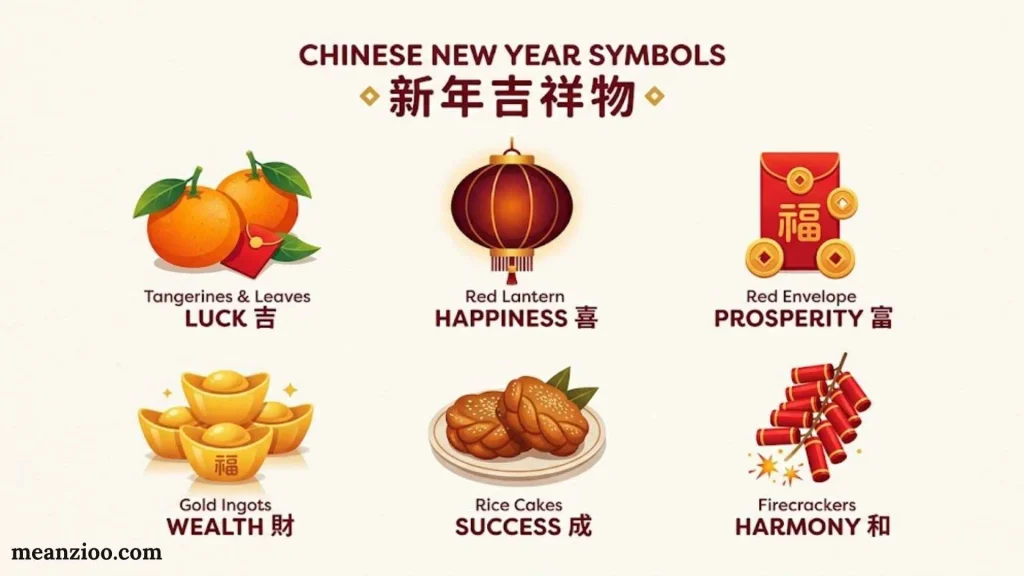
You don’t need an elaborate display to appreciate the meaning of the Spring Festival. A few carefully chosen decorations or traditional foods can express the holiday’s central themes.
Choose Traditional Door Decorations
Hang red couplets beside the entrance and consider displaying a 福 character above the door. These decorations communicate blessings and welcome visitors with an auspicious message.
If you display 福 upside down, you can explain the Chinese-language wordplay behind the custom.
Add Festive Colors and Flowers
Use red accents and gold details to create a traditional seasonal display. Plum blossoms, peach blossoms, or a kumquat tree can add natural color while connecting your home with familiar Spring Festival imagery.
Choose plants suited to your climate and indoor conditions rather than treating any particular plant as a requirement for good fortune.
Prepare Symbolic Foods
Consider serving a dish with a meaning that resonates with your family.
- Fish expresses wishes for abundance.
- Dumplings are associated with wealth and prosperity.
- Nian gao expresses hopes for growth and advancement.
- Tangyuan represents reunion and completeness.
You can also explore regional recipes and learn how different families prepare these dishes.
Give Thoughtful New Year Gifts
Red envelopes are traditional gifts in many families, while citrus fruits and other suitable presents can communicate good wishes.
If you’re joining someone else’s celebration, ask about their customs when you’re unsure. Cultural understanding comes from learning the meaning behind a tradition and respecting the people who maintain it.
Frequently Asked Questions About Chinese New Year Symbols
What Are the Most Important Chinese New Year Symbols?
The most recognizable symbols include the color red, red envelopes, the 福 character, lanterns, zodiac animals, dragon and lion dances, fish, dumplings, plum blossoms, and Chinese couplets. They express wishes for prosperity, happiness, protection, renewal, and family unity.
What Symbolizes Good Luck During Chinese New Year?
Red decorations, 福 characters, red envelopes, and auspicious greetings are widely associated with good fortune. Citrus fruits, kumquat trees, and certain festive foods also express hopes for prosperity and abundance.
Why Is Red Important During Chinese New Year?
Red represents celebration, happiness, and good fortune in many Chinese New Year traditions. Folklore also connects red with protection against Nian, a legendary creature said to threaten villages during the New Year period.
What Does the Chinese Character 福 Mean?
福 (fú) means good fortune, blessings, and happiness. Families commonly display it on red paper during the Spring Festival to express hopes for a fortunate year.
Why Is 福 Sometimes Displayed Upside Down?
The word 倒 (dào), meaning upside down, sounds like 到 (dào), meaning arrive. Displaying 福 upside down creates wordplay suggesting that good fortune has arrived.
What Foods Symbolize Wealth and Prosperity?
Dumplings are associated with wealth because they resemble historical gold and silver ingots. Spring rolls can symbolize gold because of their color, while fish represents surplus and abundance through Chinese-language wordplay.
What Does Fish Represent During Chinese New Year?
Fish represents abundance and surplus. The word 鱼 (yú), meaning fish, sounds like 余 (yú), meaning surplus or what remains. Serving fish expresses the hope that a household will have enough resources in the coming year.
What Do Red Envelopes Symbolize?
Red envelopes represent blessings, goodwill, and lucky money. Adults commonly give them to children and younger relatives as part of traditional New Year celebrations.
What Flowers Are Associated With Chinese New Year?
Plum blossoms, peach blossoms, and kumquat trees are among the familiar seasonal plants associated with the holiday. Plum blossoms suggest perseverance and renewal, peach blossoms can symbolize romance and vitality, and kumquat trees represent prosperity.
What Are the Twelve Chinese Zodiac Animals?
The twelve animals are the Rat, Ox, Tiger, Rabbit, Dragon, Snake, Horse, Goat or Sheep, Monkey, Rooster, Dog, and Pig. Each year in the traditional zodiac cycle corresponds to one of these animals.
Why Do People Use Firecrackers During Chinese New Year?
Traditional folklore says that loud noises and bright lights frighten away Nian and harmful spirits. Firecrackers became associated with welcoming the new year, although their use is restricted in some places for safety and environmental reasons.
What Should You Avoid Doing During Chinese New Year?
Some families avoid sweeping, using sharp objects, speaking negatively, or arguing on New Year’s Day. These customs reflect traditional beliefs about protecting good fortune, but practices differ across regions and households.
Is Chinese New Year the Same as Lunar New Year?
Chinese New Year is a major Lunar New Year celebration, but the terms aren’t interchangeable in every cultural context. Other communities, including Vietnamese and Korean communities, celebrate their own distinct new year traditions.
Conclusion: The Meaning Behind Chinese New Year Symbols
Chinese New Year symbols turn a seasonal celebration into an expression of cultural memory, family connection, and hope for the future. Red lanterns welcome the festive season, red envelopes communicate blessings, and the 福 character expresses wishes for good fortune.
Traditional foods carry their own messages. Fish represents abundance, dumplings evoke wealth, and tangyuan symbolizes reunion. Flowers and plants connect the celebration with renewal, resilience, and prosperity, while zodiac animals and traditional performances keep stories and cultural imagery alive.
These meanings aren’t identical in every region or household. Some traditions come from wordplay, others from folklore, and many reflect generations of family practice.
Understanding the symbolism behind these customs makes the Spring Festival more meaningful. Instead of seeing decorations and dishes as simple holiday details, you can recognize the wishes they express: a prosperous year, a healthy family, stronger relationships, and new opportunities.
That combination of tradition and hope is what makes Chinese New Year symbols such an enduring part of the celebration.

I’m Ryan Mitchell, and I write about modern English, trending slang, and online expressions. I enjoy explaining the meanings, origins, and real-life usage of popular words in a simple way. I believe learning slang is an important step toward understanding today’s English-speaking culture. Through my work, I aim to help readers speak more naturally and stay updated with the latest language trends.
 Charlotte Hayes