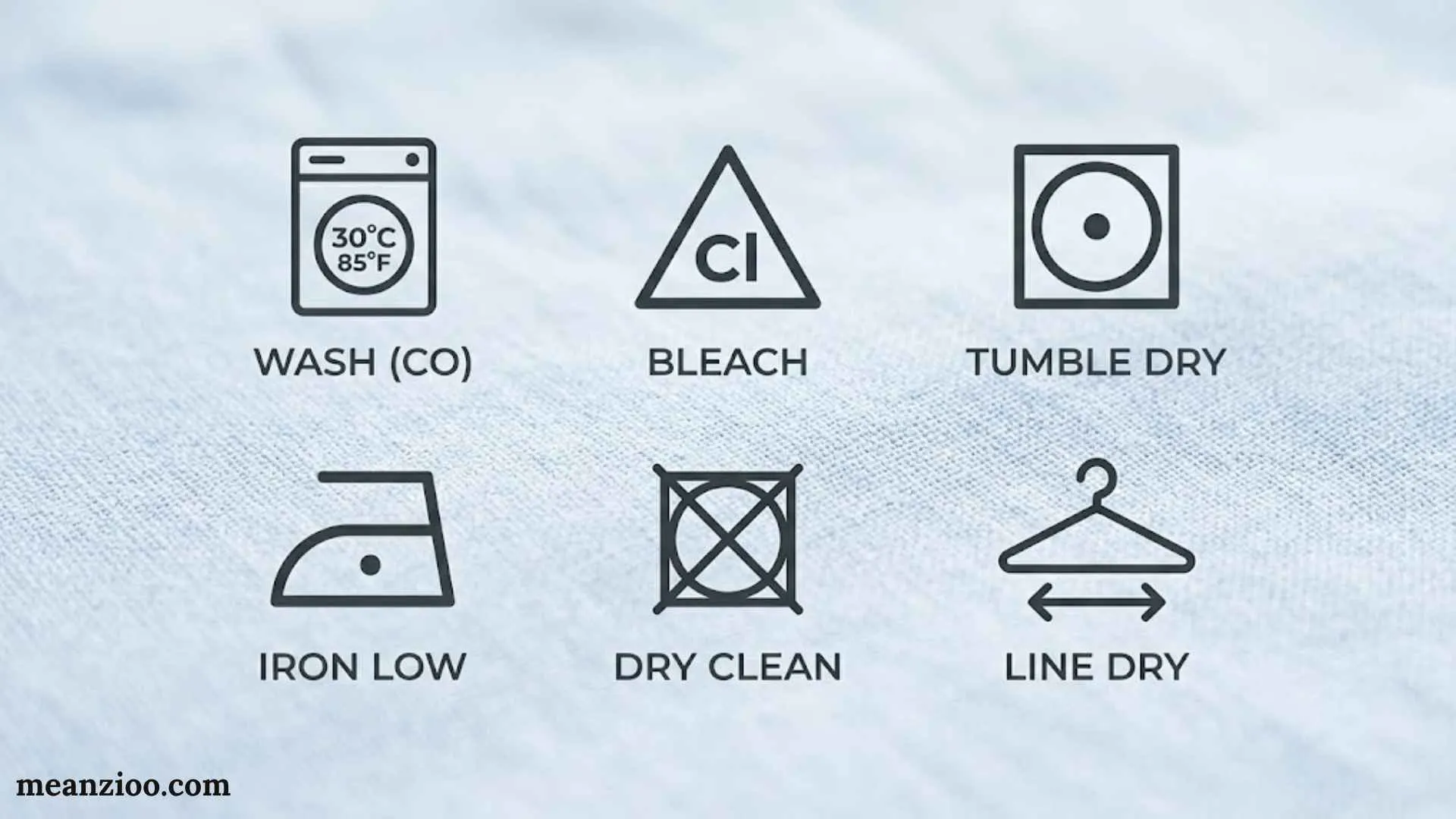
Washer symbols can look like a secret code when you’re standing in front of your washing machine with a pile of clothes. One icon might represent a delicate cycle, another might control the spin speed, and a symbol on your shirt’s care label could warn you against using the dryer altogether.
Understanding these symbols makes laundry easier. You can choose the right washing program, protect delicate fabrics, and avoid common problems such as shrinking, fading, and stretched-out clothing.
However, there’s an important distinction to remember: washing machine symbols tell you how to operate your appliance, while laundry symbols on clothing labels explain how to care for individual garments. Although these two systems serve related purposes, they don’t mean the same thing.
This guide explains both systems in practical terms. You’ll learn how to interpret common washer icons, understand washing temperatures, recognize drying and ironing restrictions, and choose the right settings for different fabrics.
What Are Washer Symbols?

Washer symbols are small icons that communicate washing machine functions or clothing care instructions. Manufacturers use them to make appliance controls easier to recognize, while clothing brands use standardized care symbols to explain how garments should be washed, dried, ironed, bleached, and professionally cleaned.
You’ll usually encounter these symbols in two places:
- On a washing machine: The control panel may display icons for cotton, wool, quick wash, temperature, spin speed, extra rinsing, and other functions.
- On clothing labels: A garment’s care tag may show a washing tub, triangle, square, iron, and circle. Each shape represents a different type of care instruction.
Recognizing the difference helps you make better laundry decisions. For example, a cotton-cycle icon on your washing machine identifies a program, while a wash tub marked 40°C on your shirt’s label indicates the maximum permitted washing temperature.
Washing Machine Symbols vs. Laundry Care Symbols
| Feature | Washing machine symbols | Laundry care symbols |
| Where you’ll find them | Appliance control panel or display | Clothing tags and care labels |
| Main purpose | Control washing machine functions | Explain garment care requirements |
| Common examples | Cotton, rinse, spin, quick wash | Wash tub, triangle, square, iron |
| Temperature information | Available temperature settings | Maximum permitted washing temperature |
| Drying information | May indicate a connected dryer or appliance feature | Specifies permitted tumble or natural drying methods |
| Where to verify meaning | Washing machine manual | Garment care label and applicable labeling standard |
International textile care labeling uses five main symbol families: washing, bleaching, drying, ironing, and professional textile care. The ISO 3758 care-labeling system provides a standardized framework for these instructions. GINETEX also publishes explanations of the care symbols used within this system.
Why Understanding Washer Symbols Matters
A familiar-looking icon can influence how your clothes look and feel after washing. Selecting an unsuitable cycle may expose a delicate garment to excessive agitation, while using the wrong drying setting can cause avoidable shrinkage.
Understanding washing symbols and their meanings helps you:
- Choose a suitable washing machine program.
- Avoid exceeding a garment’s recommended washing temperature.
- Protect wool, silk, and stretch fabrics.
- Reduce the risk of color fading and fabric distortion.
- Decide whether an item can go in a tumble dryer.
- Follow restrictions on ironing and bleaching.
- Avoid using a household washing machine for garments that require different care.
The goal isn’t to memorize every icon. It’s to recognize the main shapes and understand what each symbol tells you to do.
Washing Machine Symbols and Their Meanings
Washing machine manufacturers often use similar icons for common functions, but their exact designs and features vary by model. A symbol on one machine may represent a dedicated program, while another model may use the same general idea with a different graphic.
Always check your appliance manual if an unfamiliar icon appears on the display.
Start, Pause, and Stop Symbols
The start and pause controls are among the most recognizable washing machine symbols.
- Start or play: Usually shown as a triangle pointing to the right. It starts the selected program.
- Pause: Commonly represented by two vertical bars. It temporarily pauses a running program when the machine allows it.
- Stop or cancel: May appear as a square, a cancel symbol, or a labeled button. It stops or cancels a program according to the manufacturer’s instructions.
- Door lock: Often represented by a padlock. It indicates that the door is locked or that a locking function is active.
Don’t force the door open when the machine is running. The lock may remain engaged because the drum is spinning, the water is hot, or water remains inside the machine.
Some washers let you add clothes after pausing a cycle. Others require you to wait until the water level and temperature make opening the door safe.
Wash Cycle Symbols
Wash-cycle icons identify the program the machine will use. The program name often tells you more than the symbol alone, so check both when possible.
| Cycle | Typical purpose | Important consideration |
| Cotton | Durable cotton garments and household textiles | Check the garment label before choosing high temperatures |
| Synthetics | Many polyester and blended fabrics | Often uses gentler action than a standard cotton program |
| Delicate | Fragile garments and sensitive fabrics | Use a suitable detergent and avoid overloading |
| Wool | Compatible wool garments | Only use for items labeled suitable for machine washing |
| Hand wash | Garments requiring very gentle treatment | Follow the care label’s temperature limit |
| Quick wash | Small, lightly soiled loads | May not suit heavily soiled clothing |
| Eco | Energy- and water-conscious washing | Often takes longer than a standard cycle |
| Rinse and spin | Rinsing followed by spinning | Useful when clothes need another rinse |
| Spin only | Removes water through spinning | Does not perform a complete wash |
| Drain | Removes water from the drum | Does not necessarily include rinsing |
The names and functions aren’t identical across every brand. A quick wash program may have specific load-size limits, while an eco program may use a longer washing time to reduce energy consumption.
Choose a cycle based on the garment’s care instructions, fabric construction, and level of soiling—not simply on the program name.
Water Temperature Symbols and Settings
Temperature settings determine how warm the wash water becomes. The available options depend on the appliance, and some machines let you adjust the temperature independently of the selected program.
Common settings include:
- Cold wash: Useful for many everyday garments, especially when color retention matters.
- 30°C wash: Often suitable for lightly soiled clothing and many colored or delicate items when the label permits it.
- 40°C wash: Common for everyday clothing that allows this temperature.
- 60°C wash: May suit certain durable cotton items and household textiles when their care labels permit it.
- Higher-temperature washing: Appropriate only for items specifically designed to tolerate the selected temperature.
Cold or low-temperature washing can help reduce energy use, but cleaning results depend on the detergent, cycle, fabric, and type of soil. Some stains and hygiene requirements need a more specific approach.
On clothing labels, a number inside the washing tub indicates the maximum permitted washing temperature. A tub marked 40°C doesn’t mean you must always wash the garment at exactly 40°C. A lower temperature may be suitable, provided it delivers the cleaning result you need.
Spin Speed Symbols
The spin cycle rotates the drum to remove water from clothes. Washing machines commonly express spin speed in revolutions per minute, or RPM.
A higher spin speed generally removes more water, which can shorten drying time. However, it may increase creasing and place more mechanical stress on some garments.
- High spin speed: Often useful for durable cotton items that permit it.
- Low spin speed: May be more suitable for delicate fabrics and garments prone to creasing.
- Reduced spin: Limits spinning intensity or speed.
- No spin: Avoids the normal spin stage, although the exact program behavior varies.
Remember that spin speed and washing temperature are different settings. A garment may tolerate warm water but still require gentle spinning.
If a clothing label shows one or two lines beneath the wash tub, it indicates a milder or very mild washing process. Choose a compatible program rather than relying on temperature alone.
Rinse, Prewash, and Detergent Drawer Symbols
Several washing machine symbols relate to water distribution and detergent use.
Rinse: The machine rinses the clothes to remove detergent and loosened soil. An extra-rinse option adds another rinse when the program supports it.
Prewash: A preliminary washing stage can help with heavily soiled items. It isn’t necessary for every load.
Main wash: The principal washing stage, where the machine uses the selected program and detergent.
Detergent drawer markings: Many machines label compartments with symbols or numbers such as I and II. These commonly identify the prewash and main-wash compartments, respectively. A flower symbol often identifies the fabric softener compartment.
Check your machine’s manual before filling the compartments. Incorrect placement can release a product at the wrong stage or leave residue in the drawer.
Additional Washing Machine Function Symbols
Modern washers may include features beyond the basic washing cycle.
| Function | What it generally does |
| Delay start | Starts the cycle after a chosen delay |
| Child lock | Restricts control-panel operation |
| Extra water | Adds water during supported programs |
| Steam | Uses steam as part of a compatible cycle |
| Intensive wash | Provides a more intensive treatment for suitable loads |
| Anti-crease | Adjusts the program or drum movement to help reduce creasing |
| Load sensing | Helps determine an appropriate water level or cycle behavior |
| Wi-Fi or smart control | Connects the appliance to compatible digital features |
Not every washer includes these functions. Some icons appear only while a feature is active, and others may indicate a warning or operating condition rather than a selectable program.
If a symbol flashes, appears alongside an error code, or prevents the machine from starting, consult the model-specific manual instead of assuming it represents a wash cycle.
Laundry Symbols on Clothing Labels Explained
Laundry care symbols provide instructions for washing, bleaching, drying, ironing, and professional cleaning. They usually appear in a row on the garment’s care label, although the exact layout can vary.
The five main symbol families are easy to remember:
- Wash tub: Washing instructions.
- Triangle: Bleaching instructions.
- Square: Drying instructions.
- Iron: Ironing temperature and restrictions.
- Circle: Professional textile cleaning.
A cross through a symbol generally means that the represented treatment isn’t permitted. A line beneath certain symbols indicates that a gentler process is required.
Washing Tub Symbols
The wash tub is one of the most important clothing care symbols because it tells you whether and how a garment can be washed.
| Wash tub marking | Meaning | Recommended action |
| Tub without a number or additional marking | Washing is permitted under the applicable care instructions | Choose a suitable cycle and temperature |
| Tub marked 30°C | Maximum wash temperature of 30°C | Use a cycle that doesn’t exceed 30°C |
| Tub marked 40°C | Maximum wash temperature of 40°C | Select a suitable program at or below 40°C |
| Tub with one underline | Mild washing action | Choose a compatible gentle or easy-care program |
| Tub with two underlines | Very mild washing action | Use an appropriate very gentle program |
| Tub with a hand | Hand washing required | Follow the specified hand-washing instructions |
| Crossed-out tub | Washing is prohibited | Don’t wash using the prohibited domestic washing process |
These symbols communicate more than temperature. The underline markings also indicate the degree of mechanical action suitable for the garment.
For example, two shirts may both carry a 30°C washing instruction. One might permit a mild cycle, while the other requires a very mild program because its fibers or construction are more sensitive to movement.
The second shirt needs more than cool water. It also needs gentler handling.
Water Temperature Symbols
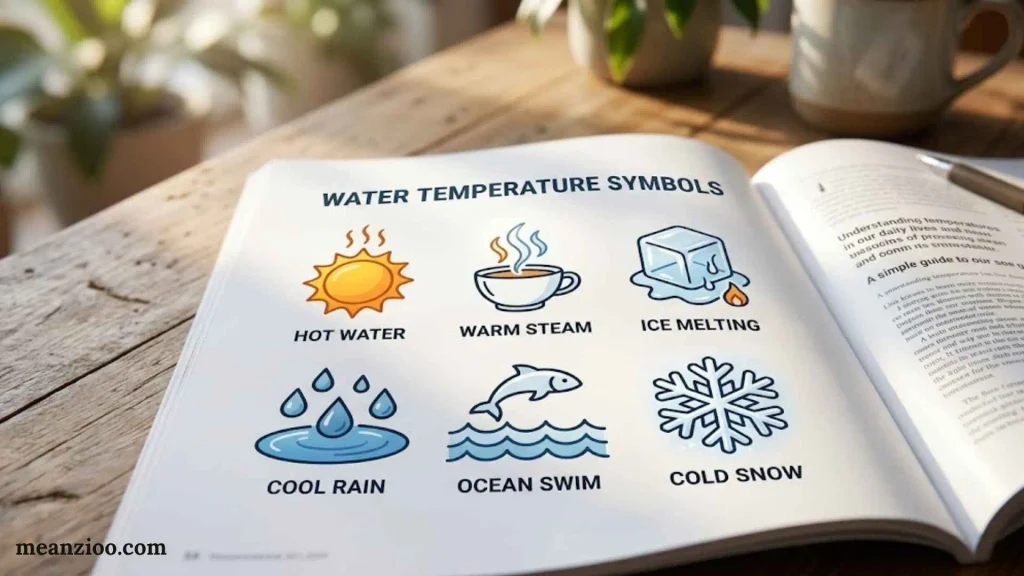
Washing temperature symbols help you avoid exposing garments to excessive heat. The number inside the wash tub represents the maximum washing temperature, expressed in degrees Celsius in the standard care-label system.
Common markings include:
- 30°C: A low-temperature wash.
- 40°C: A moderate washing temperature suitable for many everyday garments when permitted.
- 60°C: A higher-temperature wash for suitable textiles.
- 95°C: A very high-temperature wash intended only for garments specifically labeled for it.
Don’t assume that cotton clothing can always tolerate high temperatures. Cotton may shrink, bleed dye, or lose its finish depending on how the fabric was made and treated.
The same principle applies to synthetic fabrics. Polyester and nylon can have different heat sensitivities depending on their construction, blends, and finishes.
Hand-Wash Symbols
The hand-wash symbol shows a hand inside a washing tub. It indicates that the garment requires hand washing under the specified conditions.
Hand washing is often suitable for delicate garments that can’t tolerate the mechanical action of a standard washing cycle. However, it still requires care.
Follow these steps:
- Fill a basin with water at the temperature permitted by the label.
- Dissolve an appropriate mild detergent in the water.
- Submerge the garment and move it gently.
- Avoid vigorous rubbing, twisting, or pulling.
- Rinse carefully until the detergent has been removed.
- Press out excess water without wringing the garment.
- Reshape it and dry it according to the drying instructions.
Some washing machines offer a hand-wash program. However, an actual hand-wash label doesn’t automatically mean every machine’s hand-wash setting is appropriate. Follow the garment manufacturer’s instructions.
What Do the Lines Under a Washing Symbol Mean?
The lines underneath the wash tub indicate the level of washing action the garment can tolerate.
- No underline: Normal washing action, subject to the other instructions.
- One underline: Mild washing action with reduced mechanical treatment.
- Two underlines: Very mild washing action with even gentler treatment.
This distinction matters for wool knitwear, fine synthetics, and other garments that may stretch, crease, or lose their shape during vigorous washing.
Don’t interpret the lines as temperature indicators. The number inside the tub communicates the temperature limit; the lines describe the washing process.
Drying Symbols and Their Meanings
Washing clothes correctly is only half the job. The wrong drying method can undo that work, particularly when a garment is sensitive to heat or needs support to maintain its shape.
Drying symbols appear inside a square. A circle inside the square indicates tumble drying, while lines inside the square describe natural drying methods.
Tumble Dryer Symbols
| Symbol description | Meaning | What to do |
| Square containing a circle | Tumble-drying instructions | Check additional markings |
| Square with a circle and one dot | Low-temperature tumble drying | Select a low-heat setting |
| Square with a circle and two dots | Normal-temperature tumble drying in the applicable standard | Use a suitable regular-heat setting |
| Crossed-out square containing a circle | Do not tumble dry | Choose an approved natural drying method |
The dots indicate the permitted heat level within the applicable care-label system. The machine’s actual temperature and program names can differ, so use the manufacturer’s guidance when choosing a setting.
If your garment has a crossed-out tumble-drying symbol, don’t put it in the dryer simply because the fabric feels thick or durable. The garment may contain elastic, a special finish, or construction details that don’t tolerate tumble drying.
Natural Drying Symbols
Natural drying symbols show how to position a garment while it dries.
| Symbol description | Meaning | Best use |
| Square with one vertical line | Line drying | Hang the garment to dry |
| Square with horizontal lines | Dry flat | Lay the garment on a suitable flat surface |
| Square with multiple vertical lines | Drip line drying | Hang the garment while allowing water to drip away |
| Square with multiple horizontal lines | Drip flat drying | Lay the garment flat while it remains wet |
| Square with a diagonal line | Dry in the shade where indicated by the applicable symbol | Protect the garment from direct sunlight |
The number and arrangement of lines matter. Always distinguish a square containing a circle from one containing only lines: the former concerns tumble drying, while the latter communicates natural drying instructions.
How to Choose the Right Drying Method
The right drying method depends on the garment’s care label, fabric construction, and shape.
Tumble drying can be convenient for suitable towels, everyday clothing, and other dryer-safe items. Use the permitted heat level and avoid leaving clothes in excessive heat longer than necessary.
Line drying works well for many washable garments. Leave enough space between items for air to circulate and check whether direct sunlight could affect the color.
Flat drying is especially important for garments that can stretch under their own weight. Wool sweaters and certain knitwear may become misshapen if you hang them while they’re wet.
For delicate clothing, don’t assume that natural drying always means hanging. The label may specifically require the garment to lie flat or drip dry.
Ironing Symbols and Temperature Settings
The iron symbol communicates whether ironing is permitted and how much heat the garment can tolerate.
The dots inside the iron represent the permitted temperature level. Under the commonly used international care-label convention, one dot indicates low heat, two dots indicate medium heat, and three dots indicate high heat.
What the Iron Symbols Mean
| Iron symbol | General meaning | Practical guidance |
| Iron with one dot | Low temperature | Use a cool setting |
| Iron with two dots | Medium temperature | Use moderate heat |
| Iron with three dots | High temperature | Use higher heat only when permitted |
| Crossed-out iron | Do not iron | Avoid ironing the garment |
| Iron with a crossed-out steam feature | Do not use steam where indicated | Use only a permitted non-steam method, if ironing is allowed |
Some labels use a dedicated symbol to warn against steam ironing. This is different from a general prohibition on ironing, so inspect the entire symbol carefully.
Ironing Temperature by Fabric Type
Different fabrics respond differently to heat. Use the care label as your primary guide rather than relying on fiber names alone.
- Synthetic fabrics: Many require low or moderate heat because excessive heat can damage the fibers or change the fabric’s appearance.
- Silk: Often needs careful temperature control and may require a protective cloth or inside-out ironing.
- Wool: May benefit from moderate heat and careful pressing, depending on the garment’s construction.
- Cotton: Can often tolerate more heat than delicate synthetics, but finishes and blends affect the safe setting.
- Linen: May tolerate higher ironing temperatures when the label permits them, though the garment may need careful moisture management.
Avoid holding a hot iron in one place for too long. Test an inconspicuous area only when the label permits ironing, and never use a hotter setting just to remove a stubborn crease.
Bleaching Symbols Explained
The triangle on a care label tells you whether bleaching is permitted. This is particularly important when treating stains on white clothing or trying to preserve the color of dyed fabrics.
Triangle Symbols
| Triangle marking | Meaning | What to do |
| Empty triangle | Bleaching is permitted under the applicable standard | Follow the bleach product’s directions |
| Triangle with two diagonal lines | Oxygen or non-chlorine bleach only | Avoid chlorine bleach |
| Crossed-out triangle | Do not bleach | Use a suitable bleach-free cleaning product |
The exact symbols can vary by labeling standard, but the central distinction remains important: permission to bleach doesn’t mean every bleaching product is suitable.
Choosing the Correct Bleaching Product
Chlorine bleach can be effective for certain white fabrics, but it may damage dyes and sensitive fibers. Use it only when both the garment label and the product directions permit it.
Oxygen bleach is used in many laundry products and can help with some stains and discoloration. However, it isn’t suitable for every fabric or dye.
Color-safe bleach products are formulated for use on certain colored textiles, but the label still takes priority. A product marketed as color-safe isn’t automatically safe for every garment.
Never mix bleach with ammonia, acids, or other cleaning products unless the product manufacturer explicitly confirms compatibility. Such combinations can release dangerous gases.
Dry-Cleaning Symbols and Professional Care
A circle on a clothing label indicates professional textile cleaning. Letters inside the circle provide instructions to professional cleaners about permitted cleaning processes or solvents.
These symbols aren’t ordinary washing machine settings. They help determine how a garment should be cleaned in a professional facility.
Common Professional Cleaning Symbols
| Symbol description | General meaning |
| Circle without a cross | Professional cleaning instructions apply |
| Circle with the letter P | Specifies a professional dry-cleaning process using permitted solvents |
| Circle with the letter F | Specifies a professional process using permitted hydrocarbon solvents |
| Circle with the letter W | Indicates professional wet-cleaning instructions in applicable systems |
| Crossed-out circle | Do not use the prohibited professional dry-cleaning process |
The exact letters and any underlines matter. A line beneath a professional cleaning symbol can indicate a milder process with restrictions on mechanical action, moisture, or drying conditions.
When Should You Use Professional Cleaning?
Professional cleaning may be necessary for garments with specific care instructions, structured construction, sensitive finishes, or materials that aren’t suitable for domestic washing.
Before cleaning a garment at home, check all the instructions on its label. A fabric may feel sturdy while its lining, dye, trim, or construction requires special treatment.
If a garment says not to wash it, don’t assume that a gentle washing machine cycle will solve the problem. Follow the label’s professional-care instructions or ask a qualified cleaner.
Washer Symbols Chart: Quick Reference Guide
When you’re doing laundry, you may not have time to read a complete guide. This laundry symbol chart summarizes the most common markings and the action each one calls for.
| Symbol or icon | Meaning | Recommended action |
| Wash tub with a number | Maximum washing temperature | Don’t exceed the stated temperature |
| Wash tub with one line | Mild washing process | Choose a suitable gentle cycle |
| Wash tub with two lines | Very mild washing process | Use a very gentle program |
| Hand inside a wash tub | Hand washing | Follow the label’s hand-washing instructions |
| Crossed-out wash tub | Do not wash | Avoid the prohibited washing process |
| Square with a circle | Tumble-drying instructions | Check the dots and restrictions |
| Crossed-out tumble dryer | Do not tumble dry | Use an approved alternative |
| Square with vertical lines | Line drying | Hang the garment as directed |
| Square with a horizontal line | Dry flat | Lay the garment on a flat surface |
| Iron with one dot | Low-temperature ironing | Use a cool setting |
| Iron with two dots | Medium-temperature ironing | Use moderate heat |
| Iron with three dots | High-temperature ironing | Use higher heat only when permitted |
| Empty triangle | Bleaching permitted | Follow the label and product directions |
| Triangle with diagonal lines | Non-chlorine bleaching only | Avoid chlorine bleach |
| Crossed-out triangle | Do not bleach | Avoid bleaching products |
| Circle with a letter | Professional cleaning instructions | Follow the specified cleaning process |
| Crossed-out circle | Do not use the prohibited professional cleaning process | Ask a cleaner about appropriate alternatives |
Important: This chart summarizes common textile care-label symbols. It doesn’t replace your washing machine manual, and the meaning of an appliance-specific icon should always be verified against the manufacturer’s instructions.
How to Read Washer Symbols Step by Step
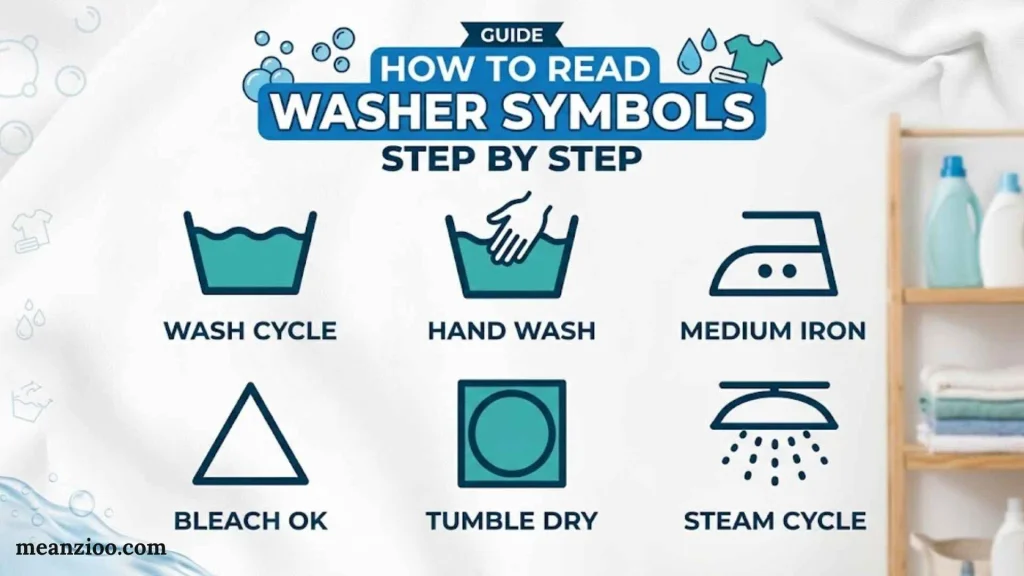
You don’t need to memorize every laundry icon to wash clothes properly. A consistent routine makes it easier to identify the instructions that matter.
Identify Where the Symbol Appears
Start by checking whether the icon appears on your washing machine, clothing tag, detergent drawer, or display screen.
If it’s on the machine, it probably relates to a program, function, or operating condition. If it’s on the garment, it usually describes a care requirement or restriction.
This simple distinction prevents one of the most common laundry mistakes: confusing a machine setting with a garment instruction.
Check the Washing Instructions
Look for the wash tub and any number inside it. The number sets the maximum washing temperature, while underlines indicate a milder washing process.
If the garment has a hand-wash symbol or a crossed-out tub, pay particular attention to that restriction. Don’t select a standard cycle just because the item appears durable.
Select the Correct Washing Machine Program
Match the garment’s care requirements to an appropriate program.
For example, a polyester shirt with a 30°C limit and one underline may need a mild cycle at 30°C or below. A compatible synthetics or delicate program may be suitable, depending on your washer’s design.
Avoid overloading the drum. Even the right program can deliver poor results when clothes don’t have enough room to move.
Check Drying and Ironing Restrictions
Before transferring clothes to the dryer, check the square symbol on the care label.
If the label prohibits tumble drying, choose an approved natural drying method. If it specifies flat drying, place the garment on a suitable surface rather than hanging it by the shoulders.
Check the iron symbol before pressing the garment. A crossed-out iron means ironing isn’t permitted, while dots indicate the maximum temperature level.
Review Special Instructions
Finally, look for the triangle and circle symbols.
The triangle tells you whether bleaching is permitted. The circle provides professional cleaning instructions.
If a symbol is unclear, consult the garment manufacturer’s guidance or your appliance manual rather than guessing.
Which Washer Cycle Should You Use for Different Fabrics?
Fabric type can help you choose a suitable program, but the garment’s care label should always guide the final decision.
Cotton Clothing
Cotton T-shirts, sheets, and towels often work well with a cotton program when their labels permit it.
However, not every cotton garment needs a hot wash. Dark cotton clothing may benefit from lower temperatures to help preserve its color, while printed shirts may have special restrictions.
Check the maximum temperature and drying instructions before choosing a cycle.
Wool and Knitwear
Wool sweaters and knitwear need special attention because moisture, heat, and mechanical action can affect their shape.
For garments labeled machine washable, use a compatible wool program when available. Follow the temperature limit and use a suitable detergent.
After washing, check whether the label requires flat drying. Supporting the garment while it dries can help prevent stretching.
Silk and Delicate Fabrics
Silk and other delicate textiles may need gentle washing, careful rinsing, and controlled drying.
If the label permits machine washing, select a suitable delicate program. Use the recommended temperature and avoid unnecessary spinning.
Some garments require professional care instead. Don’t assume that all silk or delicate fabrics can be washed at home.
Synthetic Fabrics
Polyester, nylon, and blended fabrics are common in everyday clothing, sportswear, and easy-care garments.
A synthetics program may be suitable for many of these items. However, stretch fabrics, coatings, prints, and special finishes can require different treatment.
Check the care label before using high temperatures or tumble drying.
Activewear and Stretch Fabrics
Sportswear may contain elastic fibers or moisture-managing finishes that need careful treatment.
Follow the garment’s washing instructions and avoid excessive heat when the label restricts it. Use a detergent appropriate for the garment and avoid adding fabric softener when the manufacturer advises against it.
Wash heavily sweaty clothing promptly when practical, and don’t leave damp garments sitting in the washer for long periods.
Towels, Bedding, and Bulky Items
Towels, sheets, and bedding can often use a cotton or bedding program when their labels permit it.
Bulky items need enough space to move freely. An overloaded drum may prevent effective washing and rinsing.
Check the washing machine’s load limits and follow the item’s temperature and drying instructions.
Common Mistakes When Interpreting Washer Symbols
Even experienced people make laundry mistakes when they overlook a small marking. Watch out for these common errors:
- Ignoring underlines: They indicate reduced washing action, not a lower temperature.
- Exceeding the temperature limit: A 40°C label doesn’t authorize a 60°C wash.
- Assuming every garment can go in the dryer: Machine washing and tumble drying are separate permissions.
- Confusing dots with lines: Dots indicate temperature levels in certain symbol families, while lines beneath a wash tub indicate a gentler process.
- Misreading bleach instructions: An empty triangle and a crossed-out triangle have opposite meanings.
- Treating every circle as a washer setting: Circles on clothing labels usually relate to professional cleaning.
- Ignoring model-specific icons: Appliance manufacturers may use different symbols for similar functions.
- Choosing a cycle by name alone: A program labeled “cotton” or “quick wash” may not suit every item in that category.
One useful rule is to check the entire symbol, including its dots, lines, letters, and crosses. Small details can change the instruction completely.
How to Prevent Common Laundry Problems
Understanding laundry symbols and meanings helps prevent damage, but good laundry habits matter too.
Preventing Shrinkage
Excessive heat can cause some fabrics to shrink or change shape. Follow the care label’s temperature limits and avoid unsuitable dryer settings.
Wool and certain knitwear deserve extra care because their fibers and construction can react to moisture and mechanical action.
Preventing Color Fading
Separate colors when appropriate, use a suitable detergent, and follow the garment’s washing instructions.
Avoid using bleach unless the label permits it. Even when bleaching is allowed, the product must be compatible with the fabric and dye.
Preventing Stretching and Misshapen Clothing
Choose a washing process that matches the garment’s care requirements. Avoid vigorous wringing and use flat drying when instructed.
For delicate knitwear, handle the garment gently when wet. Its shape may be more vulnerable during this stage.
Reducing Detergent Residue and Persistent Odors
Use the detergent dosage recommended for the load, water conditions, and product. Too much detergent can contribute to residue, while an overloaded drum can interfere with rinsing.
Clean the washer and detergent drawer according to the appliance manual. Leave the door open when appropriate to help the drum dry between loads.
If odors persist, check the manufacturer’s maintenance instructions and investigate possible buildup rather than repeatedly adding more detergent.
What to Do When a Washer Symbol Is Unclear
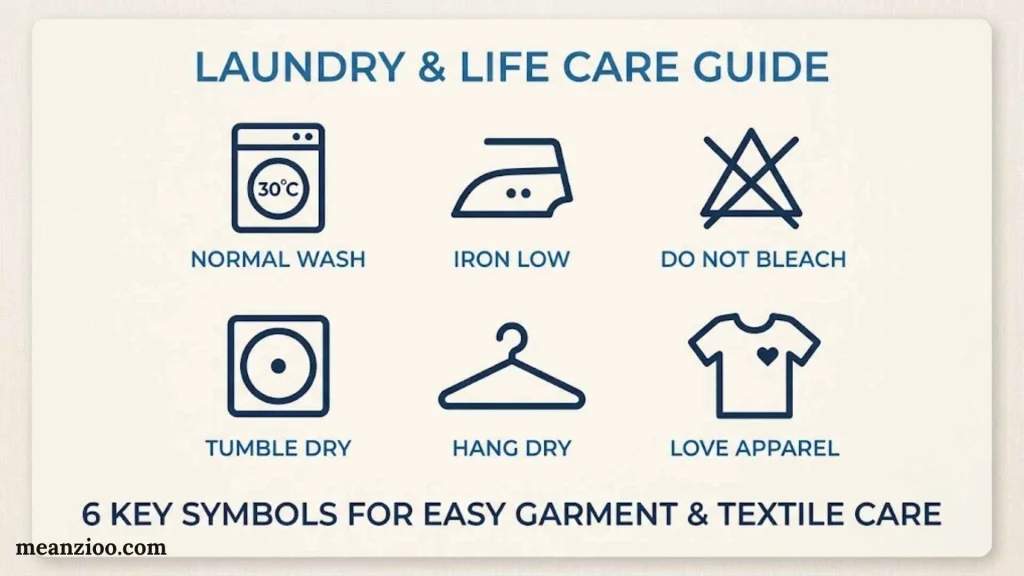
Some appliance icons are obvious. Others are specific to a brand or model, particularly when they relate to steam, automatic dosing, connectivity, or maintenance alerts.
When you can’t identify a symbol:
- Find the washing machine’s brand and model number.
- Check the owner’s manual for the exact icon.
- Consult the manufacturer’s official support documentation.
- Look for accompanying text, lights, or error codes.
- Avoid activating an unfamiliar function when you don’t understand its purpose.
- Follow the garment label when selecting a washing or drying program.
You can also compare the symbol with the manufacturer’s control-panel diagram. That approach is more reliable than assuming every washing machine uses the same icon.
Frequently Asked Questions About Washer Symbols
What Are the Most Common Washer Symbols?
The most common washing machine icons indicate cotton, synthetics, delicate washing, wool, quick wash, temperature, spin speed, rinse, and start or pause functions.
On clothing labels, the main symbols represent washing, bleaching, drying, ironing, and professional cleaning.
What Does a Tub With a Number Mean?
A number inside the wash tub indicates the maximum permitted washing temperature in degrees Celsius under the standard care-label system.
For example, a 30°C marking means you shouldn’t exceed 30°C. You may use a lower temperature when appropriate for the garment and cleaning task.
What Do the Lines Under a Washing Symbol Mean?
One underline indicates a mild washing process, while two underlines indicate a very mild process.
These markings refer to washing action rather than temperature. They help you identify garments that need gentler treatment.
What Does a Crossed-Out Washing Symbol Mean?
A crossed-out wash tub means the garment must not undergo the prohibited washing process.
Don’t assume that a delicate machine cycle is automatically safe. Follow the garment’s care instructions and seek professional advice when necessary.
What Does the Square With a Circle Mean?
A square containing a circle represents tumble drying on a clothing care label.
Dots or other markings can specify the permitted heat level. A crossed-out version means tumble drying isn’t allowed.
What Does the Hand-Wash Symbol Mean?
A hand inside a wash tub indicates hand washing under the specified conditions.
Use an appropriate temperature, avoid vigorous rubbing or wringing, and follow the label’s drying instructions. A machine’s hand-wash program should only be used when suitable for the garment.
What Do the Dots on Laundry Symbols Mean?
Dots indicate temperature levels in certain symbol families, including ironing and tumble drying.
The meaning depends on the symbol surrounding the dots. Don’t apply the ironing temperature scale directly to a dryer symbol or vice versa.
How Do I Know Which Washer Cycle to Use?
Check the garment’s washing instructions, including temperature limits and underlines. Then select a compatible program on your washing machine.
Consider the fabric, garment construction, soil level, and load size. Consult your appliance manual if you can’t determine whether a particular program meets the care requirements.
Can I Wash Clothes at a Lower Temperature Than the Label Shows?
Yes, in many cases. The number inside the wash tub specifies the maximum permitted temperature rather than a temperature that you must always use.
However, a lower temperature may not provide the cleaning performance needed for every load. Consider the type of soil, detergent instructions, and any specific hygiene requirements.
Are Washer Symbols the Same on Every Machine?
No. Manufacturers may use different designs, program names, and feature icons. Some functions are available only on certain models.
The general concepts may be similar, but the owner’s manual is the best reference for identifying an unfamiliar appliance symbol.
Conclusion: Use Washer Symbols to Care for Clothes Correctly
Understanding washer symbols makes it easier to select the right washing machine settings and follow clothing care instructions. The key is to recognize the difference between appliance icons and garment labels.
Start with the wash tub to check washing restrictions and temperature limits. Then review the drying, ironing, bleaching, and professional-cleaning symbols before deciding how to treat the garment.
When a symbol isn’t clear, check the relevant manual or care-label guidance instead of guessing. A few seconds spent checking the instructions can help prevent avoidable damage and keep your clothes looking their best for longer.
Is this conversation helpful so far?

Hi, I’m Charlotte Hayes. I love writing about the newest English slang, pop culture phrases, and digital communication. I spend my time exploring how language evolves across social media, gaming, and everyday conversations. I enjoy sharing easy-to-understand guides that help learners keep up with modern English. My goal is to make every article useful, accurate, and enjoyable for readers around the world.
Books:
- Everyday Slang Dictionary
- Fluent Through Informal English
 Ryan Mitchell