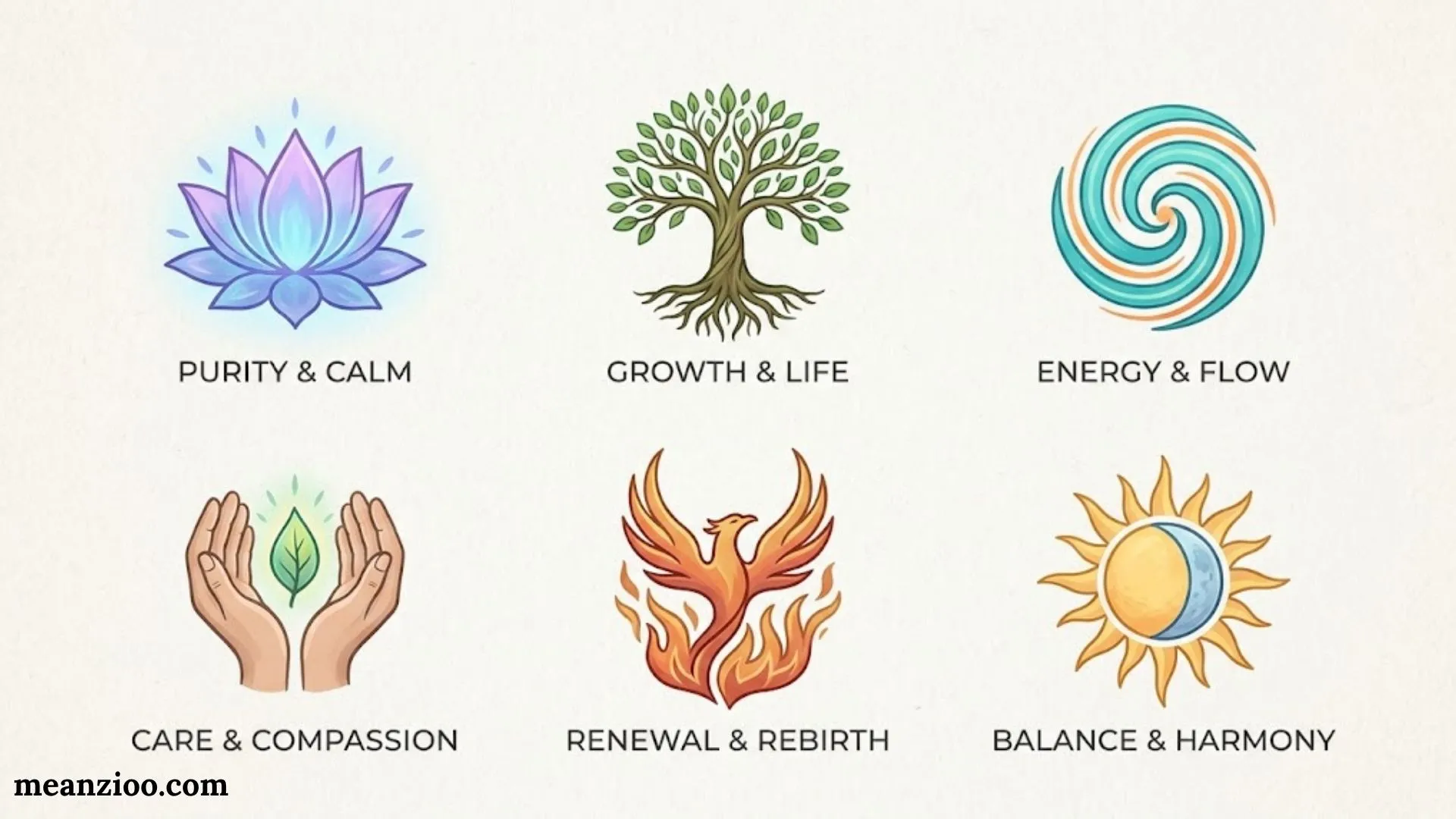
Healing symbols have connected people with ideas of health, protection, recovery, and hope for thousands of years. From an ancient serpent wrapped around a staff to the blue Star of Life on an ambulance, these images communicate powerful messages without saying a word.
Some healing symbols come from ancient mythology. Others developed through religious traditions, cultural practices, or modern healthcare systems. Although they may look similar, their meanings can differ greatly. A symbol associated with spiritual renewal, for example, doesn’t necessarily represent a medical profession.
Understanding these differences helps you recognize the most important medical symbols, discover their historical roots, and appreciate why certain designs remain familiar today.
The Rod of Asclepius represents medicine and healing, while the caduceus has different mythological origins. The Star of Life identifies emergency medical services, and the Bowl of Hygieia connects a serpent and bowl with pharmacy. Other symbols, such as the Eye of Horus and the lotus flower, carry healing-related meanings within particular cultural and religious traditions.
This guide explores the most recognizable symbols of healing, what they represent, where they originated, and how people use them today. It also separates documented history from popular interpretations and explains why symbolic meaning shouldn’t be confused with proven medical effects.
What Are Healing Symbols?
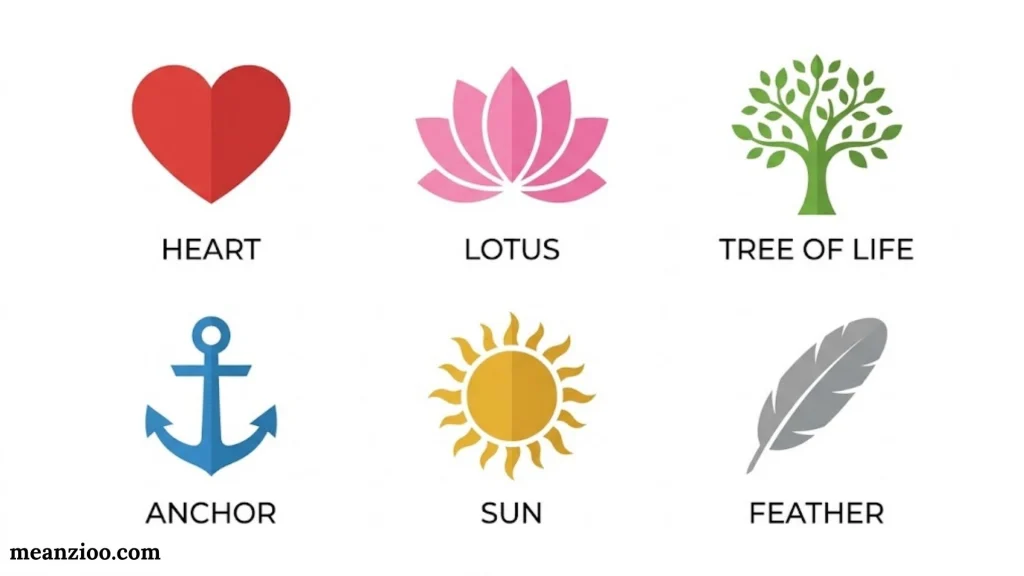
Healing symbols are images, objects, signs, or emblems associated with medicine, recovery, protection, well-being, or spiritual restoration. People use them to communicate ideas that might otherwise require a lengthy explanation.
A serpent winding around a staff can represent the medical tradition associated with Asclepius. A six-pointed blue star can identify emergency medical services. A lotus flower may represent spiritual growth and renewal in Buddhist or Hindu traditions.
Despite their differences, these images share one important feature: their meanings come from the cultural, historical, or professional settings in which people use them.
The Meaning of Healing Symbols
The meaning of a healing symbol depends on its origin and context. Some represent a particular profession, while others express broader beliefs about health and life.
Common associations include:
- Healing and recovery: Returning to health after illness or injury.
- Protection: Seeking safety from illness, danger, or harm.
- Renewal and transformation: Beginning again after hardship or change.
- Balance and harmony: Maintaining a sense of equilibrium between different aspects of life.
- Medical knowledge: Recognizing physicians, pharmacists, nurses, and other healthcare professionals.
- Compassion and service: Expressing care for people who are sick, injured, or vulnerable.
- Spiritual restoration: Representing hope, faith, or personal growth within a religious tradition.
These meanings aren’t universal. A symbol that represents spiritual balance in one tradition may have a different meaning elsewhere.
Healing Symbols vs. Medical Symbols
Although people often use these terms interchangeably, healing symbols and medical symbols aren’t exactly the same.
Healing symbols cover a broad range of cultural, spiritual, historical, and personal meanings. Medical symbols more often identify healthcare professions, medical institutions, emergency services, or specific areas of treatment.
| Symbol or category | Main association | Typical context |
| Rod of Asclepius | Medicine and healing | Medical organizations and professional identity |
| Caduceus | Hermes, communication, and commerce | Mythological imagery and some medical institutions |
| Star of Life | Emergency medical services | Ambulances and EMS identification |
| Bowl of Hygieia | Pharmacy and health | Pharmacy emblems |
| Lotus flower | Spiritual growth and renewal | Religious art and spiritual traditions |
| Eye of Horus | Protection and restoration | Ancient Egyptian religious symbolism |
| Red Cross and Red Crescent | Humanitarian assistance and protected services | Authorized humanitarian and medical contexts |
The distinction matters because not every image associated with healing identifies a healthcare professional. Likewise, not every medical emblem originated as a healing symbol.
Why Symbols Matter in Healthcare and Healing Traditions
A recognizable symbol can help people identify a service quickly, especially in stressful situations. An emergency medical emblem on an ambulance, for example, helps distinguish the vehicle from ordinary traffic.
Symbols also preserve history. The Rod of Asclepius connects modern medicine with ancient Greek healing traditions, while the Bowl of Hygieia reflects the historical relationship between pharmacy and the pursuit of health.
In spiritual settings, symbols can offer a visual expression of hope, faith, or personal meaning. Their emotional significance may matter deeply to individuals even when the symbol itself has no demonstrated therapeutic effect.
The Most Recognized Healing Symbols and Their Meanings
Several designs appear repeatedly in discussions of medical symbolism. The most useful way to understand them is to examine their appearance, historical associations, and modern uses separately.
Rod of Asclepius: The Traditional Symbol of Medicine
The Rod of Asclepius is one of the most widely recognized traditional symbols of medicine. Its design features a single serpent coiled around a staff, usually without wings.
The symbol takes its name from Asclepius, a figure in ancient Greek religion associated with healing and medicine. Ancient Greeks worshipped Asclepius at healing sanctuaries, where religious practices and approaches to treating illness existed alongside one another.
The staff and serpent became lasting visual associations with this healing tradition. Over time, the emblem spread through medical imagery and became an important sign of the healthcare profession.
What does the Rod of Asclepius represent?
Its central associations include:
- Medical practice and the healing profession.
- The historical tradition of Asclepius.
- The relationship between medicine, illness, and recovery.
- Professional identity in healthcare.
The serpent has attracted several interpretations, including renewal and transformation because snakes shed their skin. However, this interpretation shouldn’t be treated as a proven explanation for the symbol’s entire historical development.
Today, the Rod of Asclepius appears in medical logos, professional emblems, and healthcare-related insignia. Its single serpent makes it easy to distinguish from the caduceus.
Caduceus: The Winged Staff of Hermes
The caduceus is a staff featuring two entwined serpents and a pair of wings. It is associated with Hermes in Greek mythology and Mercury in Roman mythology.
Hermes served as a messenger of the gods and was associated with communication, travel, trade, and negotiation. Mercury inherited many of these associations in Roman religion.
The caduceus therefore has a different traditional background from the Rod of Asclepius. Its original associations weren’t primarily centered on medicine.
So why does it appear in healthcare?
In the United States, some medical institutions and military organizations adopted the caduceus as a medical emblem. The U.S. Army Medical Department adopted it in 1902, helping establish its place in American medical insignia.
Its widespread recognition in some American contexts has continued despite the historical distinction between the two staffs.
What does the caduceus mean?
Its traditional associations include:
- Communication and negotiation.
- Commerce and trade.
- Hermes and Mercury.
- In modern institutional settings, medical or healthcare identity.
The important point is that the caduceus and the Rod of Asclepius aren’t interchangeable in their historical origins, even though people sometimes confuse them.
Star of Life: The Emergency Medical Services Symbol
The Star of Life is a blue, six-pointed star associated with emergency medical services (EMS). It commonly features the Rod of Asclepius in its center.
Unlike ancient mythological emblems, the Star of Life developed as a modern emergency-response symbol. It helps people recognize EMS personnel, vehicles, and services.
Its six branches are commonly associated with the main stages of emergency medical response:
- Detection of an emergency.
- Reporting the emergency.
- Dispatching a response.
- Providing care at the scene.
- Providing care during transport.
- Transferring the patient to appropriate definitive care.
The star’s design connects a recognizable medical emblem with the practical work of emergency responders. It can appear on ambulances, uniforms, equipment, and EMS-related signs.
The Star of Life is not the same as the Rod of Asclepius. Instead, it incorporates that older symbol into a design created for emergency medical services.
Bowl of Hygieia: The Symbol of Pharmacy
The Bowl of Hygieia is a traditional pharmacy symbol featuring a serpent associated with a bowl or cup. It takes its name from Hygieia, a Greek goddess connected with health and cleanliness.
Hygieia was associated with maintaining health and preventing illness, while Asclepius was more directly associated with healing. Their related but distinct roles help explain why their symbols appear in different healthcare professions.
The Bowl of Hygieia became a recognizable emblem of pharmacy. Pharmacists and pharmacy organizations have used versions of the design to identify their profession.
Its visual elements are straightforward:
- The bowl provides the distinctive container in the design.
- The serpent connects the emblem with ancient Greek religious and healing imagery.
- The combined image identifies a longstanding tradition of pharmacy symbolism.
The Bowl of Hygieia is especially useful to recognize when distinguishing pharmacy-related emblems from the general medical symbols associated with physicians.
Red Cross and Red Crescent: Humanitarian Medical Emblems
The Red Cross and Red Crescent emblems serve a different purpose from mythological symbols such as the Rod of Asclepius. They identify authorized humanitarian organizations and, in armed conflict, can mark medical personnel, facilities, and transports entitled to protection under international humanitarian law.
The Red Cross emblem originated in 1864, when governments adopted a distinctive sign to identify medical services on battlefields. The Red Crescent was also formally recognized internationally in 1929. The Red Crystal was adopted as an additional emblem in 2005.
These emblems are more than ordinary healthcare logos. Their authorized use carries legal significance.
The International Committee of the Red Cross explains that they have two principal functions:
- Protective use: Identifying people, facilities, and transports entitled to protection under the applicable laws of armed conflict.
- Indicative use: Showing a connection with the International Red Cross and Red Crescent Movement.
The emblems must be used according to applicable rules. They aren’t general-purpose medical icons for any business, product, or individual. Unauthorized use can undermine the protection they are meant to communicate.
This distinction makes the Red Cross and Red Crescent among the most important healthcare symbols to understand correctly.
Traditional and Spiritual Healing Symbols
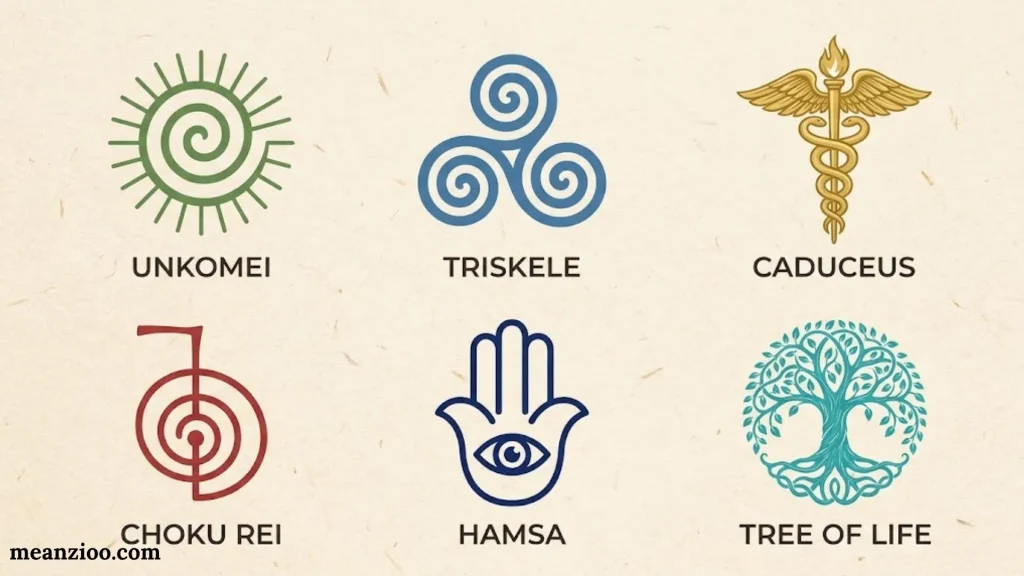
Not all symbols associated with healing identify medical professionals. Many developed within religious traditions, cultural practices, or philosophical systems.
Their meanings deserve careful explanation because modern wellness culture sometimes assigns new interpretations to symbols with much older histories.
Lotus Flower: Renewal and Spiritual Growth
The lotus flower is an important symbol in several Asian religious traditions, particularly Buddhism and Hinduism. It grows in muddy water yet rises above the surface to bloom, making it a powerful image of spiritual development.
In Buddhist traditions, the lotus often represents purity, awakening, and the possibility of developing wisdom despite difficult circumstances. In Hindu traditions, it appears in religious art and is associated with various deities and ideas of beauty, creation, and spiritual significance.
Modern wellness communities sometimes interpret the lotus as a symbol of emotional healing, personal growth, or a fresh start.
However, these meanings depend on context. The lotus doesn’t have one universal meaning across every Asian culture, and its spiritual significance shouldn’t be confused with evidence of a medical benefit.
Yin and Yang: Balance and Harmony
The yin-yang symbol comes from Chinese philosophical traditions. Its familiar circular design contains two interlocking sections, one dark and one light, each containing a small circle of the opposite color.
The symbol represents yin and yang, complementary aspects of existence that interact within a larger whole. It is associated with Chinese philosophical thought and has influenced traditional Chinese medicine, although its philosophical meaning is broader than healthcare alone.
In traditional medical frameworks, concepts of balance help explain how practitioners interpret health and bodily function. These historical ideas should be understood within their own intellectual context rather than automatically equated with modern biomedical explanations.
Today, people also use yin-yang imagery to represent balance, harmony, and well-being. Those interpretations may have personal meaning, but the symbol itself doesn’t demonstrate that a particular treatment works.
Dhanvantari: Healing in Hindu Tradition
Dhanvantari is a Hindu deity associated with Ayurveda, the traditional Indian system of medicine. In Hindu religious traditions, he is regarded as a divine figure connected with health, healing, and medicinal knowledge.
Artistic representations commonly depict Dhanvantari holding objects associated with healing, including a vessel of amrita, the nectar of immortality, in some depictions.
Dhanvantari is not simply a logo or abstract medical emblem. His significance comes from Hindu religious tradition and the historical relationship between Ayurveda and spiritual ideas about health.
For readers researching traditional healing imagery, Dhanvantari illustrates how a culture can express the value of medicine through a revered figure rather than a geometric sign.
Eye of Horus: Protection and Restoration
The Eye of Horus, also known as the Wedjat eye, is an ancient Egyptian symbol associated with protection, restoration, and healing.
Its meaning comes from an Egyptian myth in which Horus’s eye is injured and subsequently restored. The restored eye became a symbol of wholeness and protection.
The Metropolitan Museum of Art describes the Wedjat eye as one of the most popular amulet forms in ancient Egypt. A museum example dating to approximately 1386–1347 BCE represents the healed eye of Horus and reflects ancient Egyptian beliefs about protection and regeneration.
Ancient Egyptians wore Wedjat amulets and used them in funerary contexts. Their significance extended beyond modern ideas of medical treatment to include religious protection and the restoration of wholeness.
Today, people may use the symbol in jewelry, artwork, or spiritual practices. Those contemporary uses don’t necessarily reflect every aspect of its ancient meaning.
Spiral Motifs: Cycles and Renewal
Spiral patterns appear in many artistic and cultural traditions. Depending on the context, they can represent movement, cycles, growth, or continuity.
Some contemporary spiritual practices use spirals to express personal transformation or the journey toward greater self-understanding. However, spirals don’t share one universal meaning. Their interpretation depends on the specific culture, period, and design.
When researching a particular spiral symbol, identify its cultural origin before assigning it a healing-related meaning.
Rod of Asclepius vs. Caduceus: What’s the Difference?
The Rod of Asclepius and caduceus are often confused because both feature serpents wrapped around a staff. Their visual similarities conceal different mythological histories.
The simplest way to distinguish them is to count the snakes and look for wings.
| Feature | Rod of Asclepius | Caduceus |
| Number of serpents | One | Two |
| Wings | Usually absent | Usually present |
| Mythological figure | Asclepius | Hermes or Mercury |
| Traditional meaning | Medicine and healing | Communication, commerce, and negotiation |
| Modern healthcare use | Widely recognized medical emblem | Used by some medical institutions, particularly in the United States |
Which Symbol Is the Correct Symbol of Medicine?
The Rod of Asclepius is generally the more historically direct symbol of medicine. Its association with Asclepius connects it to ancient Greek healing traditions.
The caduceus has a different mythological background. Hermes was a messenger and a god associated with trade and negotiation rather than being primarily a healing deity.
That distinction doesn’t mean every modern organization using the caduceus is using an invalid emblem. Institutions may preserve established designs because of historical tradition, official policy, or public familiarity.
The more accurate conclusion is that the Rod of Asclepius has the stronger traditional connection to medicine, while the caduceus also appears in modern medical contexts.
Why Do Some Hospitals and Medical Organizations Use the Caduceus?
The caduceus gained a foothold in American medical insignia through institutional adoption. The U.S. Army Medical Department adopted the winged caduceus in 1902, and its use helped establish the design in American military medical history.
Several factors can sustain an emblem once an institution adopts it:
- Established organizational tradition.
- Recognition among staff and the public.
- Consistency across uniforms, documents, and insignia.
- The practical difficulty of changing a long-standing visual identity.
Its adoption illustrates an important principle of medical symbolism: a symbol’s modern use doesn’t always match its original mythological meaning.
Why Are Snakes Associated With Healing and Medicine?
The snake is one of the most recognizable features of traditional medical imagery. Its presence on the Rod of Asclepius and the Bowl of Hygieia links modern professional symbols with much older cultural and religious traditions.
Yet no single explanation accounts for every serpent symbol. Snakes have represented different things in different societies, including danger, renewal, wisdom, fertility, protection, and spiritual power.
Snakes in Ancient Greek Healing Traditions
Ancient Greek religion associated Asclepius with healing. Sanctuaries dedicated to him, known as Asclepieia, served as important centers of healing worship.
Epidaurus was among the best-known centers associated with Asclepius. People visited such sanctuaries seeking healing through religious rituals and practices that could include rest, offerings, and incubation, a ritual involving sleeping in a sacred setting.
Serpents appeared in the imagery associated with Asclepius. Their connection to the healing tradition helped make the snake-and-staff design an enduring medical emblem.
These ancient practices weren’t identical to modern healthcare. Understanding them requires recognizing the religious and cultural beliefs that shaped medicine in the ancient world.
Snakes, Renewal, and Transformation
One common interpretation links snakes with renewal because many species shed their skin as they grow.
This visible process can serve as a metaphor for change, restoration, and the beginning of a new stage of life. In some cultural contexts, snakes also represent vitality, danger, wisdom, or protection.
However, it would be misleading to claim that skin shedding fully explains why the snake became part of the Rod of Asclepius. The symbol developed within a broader historical and religious setting.
The Staff and Serpent as a Medical Emblem
The Rod of Asclepius combines two recognizable elements:
- The staff: The central object around which the serpent coils.
- The serpent: An animal associated with the ancient tradition of Asclepius and broader serpent imagery.
Together, they create a distinctive emblem that has endured across centuries.
The caduceus also combines serpents and a staff, but its two serpents and wings identify it as a different symbol. Recognizing this difference helps prevent a common historical mix-up.
The History and Origins of Healing Symbols
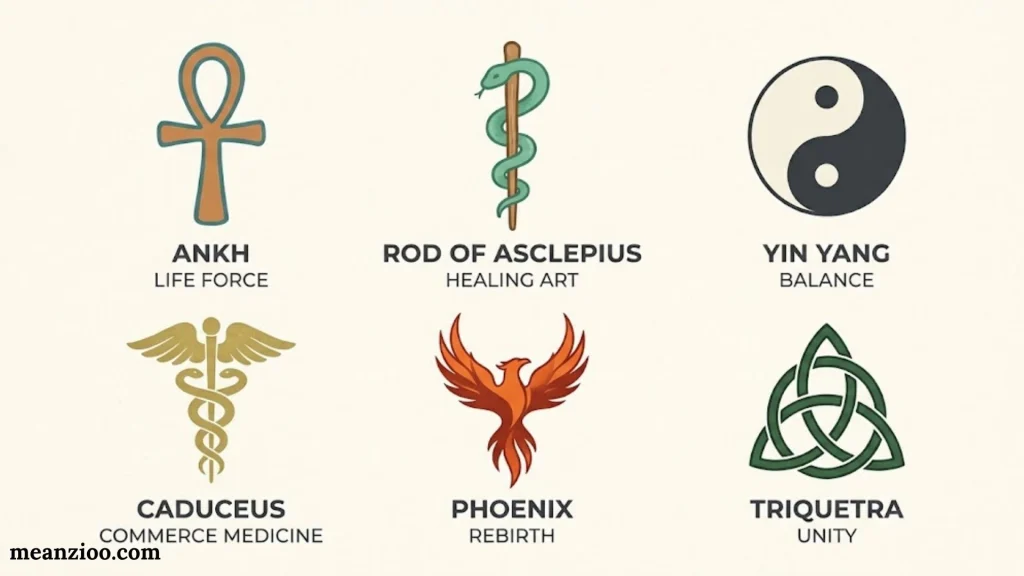
The history of healing symbols reflects changes in religion, medicine, public institutions, and cultural exchange. Some symbols originated in ancient religious traditions, while others developed much later for professional or humanitarian purposes.
Healing Symbols in Ancient Civilizations
Ancient civilizations used religious images, protective objects, and ritual symbols to express beliefs about illness and recovery.
In ancient Egypt, the Wedjat eye represented the restored eye of Horus and carried associations with protection and regeneration. Amulets provided a tangible way to express those beliefs.
In ancient Greece, the cult of Asclepius connected healing with religious practice. The Rod of Asclepius grew from this tradition and eventually became one of the most recognizable symbols of medicine.
Roman culture adopted and adapted many Greek religious traditions. As Roman institutions developed, Greek and Roman mythology continued to influence the artistic imagery associated with medicine and healing.
These traditions weren’t identical, and their symbols didn’t all emerge at the same time.
Healing Symbols in the Medieval Period
During medieval Europe, religious institutions played an important role in caring for the sick. Christian imagery, charitable traditions, and religious ideas about suffering influenced how communities understood illness and care.
Monasteries and hospitals developed within religious and social systems that combined practical care with spiritual beliefs.
At the same time, other cultures maintained their own medical and religious traditions. Islamic medical scholarship, for example, contributed significantly to the preservation and development of medical knowledge during the medieval period.
There wasn’t one universal medieval healing symbol. Instead, imagery reflected local religions, medical institutions, and cultural practices.
The Development of Modern Medical Emblems
As healthcare professions and institutions became more organized, symbols increasingly served practical purposes. They identified medical personnel, distinguished professional organizations, and communicated information quickly.
Several important developments illustrate this change:
- 1864: The first Geneva Convention established the red cross emblem as a distinctive sign for identifying medical services in armed conflict.
- 1902: The U.S. Army Medical Department adopted the caduceus as its emblem.
- 1929: The Red Crescent received formal international recognition alongside the Red Cross.
- Late twentieth century: The Star of Life became widely associated with emergency medical services.
- 2005: The Red Crystal was adopted as an additional emblem under international humanitarian law.
The first, second, third, and fifth milestones are documented in historical and institutional sources. The Star of Life’s development should be described separately from the legal history of humanitarian emblems.
These developments show how medical emblems moved beyond mythology into professional identification, emergency response, and humanitarian protection.
How Healing Symbols Have Changed Over Time
A symbol can retain its original design while gaining new meanings.
The Rod of Asclepius continues to represent medicine, but it now appears on modern logos and digital healthcare interfaces. The caduceus has acquired medical associations in certain institutions despite its older connection to Hermes and Mercury.
Meanwhile, the Star of Life was designed for modern emergency services rather than inherited directly from ancient mythology.
This evolution explains why identifying a symbol’s appearance is only the first step. Its historical origin and present-day use matter just as much.
Healing Symbols Across Different Cultures and Traditions
Different cultures have developed their own ways of expressing healing, protection, and well-being. These ancient healing symbols reflect particular religious beliefs, philosophies, and historical experiences rather than one universal understanding of health.
Ancient Greek and Roman Healing Symbols
Greek and Roman traditions provide several of the most familiar medical symbols.
- Rod of Asclepius: Represents the healing tradition associated with Asclepius.
- Caduceus: Connects with Hermes and Mercury, figures associated with messages, commerce, and negotiation.
- Bowl of Hygieia: Connects pharmacy with Hygieia and ancient Greek ideas about health.
- Apollo: A Greek deity associated with healing, prophecy, music, and protection against disease in different mythological traditions.
These symbols emerged from overlapping religious and cultural traditions. However, they don’t all have the same meaning or historical role.
Ancient Egyptian Symbols Associated With Healing
The Eye of Horus provides a strong example of how healing-related imagery developed beyond Greek mythology.
Its association with a restored eye made it a symbol of protection and regeneration in ancient Egyptian culture. Amulets bearing the design served religious and protective purposes.
The ankh, another well-known ancient Egyptian symbol, represents life. Although modern interpretations sometimes associate it with healing and wellness, its broader historical meaning centers on life rather than a specific medical profession.
Together, these symbols show how ancient cultures expressed ideas about health and protection through religious imagery.
Hindu Healing Traditions
In Hindu traditions, Dhanvantari holds an important place in the history and religious understanding of Ayurveda.
Ayurveda is a traditional Indian medical system with a long history of approaches to diet, lifestyle, health, and treatment. Dhanvantari’s religious significance connects healing with divine knowledge and the preservation of well-being.
The figure is especially relevant when exploring traditional medicine symbols, because it illustrates how a healing tradition may use a deity rather than a single abstract emblem.
Ayurveda contains diverse practices, and its treatments should be assessed individually using appropriate evidence. Religious symbolism alone doesn’t establish the safety or effectiveness of a medical intervention.
Buddhist and Other Asian Traditions
The lotus and yin-yang symbol illustrate two different approaches to symbolism in Asian traditions.
In Buddhism, the lotus frequently represents purity, awakening, and spiritual development. Its ability to bloom above muddy water provides a powerful visual metaphor for growth amid difficulty.
The yin-yang symbol, rooted in Chinese philosophy, represents complementary forces and their interaction. It also influenced traditional Chinese medical frameworks, although its philosophical significance extends far beyond medicine.
Both symbols appear in contemporary wellness settings. However, their meanings depend on the traditions and contexts in which people use them.
Religious and Spiritual Healing Symbols
Religious communities often use sacred images, objects, and gestures to express hope during illness or hardship.
These symbols can offer comfort, strengthen community connections, and provide a meaningful way to express faith. Their significance may be deeply personal.
Still, spiritual meaning and clinical effectiveness are separate questions. A person may find comfort in a religious symbol without the symbol itself having a proven ability to treat an illness.
Respecting that distinction allows an article about symbols of healing to acknowledge their cultural importance without making unsupported health claims.
Healing Symbols Used in Modern Medicine and Healthcare
Today, healthcare symbols help people identify medical services, understand signage, and recognize professional organizations. Their practical value often depends on consistent design and public familiarity.
Medical Symbols in Hospitals and Clinics
Hospitals and clinics use visual signs to help patients locate departments, recognize services, and navigate unfamiliar buildings.
Medical logos may feature a Rod of Asclepius, a cross-shaped design, or another emblem selected by the organization. Some facilities also use simplified icons for pharmacy, emergency care, or specialized departments.
Good medical signage should be clear, accessible, and easy to recognize at a glance. A symbol that looks attractive but confuses patients serves little practical purpose.
Healthcare organizations should also consider local expectations. A symbol widely recognized in one country may have a different level of recognition elsewhere.
Symbols Used by Paramedics and Emergency Medical Services
The Star of Life is particularly relevant to emergency medical services.
It appears on many ambulances and EMS-related materials, helping people identify emergency response services. The Rod of Asclepius at its center links modern emergency care with a long-standing medical emblem.
Paramedic uniforms may also feature department names, service logos, rank markings, and other medical insignia. These designs help identify personnel and distinguish organizations.
However, uniform insignia vary by jurisdiction and employer. Not every paramedic service uses the same badge, shoulder patch, or emblem.
Military Medical Insignia
Military organizations use medical insignia to identify medical personnel and distinguish medical units within their organizational structures.
The Rod of Asclepius and caduceus both appear in military medical history, although their use varies among countries and institutions.
Military medical badges can also communicate a person’s role or affiliation. Their exact appearance depends on the relevant armed service and its official insignia regulations.
It is important to distinguish ordinary professional insignia from protective emblems governed by international humanitarian law. A decorative medical badge doesn’t automatically carry the legal status of a protected humanitarian emblem.
Humanitarian Medical Symbols
The Red Cross, Red Crescent, and Red Crystal have a special role in humanitarian work.
Under applicable international humanitarian law, these emblems identify medical services and other authorized persons or objects entitled to protection. They also identify authorized components of the International Red Cross and Red Crescent Movement.
The International Committee of the Red Cross stresses that the emblems have defined protective and indicative uses. Unauthorized use can undermine their recognition and the protection they are meant to communicate.
For that reason, individuals and businesses shouldn’t treat these designs as ordinary decorative medical icons.
Awareness Ribbons and Disease-Specific Symbols
Awareness ribbons and campaign logos serve a different purpose from traditional medical emblems.
A pink ribbon, for example, is widely associated with breast cancer awareness. It helps organizations communicate support, encourage public discussion, and promote awareness activities.
Such symbols can be meaningful tools for public engagement. However, they don’t identify a medical profession in the same way as the Rod of Asclepius or Star of Life.
Colors and designs may also carry different meanings across organizations and campaigns. When discussing an awareness symbol, identify the specific cause or campaign rather than assuming every similar design communicates the same message.
How to Choose the Right Healing Symbol for Its Intended Use
Choosing a healing symbol starts with understanding what you want it to communicate. A symbol intended for a medical institution may have different requirements from one chosen for a personal tattoo or piece of jewelry.
For Medical Education and Healthcare Communication
If you’re creating educational material or healthcare signage, choose a symbol that accurately represents the service or concept.
Consider these practical guidelines:
- Use the Rod of Asclepius when referring to traditional medical symbolism.
- Use the Star of Life when the context specifically concerns emergency medical services.
- Consider the Bowl of Hygieia for pharmacy-related topics.
- Make sure the symbol remains recognizable at small sizes.
- Check whether the intended audience will understand its meaning.
Avoid selecting an emblem solely because it looks medical. Accuracy matters, especially when a symbol could affect how people interpret healthcare information.
For Personal Art, Jewelry, and Tattoos
Personal use offers more freedom, but understanding a symbol’s history still matters.
Someone choosing the Rod of Asclepius may want to express a connection to medicine. Another person might choose a lotus to represent spiritual growth or a new beginning.
Before choosing a design, ask yourself:
- What does the symbol mean in its original cultural context?
- Does that meaning match the idea you want to express?
- Does the symbol have religious or cultural significance you should understand?
- Are you comfortable with how other people may interpret it?
A symbol can serve as a personal reminder of hope, recovery, or change. Its value doesn’t depend on claiming that it provides supernatural protection or cures illness.
For Healthcare Branding and Uniform Insignia
Organizations choosing medical logos or uniform insignia should focus on clarity, relevance, and appropriate use.
The design should reflect the organization’s actual role and remain legible on uniforms, vehicles, printed documents, and digital platforms.
Before adopting a symbol, organizations should check applicable trademark rules and restrictions on protected humanitarian emblems. The Red Cross, Red Crescent, and Red Crystal require particular care because their use is regulated under international and national law.
A thoughtful design can communicate professional identity effectively without confusing the organization with another service.
Frequently Asked Questions About Healing Symbols
What Is the Most Recognized Symbol of Healing?
The Rod of Asclepius is one of the most widely recognized traditional symbols of medicine and healing. It features a single serpent wrapped around a staff and is associated with Asclepius, the Greek figure connected with healing.
The most familiar symbol can vary by country, profession, and context.
What Is the Difference Between the Caduceus and the Rod of Asclepius?
The Rod of Asclepius features one serpent and usually has no wings. The caduceus features two entwined serpents and typically has wings.
The Rod of Asclepius has a more direct historical association with medicine, while the caduceus traditionally relates to Hermes and Mercury.
Why Is a Snake Used as a Symbol of Medicine?
The serpent appears in the healing tradition associated with Asclepius in ancient Greek religion. Snakes also have broader cultural associations with renewal, transformation, protection, and danger.
However, no single interpretation explains every snake-related healing symbol.
What Does the Star of Life Represent?
The Star of Life is a blue, six-pointed emblem associated with emergency medical services. Its six branches are commonly linked to the stages of emergency response, and its center contains the Rod of Asclepius.
It helps identify EMS personnel, vehicles, and services.
What Is the Symbol of Pharmacy?
The Bowl of Hygieia is a traditional symbol of pharmacy. It depicts a serpent associated with a bowl and takes its name from Hygieia, a Greek goddess connected with health.
Pharmacy organizations may also use other emblems and logos.
What Are Some Ancient Symbols of Healing?
Examples include the Rod of Asclepius, the Bowl of Hygieia, and the Eye of Horus. The lotus flower also carries healing-related interpretations in some modern settings, although its traditional meanings often center on spiritual development and purity.
Each symbol has its own history and cultural context.
Are Spiritual Healing Symbols the Same as Medical Symbols?
No. Spiritual healing symbols express religious, cultural, or personal meanings. Medical symbols more often identify healthcare professions, services, or institutions.
Some symbols overlap, but their purposes and meanings aren’t always the same.
What Does the Lotus Flower Symbolize in Healing?
The lotus often represents purity, renewal, and spiritual growth in Buddhist and Hindu traditions. In contemporary wellness settings, people may also use it to express personal transformation or emotional renewal.
Its meaning varies across traditions, and it isn’t a medical treatment.
Why Does the U.S. Military Use the Caduceus?
The U.S. Army Medical Department adopted the caduceus in 1902. Its use helped establish the winged staff as a familiar medical emblem in American military and institutional settings.
The caduceus remains historically distinct from the Rod of Asclepius.
Do Healing Symbols Have Proven Medical Effects?
A symbol may provide comfort, represent faith, or help someone express personal meaning. However, the symbol itself isn’t an established treatment for disease.
Medical treatments should be evaluated using appropriate scientific evidence rather than the symbolic meaning of an image.
Conclusion: Understanding the Meaning Behind Healing Symbols
Healing symbols tell stories about how people have understood health, illness, protection, and recovery across different periods and cultures.
The Rod of Asclepius connects medicine with ancient Greek healing traditions. The caduceus has a different mythological background, while the Star of Life identifies modern emergency medical services. The Bowl of Hygieia represents pharmacy, and the Eye of Horus reflects ancient Egyptian beliefs about protection and restoration.
Other symbols, including the lotus and yin-yang, carry cultural or philosophical meanings that extend beyond medicine.
The key is to understand each symbol in its proper context. Its appearance, historical origin, and modern use all help explain what it communicates.
Whether you’re researching medical symbols and their meanings, studying ancient traditions, or selecting an emblem for a personal project, a little historical knowledge goes a long way. It helps you appreciate the symbol without confusing cultural significance with medical evidence.

I’m Ryan Mitchell, and I write about modern English, trending slang, and online expressions. I enjoy explaining the meanings, origins, and real-life usage of popular words in a simple way. I believe learning slang is an important step toward understanding today’s English-speaking culture. Through my work, I aim to help readers speak more naturally and stay updated with the latest language trends.
 Charlotte Hayes