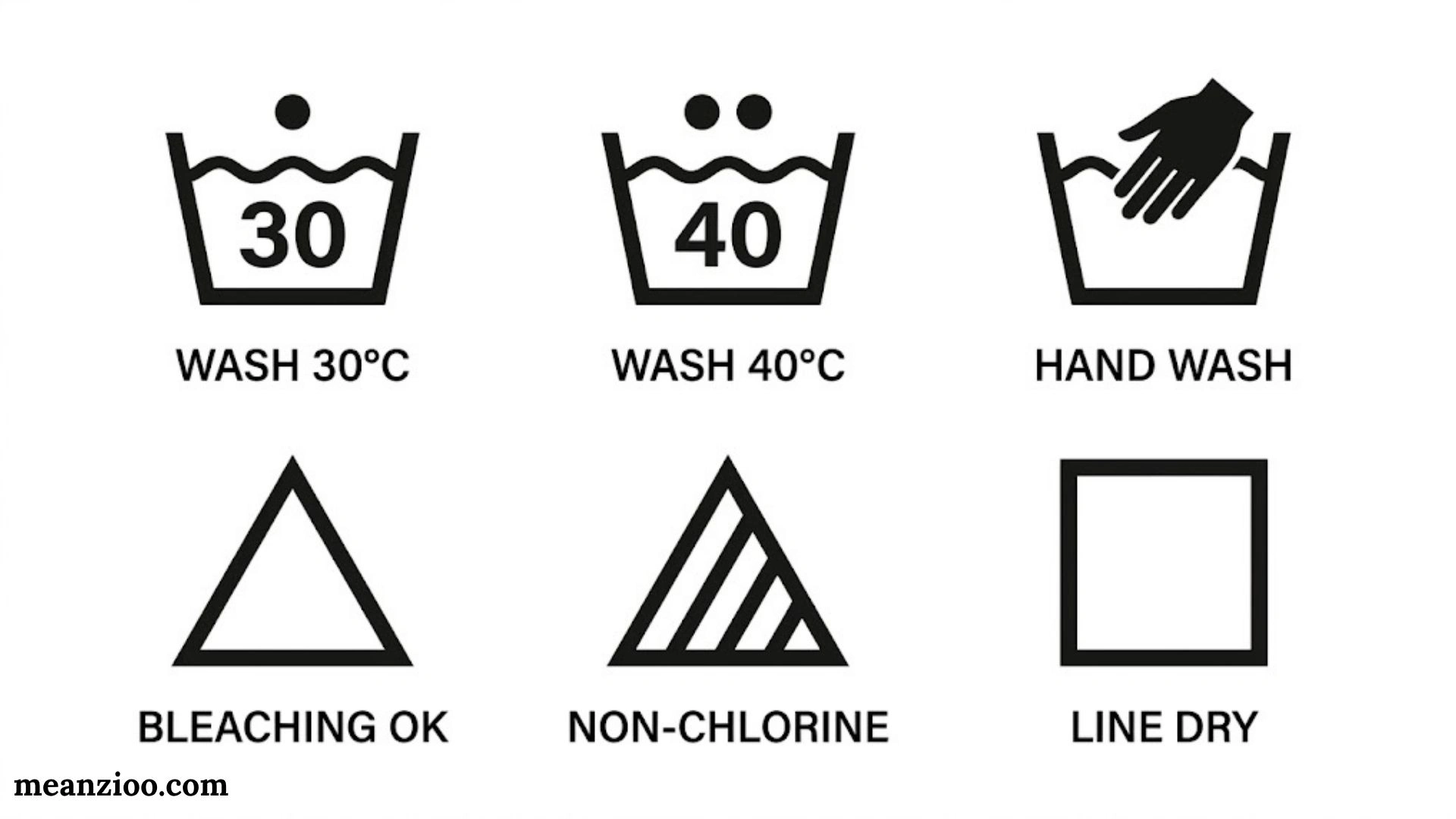
Have you ever looked at a clothing label and wondered whether you should machine-wash, hand-wash, or dry-clean your favorite shirt? Those tiny symbols provide important instructions, but they can look confusing until you understand what each one means.
Knowing the wash symbols meaning helps you choose the right water temperature, washing cycle, drying method, and ironing setting. It also helps you avoid common laundry problems such as shrinking, fading, stretching, and heat damage.
Clothing manufacturers use laundry symbols, also called laundry care symbols or clothing care symbols, to communicate essential garment-care instructions. These symbols cover five main areas: washing, bleaching, drying, ironing, and professional textile care.
This guide explains the most common washing symbols, their variations, and how to use them when doing laundry. You’ll also learn how to interpret dots, numbers, lines, and crossed-out symbols, along with practical tips for caring for different fabrics.
Laundry Symbols and Their Meanings: Quick Reference Chart
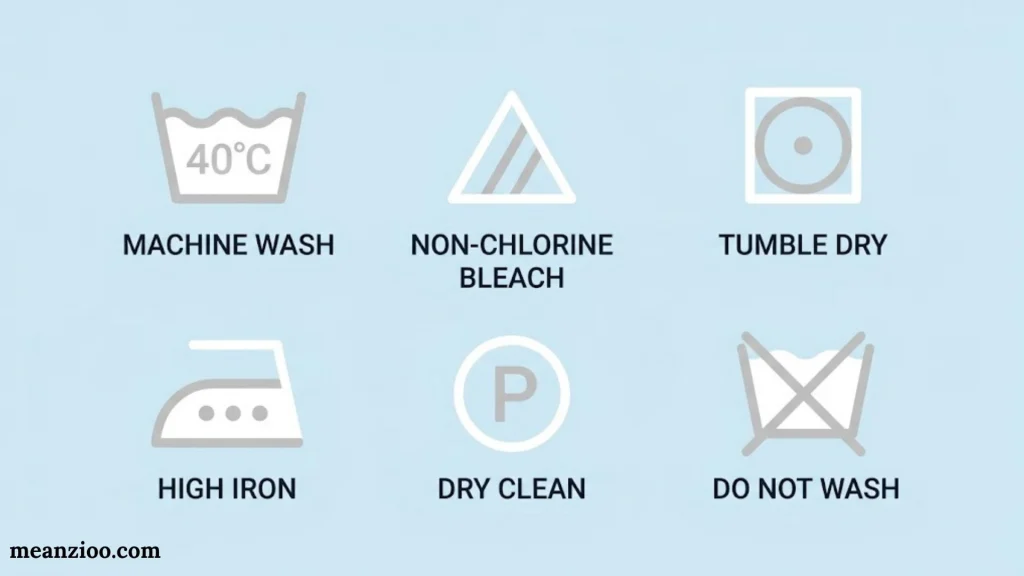
The easiest way to understand laundry symbols and their meanings is to recognize the five basic shapes used on clothing care labels. Each shape represents a different type of treatment.
| Symbol category | What the symbol looks like | Meaning |
| Washing | A washtub filled with water | Explains whether and how to wash the garment |
| Bleaching | A triangle | Shows whether bleach is permitted |
| Drying | A square | Provides drying instructions |
| Ironing | An iron | Indicates whether and how to iron the fabric |
| Professional care | A circle | Gives instructions for professional dry cleaning or wet cleaning |
These five categories form the foundation of the international textile-care symbol system described by GINETEX, which references ISO 3758:2023.
However, the basic shape is only the beginning. Additional marks explain the limits of each treatment.
- Dots indicate temperature or heat levels in applicable symbol systems.
- Numbers inside a wash tub specify the maximum washing temperature in degrees Celsius under the international ISO-based system.
- Horizontal lines beneath a symbol indicate a gentler treatment in the international system.
- A crossed-out symbol means you must not use the treatment represented by that symbol.
- Lines inside a square can indicate natural drying methods, such as hanging or laying a garment flat.
For example, a washtub with a temperature number tells you how hot the water can be. A square containing a circle identifies tumble drying, while dots inside that circle indicate the permitted heat level.
Always interpret the complete symbol rather than focusing on one mark in isolation.
How to Read Laundry Symbols on Clothing Labels
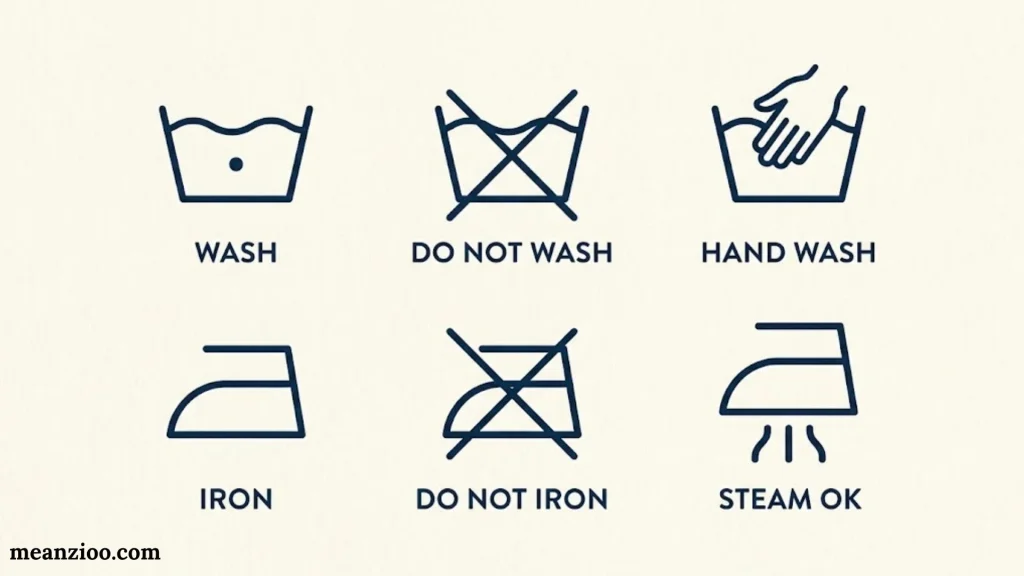
Learning to read laundry label symbols becomes much easier once you know what each part represents. Start with the main shape, then look for additional markings that explain temperature, treatment intensity, or restrictions.
Understand the Five Main Care Symbols
Most complete international care labels present their instructions in this order:
- Washing: How to wash the garment.
- Bleaching: Whether bleaching agents are allowed.
- Drying: Which drying methods are suitable.
- Ironing: Whether ironing is permitted and how much heat to use.
- Professional textile care: Which professional cleaning methods are allowed.
Not every label displays every symbol. However, when a complete international symbol sequence appears, this is the standard order.
Learn What Dots, Lines, and Crosses Mean
The smaller details often determine whether a particular laundry method is safe.
Dots commonly indicate temperature levels in drying and ironing symbols. Some US-style washing symbols also use dots to communicate water-temperature limits. The meaning depends on the symbol and the applicable standard.
Numbers inside international wash-tub symbols specify maximum water temperatures in degrees Celsius. A tub marked 30, for example, means you shouldn’t exceed 30°C.
One horizontal bar beneath a wash tub indicates a milder washing process. Two bars indicate a very mild process in the international system.
Crossed-out symbols prohibit the corresponding treatment. A crossed-out triangle means no bleaching, while a crossed-out iron means no ironing.
Never assume that one marking applies to every symbol category. A line beneath a wash tub doesn’t mean the same thing as a horizontal line inside a drying square.
Read the Entire Care Label Before Washing
A garment might tolerate water but still be unsuitable for tumble drying. Another might be washable at a low temperature but require careful ironing.
That’s why you should read all available garment care instructions before starting a load.
For example, a blouse might allow machine washing at a low temperature while prohibiting tumble drying. In that case, use the permitted washing cycle and choose an appropriate alternative drying method.
Practical rule: Follow the complete care label, not just the washing symbol. Each instruction addresses a different part of the garment’s care.
Washing Symbols and Their Meanings
Washing symbols explain whether a garment can be washed at home and how carefully you need to handle it. These markings help you choose suitable water temperatures, washing cycles, and levels of mechanical action.
Machine Wash Symbol
The basic machine wash symbol is a washtub containing water. It indicates that domestic washing is permitted, subject to any additional restrictions.
Look for numbers, dots, or lines that modify the symbol. These details can specify the maximum temperature or indicate that the garment needs a gentler washing process.
For example, a cotton T-shirt might tolerate a regular machine cycle, while a lightweight blouse may require a delicate program. Don’t assume both garments can handle the same treatment simply because both display a washtub.
When choosing a machine setting, consider:
- The temperature indicated on the care label.
- Whether the garment requires a normal, gentle, or very gentle cycle.
- The recommended spin speed, where relevant.
- Whether the fabric is likely to snag, stretch, or lose its shape.
The washing symbol provides the care limit. Your washing machine’s settings help you stay within it.
Hand Wash Symbol
The hand wash symbol shows a hand inside a washtub. It indicates that the garment requires hand washing under the applicable care instructions.
Hand washing reduces the mechanical action that can damage delicate fibers, decorative details, and certain garment constructions. However, it doesn’t mean you should scrub the fabric vigorously.
To hand-wash a suitable garment:
- Fill a clean basin with water at the temperature specified on the label.
- Add a suitable detergent and dissolve it before introducing the garment.
- Submerge the item and move it gently through the water.
- Rinse thoroughly without twisting or stretching the fabric.
- Remove excess water carefully and reshape the garment.
- Follow the label’s drying instructions.
Avoid aggressive rubbing, especially around seams, embroidery, and delicate knitwear.
Some washing machines offer a hand-wash program. However, don’t assume that this program is an acceptable substitute for actual hand washing in every case. Follow the garment’s instructions.
Do Not Wash Symbol
A do not wash symbol shows a crossed-out washtub. It means you shouldn’t wash the garment using the prohibited domestic washing treatment.
Some items contain finishes, trims, linings, adhesives, or combinations of materials that may not withstand water and agitation. Others may be unsuitable for domestic washing because of their construction or size.
Check the rest of the label for professional cleaning instructions. If it specifies dry cleaning, take the garment to a qualified cleaner and point out any visible stains or damage.
Don’t automatically assume that a garment marked do not wash must be dry-cleaned. Follow the actual professional-care instructions provided on its label.
Washing Temperature Symbols
The correct water temperature can help protect fabric color, shape, and strength.
International ISO-based washing temperature symbols use numbers inside the washtub. These numbers specify the maximum water temperature in degrees Celsius.
| Temperature marking | Maximum temperature | General guidance |
| 30 | 30°C / 86°F | Suitable for garments requiring a low washing temperature |
| 40 | 40°C / 104°F | Permitted for garments that can tolerate warmer washing |
| 60 | 60°C / 140°F | Suitable only when the care label permits this temperature |
| 95 | 95°C / 203°F | A high-temperature treatment for items specifically designed to tolerate it |
These are examples of international numeric markings, not a recommendation to wash every garment at those temperatures.
US-style labels may use written instructions such as cold, warm, or hot. Some symbol systems also use dots to indicate temperature limits. Don’t assume that a dot has one universal temperature value across all categories and standards.
Cold water can help reduce dye bleeding and energy use in many everyday laundry situations. Warm water can suit garments whose labels permit it. Hot water should be reserved for items that can tolerate the higher temperature.
The care label takes priority over general advice about fabric type or washing convenience.
Lines Beneath the Wash Tub
Lines beneath the washtub indicate reduced washing intensity in the international symbol system.
- One line: Use a mild washing process with reduced mechanical action.
- Two lines: Use a very mild process, often suitable for particularly sensitive textiles.
These markings can help you choose between normal, gentle, and delicate washing programs. They don’t necessarily specify an exact spin speed for every machine.
For example, a wool sweater with a very gentle washing instruction may need a specialized wool program, a reduced load, and careful handling after washing.
Washing Machine Cycles and Spin Settings
Modern washing machines offer several programs, but their names aren’t always standardized. One manufacturer’s delicate cycle may differ from another’s.
A normal wash cycle generally uses more mechanical action than a delicate program. A permanent press cycle is designed to help reduce wrinkling in suitable fabrics. A delicate cycle usually provides gentler movement.
The spin cycle removes water from the load. Higher spin speeds extract more water but can place additional mechanical stress on some garments.
When the label calls for mild treatment, consider reducing the spin speed if your machine allows it. For delicate or shape-sensitive items, avoid excessive twisting when removing the garment.
Remember that machine-program names are not necessarily individual clothing label symbols. Use the label to identify the required treatment, then select the closest suitable machine setting.
Bleaching Symbols and Their Meanings
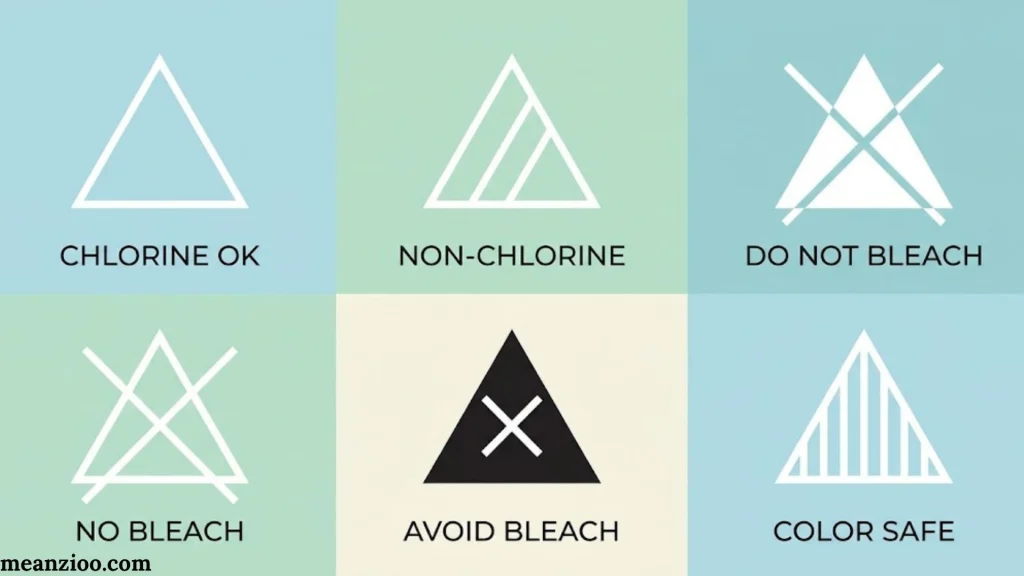
The triangle is the main symbol used for bleaching instructions in the international care-label system. It tells you whether bleaching is allowed and, in some cases, which type of bleach you may use.
Empty Triangle: Bleaching Allowed
An empty triangle means bleaching is permitted under the international system.
This doesn’t mean bleach is necessary or that you should use it with every wash. Choose a bleaching product only when it suits the garment, the cleaning task, and the product’s own instructions.
Triangle with Diagonal Lines: Oxygen Bleach Only
A triangle containing two diagonal lines indicates that oxygen-based or non-chlorine bleach is allowed, but chlorine bleach isn’t permitted under the international system.
Oxygen bleach is commonly used in products designed to help remove certain stains while protecting suitable colored fabrics. However, formulations differ, and not every oxygen-bleach product is appropriate for every garment.
Check both the clothing label and the bleach product’s directions before use.
Crossed-Out Triangle: Do Not Bleach
A crossed-out triangle means bleaching isn’t allowed.
Bleach can damage dyes, weaken sensitive fibers, or affect decorative details. Even a product marketed for colors may be unsuitable for a particular garment.
If the label prohibits bleaching, choose a compatible detergent and follow the garment’s permitted washing instructions instead.
Chlorine Bleach vs. Oxygen Bleach
These bleaching agents aren’t interchangeable.
- Chlorine bleach: A strong bleaching agent used in products formulated for specific cleaning and whitening tasks.
- Oxygen bleach: A category of bleaching agents used in many laundry products, including some marketed for colored fabrics.
- Non-chlorine bleach: A label commonly used for bleach products that don’t rely on chlorine-based bleaching agents.
Always check the garment’s triangle symbol before using a bleaching product. Don’t rely on the garment’s color or fiber content alone.
Drying Symbols and Their Meanings
The square is the main drying symbol. Its additional markings explain whether you can tumble-dry a garment or should use a natural drying method.
Correct drying matters because heat and mechanical movement can shrink fabrics, stretch knitwear, damage elastic, and affect garment shape.
Tumble Dry Symbol
A square containing a circle represents tumble drying in common international care-label systems.
The symbol indicates that the garment may be dried in a tumble dryer, subject to any additional markings.
Dots inside the circle specify the permitted temperature level in the applicable system. More dots generally indicate a higher permitted heat level.
Don’t interpret permission to tumble-dry as permission to use the hottest setting. A garment may tolerate tumble drying only under a restricted temperature or a mild drying process.
Do Not Tumble Dry Symbol
The do not tumble dry symbol is a square containing a circle with a cross over it.
It means you shouldn’t use a tumble dryer for the garment. Instead, check whether the label permits line drying, drip drying, or flat drying.
Heat and tumbling can damage certain synthetic fabrics, shrink some natural fibers, and distort delicate constructions. Even when a garment feels sturdy, its lining, elastic, print, or trim may be sensitive to dryer heat.
When the label prohibits tumble drying, don’t assume that a low-heat setting makes the dryer safe.
Dryer Temperature Symbols
Dots inside the tumble-dryer symbol indicate the permitted heat level.
| Dryer marking | General meaning |
| One dot | Low-temperature tumble drying |
| Two dots | Medium-temperature tumble drying |
| Three dots | High-temperature tumble drying |
| Crossed-out square with a circle | Do not tumble dry |
Use this table as a general guide to common dot-based symbols. The exact permitted temperature depends on the applicable care-label standard.
Some international systems also use specific drying-process markings. For example, a mild tumble-drying symbol can indicate reduced thermal action. Follow the full symbol rather than relying on the number of dots alone.
Hang to Dry Symbol
Natural-drying symbols appear inside a square without a circle. A square with a vertical line generally indicates line drying in the international system.
Hanging a garment allows water to drain while air circulates around the fabric. This works well for many everyday clothes, provided the item can support its own weight while wet.
However, some knitwear and delicate garments can stretch if you hang them while they’re heavy with water. Check whether the label instead calls for flat drying.
Drip Dry Symbol
The drip dry symbol generally uses vertical lines inside a square. It indicates a natural drying method in which the garment can drip dry.
This approach can be useful for delicate items that shouldn’t undergo intensive wringing or water removal. Place the garment where dripping water won’t cause damage and allow sufficient airflow.
Avoid squeezing or twisting the item unless its care instructions permit that treatment.
Dry Flat Symbol
The dry flat symbol generally shows a horizontal line inside a square.
It indicates that the garment should dry horizontally rather than hanging vertically. This can help preserve the shape of wool sweaters, knitwear, and other items that may stretch under their own weight.
To dry an item flat, place it on a clean, absorbent surface in a well-ventilated area. Reshape it gently and avoid direct heat unless the care label specifically allows it.
Dry in the Shade
An additional diagonal line in applicable international natural-drying symbols indicates drying in the shade.
Shade drying can help protect some colors and heat-sensitive textiles from direct sunlight. It doesn’t eliminate the need for airflow, so avoid leaving damp clothes in a cramped or poorly ventilated space.
Do Not Wring Symbol
A crossed-out twisted-garment symbol means you shouldn’t wring the garment.
Twisting can stretch fibers, distort seams, and damage delicate fabric structures. Instead, press out excess water gently if the care instructions allow it. You can also place the garment between clean towels and press lightly to absorb moisture.
Choosing the Right Drying Method
Your choice depends on the label, garment construction, and available equipment.
- Tumble drying: Use only when the label permits it.
- Line drying: Suitable for garments whose instructions allow hanging.
- Drip drying: Useful when the garment should drain without vigorous water removal.
- Flat drying: Helps protect garments that can stretch when wet.
- Shade drying: Appropriate when the label specifies protection from direct sunlight.
Never assume that a garment safe to wash is also safe to tumble-dry. These are separate care decisions.
Ironing Symbols and Their Meanings
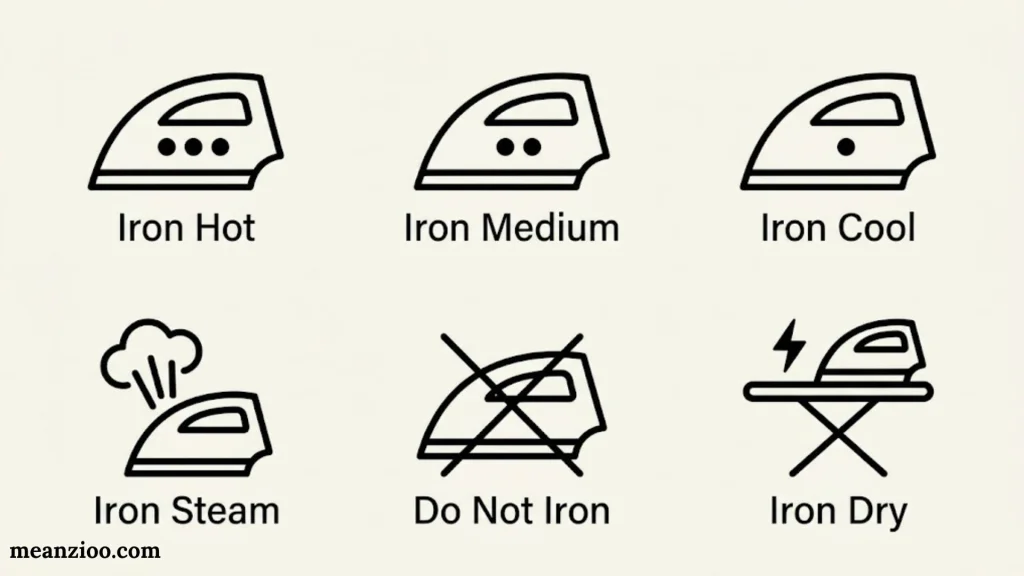
The iron-shaped symbol tells you whether you can iron a garment and how much heat it can tolerate.
Incorrect ironing can cause shine, scorching, melted fibers, flattened textures, or permanent damage to decorative details.
Do Not Iron Symbol
A crossed-out iron means do not iron.
Some synthetic fabrics and garments with special finishes can suffer irreversible damage from direct heat. If the label prohibits ironing, don’t assume that a quick pass at a low setting is safe.
If the garment needs wrinkle reduction, consider an alternative only when compatible with its care instructions. For example, hanging a garment properly after washing may help some wrinkles relax naturally.
Low, Medium, and High Ironing Temperatures
Dots inside the iron symbol indicate the permitted ironing temperature in common care-label systems.
| Iron symbol marking | General meaning | Typical care approach |
| One dot | Low heat | Use a low temperature and extra caution with steam |
| Two dots | Medium heat | Use a moderate setting |
| Three dots | High heat | Use higher heat only when the label permits it |
| Crossed-out iron | Do not iron | Avoid ironing the garment |
Don’t assume that every standard assigns identical temperature limits to these markings. Use the applicable label instructions and the iron’s settings.
Ironing Different Fabrics
Fiber content can offer helpful context, but the care label should guide the final decision.
- Silk: May require low heat and careful handling.
- Polyester: Often needs a lower temperature than heat-tolerant natural fabrics.
- Wool: May benefit from gentle pressing and a suitable protective cloth.
- Cotton: Can tolerate higher heat in some constructions, but blends and finishes may require less.
- Linen: Often needs careful temperature control and may be easier to press when slightly damp if the label permits it.
Always check the garment label before ironing. Decorative prints, coatings, pleats, and bonded materials can change the appropriate treatment even when two garments contain the same fiber.
Steam Ironing and Heat-Sensitive Fabrics
Some garments are sensitive to steam as well as direct heat. Certain care instructions specifically prohibit steam ironing.
When ironing is allowed, test the setting on a discreet area if the garment’s construction permits it. Avoid applying prolonged pressure to delicate or textured surfaces.
If the label prohibits ironing, choose a different wrinkle-management method rather than risking permanent damage.
Dry Cleaning Symbols and Professional Care Instructions
The circle symbol identifies professional textile care. Depending on the markings, it can provide information about dry cleaning or professional wet cleaning.
These symbols are mainly intended to help professional cleaners choose an appropriate treatment.
Circle Symbol: Professional Cleaning
A circle on a care label indicates professional-care instructions rather than ordinary home washing.
The circle may contain letters that specify permitted processes or solvents. Additional lines beneath the circle can indicate a milder professional treatment in the applicable international system.
If your garment displays professional-care instructions, show the label to the cleaner. Mention stains, previous cleaning attempts, or visible damage because these details can affect the treatment decision.
Circle with P or F
In common international dry-cleaning symbols, the letters P and F identify different professional cleaning processes and solvent restrictions.
These letters aren’t simple recommendations to choose any dry cleaner. They communicate technical information about the cleaning method.
A professional cleaner can interpret the complete symbol and determine whether their equipment and process are suitable for the garment.
Don’t try to reproduce a professional dry-cleaning process at home using ordinary detergents or stain removers.
Circle with W: Professional Wet Cleaning
Professional wet cleaning uses water, specialized equipment, suitable detergents, and controlled mechanical action.
It differs from simply putting a garment in a household washing machine. Professional wet cleaning can also involve specialized finishing methods designed to help preserve the garment’s shape and appearance.
The circle with W identifies professional wet-cleaning instructions in applicable international symbol systems. Follow the complete marking and any additional restrictions.
Do Not Dry Clean Symbol
A crossed-out circle means professional dry cleaning isn’t permitted under the applicable care instructions.
Check the rest of the label for another permitted cleaning method. If the garment is also unsuitable for domestic washing, ask a professional cleaner for advice rather than experimenting with an unapproved treatment.
Avoid solvent-based stain removers when the label prohibits the relevant cleaning process.
What Do Lines Beneath the Circle Mean?
In the international system, one or two bars beneath a professional-care symbol indicate a milder or very mild treatment.
These restrictions can relate to factors such as mechanical action, temperature, or moisture levels during the cleaning process.
Professional cleaners use these details to select a suitable process. Consumers don’t need to memorize every technical setting, but understanding the markings helps them communicate the garment’s requirements.
How US Laundry Symbols Differ from International Symbols
Laundry symbols charts don’t always look identical across countries. Some labels use internationally standardized pictograms, while others use US-style symbols or written instructions.
The important distinction is that similar-looking markings may use different conventions. A chart created for one system shouldn’t automatically be treated as a universal reference.
US Care Symbols and International ISO Symbols
The international ISO 3758 system uses five main symbol categories: washing, bleaching, drying, ironing, and professional textile care.
Within that system, numeric temperatures in the wash tub are expressed in degrees Celsius. Other markings indicate the permitted treatment or restrictions.
US garment labels may use written instructions such as “machine wash cold,” “tumble dry low,” or “cool iron.” US textile-care symbols can also use visual markings, but their details should be interpreted using the relevant convention.
When comparing labels, pay attention to:
- Whether the washing temperature appears as a number or another marking.
- The meaning of dots inside drying and ironing symbols.
- Whether a crossed-out symbol prohibits a particular treatment.
- The exact letters and lines used in professional-care instructions.
If you’re unsure which system a chart represents, use the complete care label and consult an authoritative reference rather than guessing.
Are Laundry Care Labels Required in the United States?
The US Federal Trade Commission administers the Care Labeling Rule, found in 16 CFR Part 423.
The rule generally requires manufacturers and importers of covered textile wearing apparel and certain piece goods to provide adequate care instructions. It also addresses warnings about cleaning methods that could damage a product.
Under the rule, covered apparel generally needs a washing or dry-cleaning instruction, subject to the rule’s scope and exceptions. The requirements aren’t simply a mandate to print the five international pictograms on every garment.
How to Choose the Right Laundry Settings for Different Fabrics
Understanding fabric care symbols is more useful than relying on fabric names alone. Two garments made from the same fiber can have different care requirements because of their construction, dyes, finishes, linings, and decorative elements.
Cotton and Linen
Cotton and linen garments can vary widely in their tolerance for heat and agitation.
Some cotton T-shirts tolerate machine washing and tumble drying. Others contain prints, elastic, or blends that require gentler treatment.
Linen may wrinkle easily and can shrink under unsuitable conditions. Check the label for washing temperatures, drying methods, and ironing limits before choosing a program.
Wool and Knitwear
Wool and knitwear may stretch, shrink, or lose shape when exposed to excessive heat or mechanical action.
If the label permits washing, choose the specified gentle process and avoid aggressive wringing. Flat drying may help preserve the garment’s shape when the label calls for it.
Don’t assume that every wool garment must be hand-washed. Some products are designed for machine washing, while others require professional care.
Silk and Other Delicate Fabrics
Silk garments can be sensitive to abrasion, water, heat, and certain cleaning products. Their care requirements depend on the specific fabric and garment construction.
Follow the label closely. If it specifies hand washing, use gentle handling. If it requires professional cleaning, don’t substitute home washing without reliable guidance.
The same principle applies to delicate lace, beaded clothing, and garments with fragile embellishments.
Polyester and Other Synthetic Fabrics
Synthetic fibers often have different heat tolerances from cotton or linen. High dryer temperatures or excessive ironing heat can damage some synthetic garments.
Check the washing and drying instructions before choosing a machine program. Use the specified ironing temperature if ironing is permitted.
A garment’s blend matters, too. A polyester-cotton shirt may need different treatment from a shirt made entirely of cotton.
Jeans, Towels, and Everyday Clothing
Jeans, towels, T-shirts, and bed linen are common laundry items, but they don’t all require identical treatment.
For jeans, follow the label’s temperature and drying instructions to help protect color and fit. Towels may tolerate more intensive washing than delicate clothing, but their labels still matter. T-shirts with prints or elastic components may need gentler drying than plain cotton garments.
Use the care label to make the final decision rather than assuming that every item in the same category can share one setting.
Common Laundry Symbol Mistakes to Avoid
Even familiar laundry care symbols can be misinterpreted. Avoid these common mistakes to reduce the risk of damaging clothing.
- Confusing washing with tumble drying: A washtub refers to washing, while a square containing a circle refers to tumble drying.
- Ignoring temperature limits: A garment that tolerates washing may still require a low water temperature.
- Overlooking lines beneath symbols: These can indicate gentler treatment in international care-label systems.
- Assuming all bleach is interchangeable: A triangle with diagonal lines restricts bleaching to oxygen-based products in the international system.
- Using high dryer heat automatically: Permission to tumble-dry doesn’t necessarily permit the highest heat setting.
- Ironing without checking the dots: Temperature limits matter, especially for synthetic and delicate fabrics.
- Treating professional wet cleaning as home washing: Professional wet cleaning uses controlled processes that household washing machines don’t replicate.
- Relying on fiber content alone: Finishes, trims, linings, and fabric blends can change the care requirements.
One final mistake deserves attention: assuming that following the label guarantees every stain will disappear. Care instructions specify treatments intended to protect the textile, but they don’t guarantee complete stain removal. GINETEX makes this distinction in its textile-care guidance.
Frequently Asked Questions About Wash Symbols
What do laundry symbols mean?
Laundry symbols explain how to care for clothing and other textiles. The main categories cover washing, bleaching, drying, ironing, and professional textile care. Additional markings can specify temperature limits, gentler treatment, or prohibited methods.
What does the washing tub symbol mean?
The washtub represents washing instructions. Numbers inside the tub specify the maximum washing temperature in the international ISO-based system. Additional lines may indicate a milder or very mild washing process.
How do I know if clothes can go in the washing machine?
Check the washtub symbol and any additional markings. A crossed-out washtub means you shouldn’t use the prohibited washing treatment. A hand inside the tub indicates hand washing, while other markings may specify temperature or gentleness.
What does a crossed-out washing symbol mean?
A crossed-out symbol generally means the treatment represented by that symbol isn’t permitted. A crossed-out washtub prohibits washing under the applicable care instructions. A crossed-out triangle prohibits bleaching, and a crossed-out iron prohibits ironing.
What do the dots on laundry symbols mean?
Dots commonly indicate temperature or heat levels in drying and ironing symbols. Some US-style washing symbols also use dots. Their exact meaning depends on the symbol category and the applicable standard, so don’t assume every dot represents the same temperature.
What does a square with a circle mean on clothes?
A square containing a circle represents tumble drying in common care-label systems. Dots inside the circle indicate the permitted heat level in applicable systems. A crossed-out version means you shouldn’t tumble-dry the garment.
What does a triangle mean on a laundry label?
The triangle indicates bleaching instructions in the international system. An empty triangle permits bleaching, a triangle with two diagonal lines restricts bleaching to oxygen-based products, and a crossed-out triangle prohibits bleaching.
What does a circle with a letter mean on a clothing label?
A circle with a letter provides information about professional textile-care processes. In dry-cleaning symbols, letters such as P and F identify different processes or solvent restrictions. The complete symbol should be interpreted using the relevant care-label standard.
Can I wash clothes labeled dry clean only?
Don’t assume that home washing is safe for a garment labeled dry clean only. Water, agitation, and household detergents can affect its fabric, lining, finish, or shape. Follow the label and ask a professional cleaner if you’re unsure about an alternative method.
Where can I find a laundry symbols chart?
You can use the quick-reference chart near the beginning of this guide. For detailed international symbol meanings, consult the GINETEX care-symbol reference. For US care-label requirements, consult the FTC’s official rule.
Final Thoughts on Understanding Laundry Symbols
Learning the wash symbols meaning doesn’t require memorizing every marking at once. Start by recognizing the washtub, triangle, square, iron, and circle. Then check the dots, numbers, lines, and crosses that explain each treatment’s limits.
Before washing a garment, read the complete care label and select suitable settings for washing, bleaching, drying, ironing, and professional cleaning. When a symbol isn’t clear, consult a reliable reference instead of guessing. A few seconds spent checking the label can help you protect your clothes and keep them in good condition for longer.

Hi, I’m Charlotte Hayes. I love writing about the newest English slang, pop culture phrases, and digital communication. I spend my time exploring how language evolves across social media, gaming, and everyday conversations. I enjoy sharing easy-to-understand guides that help learners keep up with modern English. My goal is to make every article useful, accurate, and enjoyable for readers around the world.
Books:
- Everyday Slang Dictionary
- Fluent Through Informal English
 Ryan Mitchell