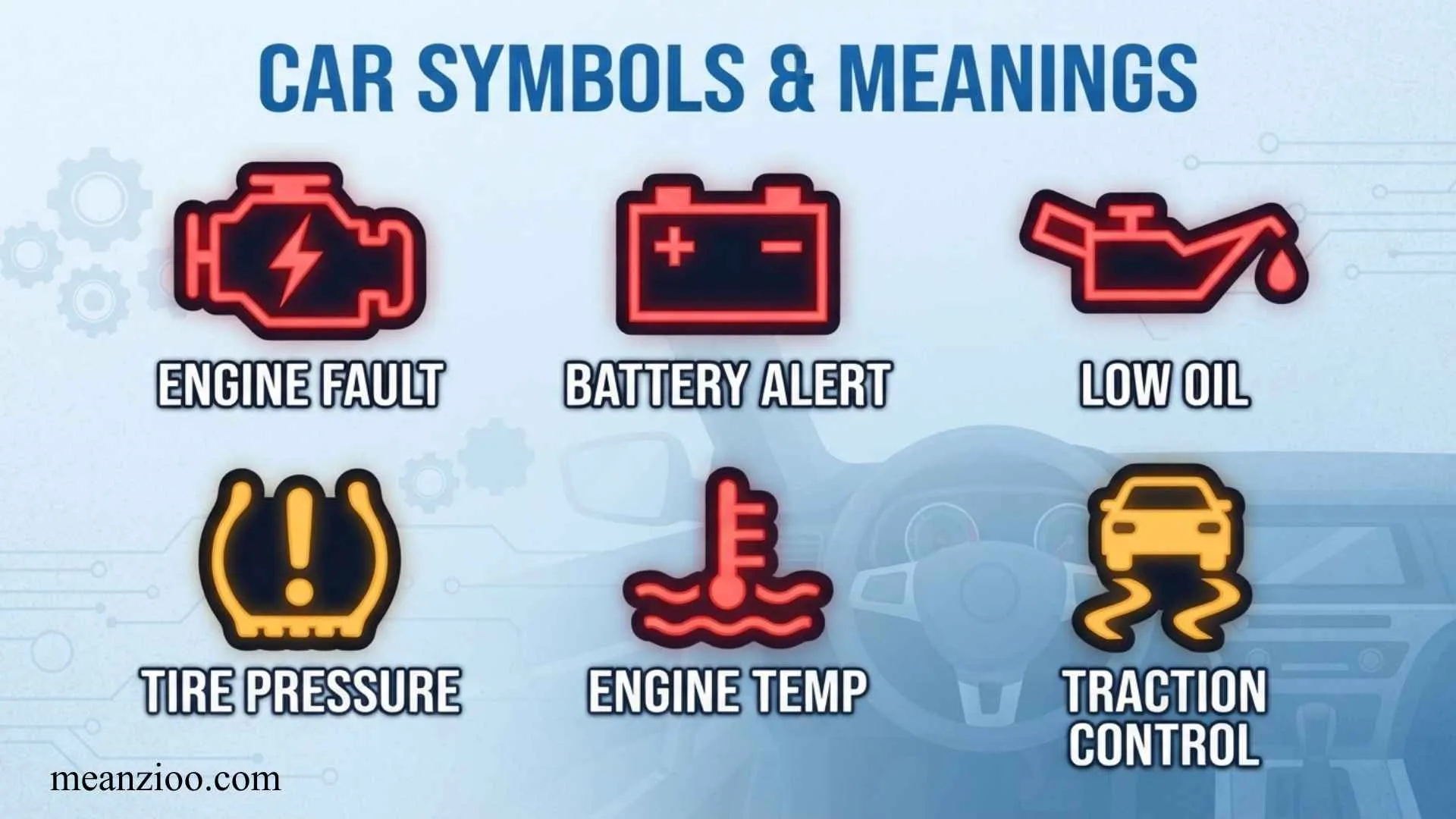
Understanding car symbols and meanings is essential for every driver. Your car’s dashboard uses different symbols and warning lights to communicate everything from active features to serious mechanical problems.
Some dashboard lights are simply informational, while others can warn you about issues with the engine, brakes, battery, tires, steering, airbags, or transmission. Knowing what these symbols mean can help you react quickly and decide whether you can continue driving or need professional assistance.
In this guide, you’ll learn the meanings of the most common car dashboard symbols, what different warning-light colors indicate, the difference between flashing and solid lights, and what you should do when a warning appears.
What Do Car Dashboard Symbols Mean?
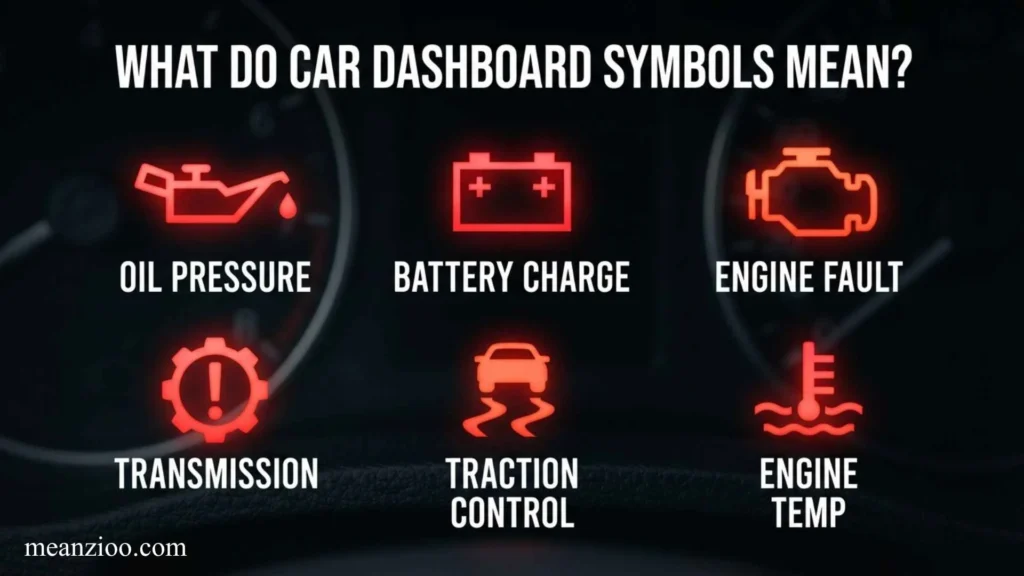
Car dashboard symbols are visual indicators that communicate information about your vehicle. They can show that a system is operating, alert you to a problem, or remind you that your vehicle needs maintenance.
The exact appearance of dashboard symbols can vary depending on the make, model, and year of your vehicle. Modern cars may also have additional symbols for hybrid systems, electric vehicles, driver-assistance features, and advanced safety technology.
Your vehicle’s owner’s manual is always the best source for the exact meaning of a symbol on your particular car.
What Do Dashboard Warning Light Colors Mean?
The color of a dashboard light provides an important clue about its urgency.
Red Dashboard Lights
Red warning lights generally indicate a serious problem or an important safety issue.
Common examples include:
- Engine oil pressure warning
- Engine overheating warning
- Brake-system warning
- Certain charging-system warnings
- Some power-steering warnings
If a red warning appears while driving, safely pull over and check your owner’s manual before continuing.
Yellow or Amber Dashboard Lights
Yellow or amber lights generally indicate a problem or condition that needs attention.
Examples include:
- Check engine light
- ABS warning
- Tire-pressure warning
- Traction-control warning
- DPF warning
An amber light does not always mean you need to stop immediately, but it should not be ignored.
Green Dashboard Lights
Green dashboard lights are usually informational. They commonly indicate that a feature or system is active.
Examples include:
- Turn signals
- Cruise control
- Low-beam headlights
- Some lane-assistance systems
Blue Dashboard Lights
Blue is commonly used for informational indicators. The best-known example is the high-beam indicator.
White Dashboard Lights
Some vehicles use white symbols to display information about vehicle settings or system status. Their meaning depends on the manufacturer.
What Is the Difference Between a Flashing and Solid Warning Light?
Whether a warning light is flashing or solid can affect how urgently you need to respond.
What Does a Solid Warning Light Mean?
A solid warning light generally means the vehicle has detected a condition or fault that needs attention.
For example, a steady check engine light can indicate a problem with the engine or emissions system.
What Does a Flashing Warning Light Mean?
A flashing warning light can indicate a more urgent problem.
For example, a flashing check engine light may indicate a serious engine misfire. Continuing to drive in this situation could potentially cause additional damage.
However, flashing does not always mean an emergency. A traction-control light may flash when the system is actively working to prevent wheel slip.
Always check your owner’s manual for the specific warning.
Common Car Symbols and Meanings
Check Engine Light
The check engine light is represented by an engine-shaped symbol. It indicates that the vehicle’s computer has detected a problem involving the engine, emissions system, or related components.
Possible causes include:
- Faulty sensors
- Ignition problems
- Fuel-system faults
- Emissions problems
- Catalytic-converter issues
- Electrical faults
- A loose fuel cap on some vehicles
Can You Drive With the Check Engine Light On?
If the check engine light is steady and the vehicle feels normal, you may be able to drive cautiously for a short distance while arranging a diagnostic check.
If the light is flashing, the engine is running roughly, power has decreased, or other serious symptoms appear, stop driving when it is safe to do so.
Engine Oil Pressure Warning Light
The oil-pressure symbol normally looks like an oil can with a drop of oil.
It generally indicates low engine oil pressure. Low oil pressure can prevent important engine components from receiving adequate lubrication and may result in severe engine damage.
What Should You Do When the Oil Warning Light Comes On?
Safely stop the vehicle and switch off the engine. If appropriate, check the oil level according to your vehicle manufacturer’s instructions.
If the oil level is normal but the warning remains illuminated, do not continue driving until the problem has been investigated.
Battery Warning Light
The battery symbol usually shows a battery with positive and negative signs.
This warning commonly indicates a problem with the vehicle’s charging system rather than simply a low battery.
Possible causes include:
- Alternator failure
- Battery problems
- Damaged wiring
- Loose electrical connections
- Charging-system faults
Can You Drive With the Battery Warning Light On?
Avoid unnecessary driving and have the charging system checked as soon as possible. If the alternator stops charging the battery, the vehicle may eventually lose electrical power and stop.
Brake Warning Light
The brake warning symbol may look like an exclamation mark inside a circle or display the word “BRAKE.”
Depending on the vehicle, it may indicate:
- The parking brake is engaged
- Low brake fluid
- A brake-system fault
- Another braking-system problem
What Should You Do If the Brake Warning Light Stays On?
First, make sure the parking brake is completely released.
If the warning remains on, consult the owner’s manual and arrange an inspection.
If the brake pedal feels soft, braking performance changes, or stopping the vehicle becomes difficult, do not continue driving.
ABS Warning Light
The ABS symbol usually contains the letters “ABS” inside a circle.
ABS stands for Anti-lock Braking System. The warning indicates that the vehicle has detected a problem with its anti-lock braking system.
Your conventional brakes may still operate, but the anti-lock function may not work correctly.
Is It Safe to Drive With the ABS Light On?
If the ABS warning is the only light illuminated and the brakes feel normal, drive cautiously and have the system checked.
If the ABS warning appears together with a red brake warning or braking performance changes, stop driving and seek professional assistance.
Tire Pressure Warning Light
The tire-pressure symbol usually looks like a horseshoe-shaped tire with an exclamation mark.
It generally means that one or more tires have low pressure or that the tire-pressure monitoring system has detected a problem.
Possible causes include:
- A puncture
- Normal air loss
- Temperature changes
- Tire damage
- A faulty TPMS sensor
What Should You Do When the Tire Pressure Light Comes On?
Check all four tire pressures using the specifications provided by the vehicle manufacturer.
If a tire is significantly underinflated or damaged, do not continue driving normally. Have the tire inspected or repaired.
Engine Temperature Warning Light
The engine-temperature symbol normally shows a thermometer above waves.
It usually indicates that the engine is overheating or that there is a problem with the cooling system.
Possible causes include:
- Low coolant
- A coolant leak
- Cooling-fan problems
- A faulty thermostat
- Water-pump problems
Can You Drive With the Temperature Warning Light On?
If the engine is overheating, stop somewhere safe and switch off the engine.
Do not remove a hot, pressurized coolant-system cap because hot coolant can cause serious burns. Allow the vehicle to cool and follow the manufacturer’s instructions.
Airbag Warning Light
The airbag symbol usually shows a person sitting in front of a circular airbag.
This warning can indicate a fault with the airbag or supplemental restraint system.
The system may include airbags and seat-belt pretensioners, so an illuminated warning should not be ignored.
What Should You Do About an Airbag Warning?
Arrange a professional inspection as soon as practical. A fault could affect how the vehicle’s safety restraint system operates during a collision.
Seat Belt Warning Light
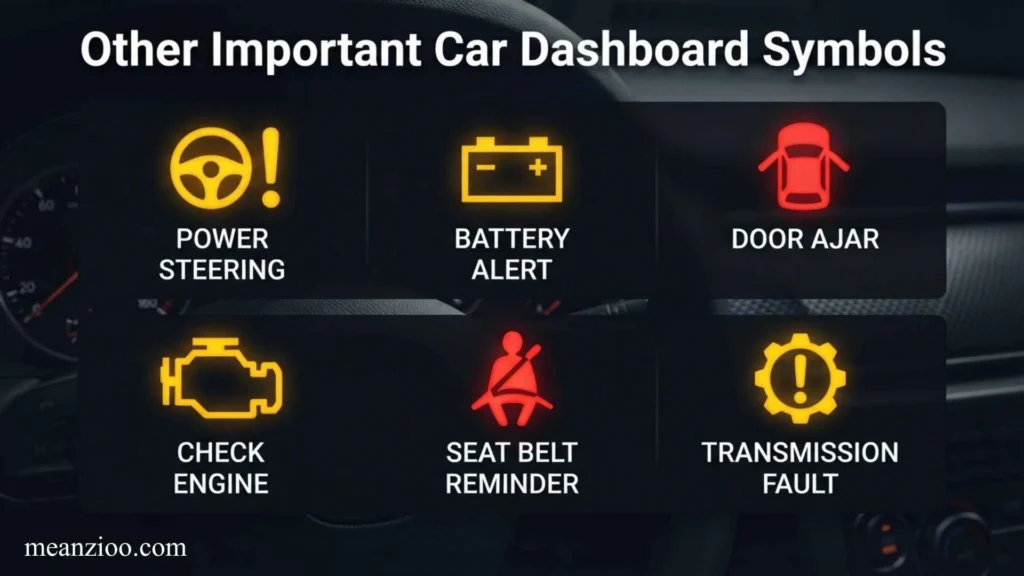
The seat-belt symbol shows a person wearing a seat belt.
It generally indicates that the driver or passenger is not properly buckled.
Some vehicles also provide an audible warning.
Make sure everyone in the vehicle is properly secured before driving.
Power Steering Warning Light
The power-steering warning usually shows a steering wheel with an exclamation mark.
It can indicate a problem with the power-steering system.
If power assistance is lost, the steering wheel may become significantly harder to turn.
Can You Drive With a Power Steering Warning?
If the steering becomes unusually heavy or difficult to control, stop in a safe location and seek assistance.
Do not continue driving if you cannot safely control the vehicle.
Traction Control Warning Light
The traction-control symbol commonly shows a car with wavy lines underneath.
A flashing light may indicate that the traction-control system is actively preventing wheel slip, particularly on wet, icy, or slippery roads.
A light that remains on may indicate that the system has been switched off or has detected a fault.
Electronic Stability Control Warning Light
The electronic stability control symbol generally shows a car with wavy lines underneath.
Depending on the manufacturer, the system may be called:
- ESC
- ESP
- VSC
- DSC
- Stability Control
A flashing indicator can mean the system is actively correcting wheel slip.
If it remains illuminated, the system may be disabled or may have detected a fault.
Low Fuel Warning Light
The low-fuel symbol looks like a fuel pump.
It means the fuel level has reached a low point.
The amount of fuel remaining when the warning appears varies between vehicles, so do not rely on a universal distance estimate.
Refuel as soon as practical.
Parking Brake Warning Light
The parking-brake symbol may display a “P” or an exclamation mark inside a circle.
It commonly indicates that the parking brake is engaged.
If the light remains illuminated after the parking brake is released, it can indicate a brake-system issue on some vehicles.
Brake Pad Warning Light
Some vehicles have a separate warning for brake-pad wear.
It generally means that the brake pads may need inspection or replacement.
Arrange a brake inspection rather than waiting until braking performance becomes poor.
Diesel Car Symbols and Meanings
Diesel vehicles can have additional dashboard symbols that are not found on many gasoline-powered cars.
DPF Warning Light
The DPF symbol usually looks like a filter containing dots or small markings.
DPF stands for Diesel Particulate Filter. It captures particulate matter from diesel exhaust.
A DPF warning may indicate that the filter requires regeneration or that the system has detected a problem.
Follow the manufacturer’s instructions rather than ignoring the warning.
Glow Plug Warning Light
The glow-plug symbol normally looks like a coil or spiral.
It is commonly found on diesel vehicles.
The light may illuminate briefly before starting as part of normal operation.
If it stays on or begins flashing while driving, consult the owner’s manual and arrange a diagnostic check.
AdBlue or DEF Warning Light
Some diesel vehicles use AdBlue or Diesel Exhaust Fluid as part of their emissions-control system.
A warning can indicate that the fluid level is low or that the emissions system has detected a fault.
Follow the manufacturer’s instructions because ignoring a low-fluid warning can eventually affect the vehicle’s ability to restart on some models.
Other Important Car Dashboard Symbols
EPC Warning Light
The EPC symbol stands for Electronic Power Control and is used on some vehicles, particularly certain Volkswagen Group models.
It can indicate a problem involving electronic engine or throttle control.
Because the exact meaning varies by vehicle, check the owner’s manual and have the vehicle diagnosed if the warning remains on.
Immobilizer or Security Warning Light
This symbol may show a car with a key, lock, or security icon.
It relates to the vehicle’s anti-theft or immobilizer system.
A brief appearance during startup can be normal on some vehicles.
A persistent or flashing warning may indicate a key-recognition problem or a security-system fault.
Transmission Warning Light
A transmission warning may appear as a gear, transmission, or warning symbol.
It can indicate a problem with the transmission or its electronic control system.
Possible symptoms include:
- Hard shifting
- Delayed gear engagement
- Gear slipping
- Reduced performance
- Limited gears
A persistent transmission warning should be diagnosed promptly.
Coolant Level Warning Light
Some vehicles have a separate coolant-level warning.
It may indicate that the coolant level is low or that there is a leak.
Never open the cooling system while the engine is hot.
Washer Fluid Warning Light
The washer-fluid symbol usually shows a windshield with water spray.
It indicates that the washer-fluid level is low.
It is generally not an emergency, but keeping sufficient washer fluid is important for maintaining visibility.
Door Open Warning Light
This symbol usually shows a vehicle with one or more doors open.
It indicates that a door, trunk, tailgate, or sometimes the hood has not been properly closed.
Stop safely and check all closures before continuing.
Headlight and Lighting Symbols
High Beam Indicator
The high-beam symbol is usually a blue headlamp.
It indicates that the high beams are switched on.
Switch to low beam when approaching other drivers to avoid dazzling them.
Low Beam Headlight Indicator
This symbol indicates that the vehicle’s low-beam headlights are active.
It is generally an informational indicator rather than a fault warning.
Front Fog Light Indicator
This symbol indicates that the front fog lights are switched on.
Use fog lights according to local road rules and visibility conditions.
Rear Fog Light Indicator
The rear fog-light symbol indicates that the rear fog lamps are active.
Because rear fog lights are very bright, switch them off when they are no longer necessary.
Turn Signal Indicators
Green left and right arrows indicate that the corresponding turn signal is active.
If a turn signal starts flashing much faster than normal, the vehicle may have detected a failed bulb or another electrical problem.
Modern Driver-Assistance Symbols
Modern vehicles can display additional symbols for cameras, radar, sensors, and advanced safety systems.
Lane Departure Warning
This symbol may show a vehicle between lane markings.
It can indicate that the system has detected an unintended lane departure or that the system is active.
Lane Keeping Assist
This symbol indicates that lane-keeping assistance is active, available, or operating.
The exact symbol and colors vary by manufacturer.
Blind Spot Monitoring
The blind-spot monitoring system warns you when another vehicle is detected in a blind spot.
The warning may appear in the side mirror, instrument cluster, or both.
Always check mirrors and blind spots yourself because driver-assistance systems have limitations.
Forward Collision Warning
A collision-warning symbol can indicate that the vehicle has detected a potential hazard ahead.
Depending on the vehicle, it may provide visual and audible warnings.
Automatic Emergency Braking
This symbol can indicate that automatic emergency braking is active, unavailable, or has detected a possible collision.
It should never replace paying attention to the road and maintaining a safe following distance.
Adaptive Cruise Control
This symbol indicates that adaptive cruise control is available, active, or set.
Depending on the vehicle, it may also show the selected speed and following distance.
Parking Sensor Warning
Parking-assistance symbols can indicate that sensors have detected an obstacle or that the parking system is active.
Always check your surroundings because parking sensors have limitations.
Start-Stop System Indicator
This symbol indicates that the automatic start-stop system is active, unavailable, or disabled, depending on how it appears.
Hybrid and Electric Vehicle Symbols
Hybrid and electric vehicles use additional symbols related to electric motors, high-voltage batteries, and charging systems.
EV System Warning Light
An EV-system warning can indicate a fault involving the vehicle’s high-voltage propulsion system.
Follow the manufacturer’s instructions and seek qualified assistance when necessary.
Charging Indicator
This symbol indicates that the vehicle is connected to a charger or is charging.
The exact color and display depend on the vehicle.
High-Voltage Battery Indicator
The battery display shows the available charge level of an electric vehicle or the status of a hybrid battery.
It is different from the conventional 12-volt battery warning light.
Regenerative Braking Indicator
Some hybrid and electric vehicles display a symbol when energy is being recovered during braking or deceleration.
This is generally an operating-status indicator rather than a fault warning.
Can You Drive With a Dashboard Warning Light On?
Whether you can continue driving depends on the specific warning, its color, whether it is flashing, and how the vehicle is behaving.
Warning Lights That Usually Require You to Stop
You should generally stop as soon as safely possible for warnings involving:
- Engine oil pressure
- Engine overheating
- Serious brake problems
- Loss of steering control
- Certain critical EV-system warnings
- A flashing check engine light accompanied by serious symptoms
Warning Lights That May Allow Careful Driving
Some warnings may allow limited driving if the vehicle feels normal, including:
- A steady check engine light
- ABS warning
- Tire-pressure warning
- Some traction-control faults
- Some DPF warnings
The correct response depends on the vehicle and the specific warning.
Warning Lights That Are Usually Informational
Green and blue indicators generally show that a vehicle feature is active rather than that the car has developed a fault.
What Should You Do When a Car Warning Light Comes On?
Knowing the correct response can prevent a small problem from becoming more serious.
Check the Warning Light Color
Determine whether the symbol is red, amber, yellow, green, blue, or another color.
Check Whether the Light Is Flashing
A flashing warning can indicate a more urgent problem, although this depends on the symbol.
Read the Vehicle Display
Many modern cars provide a text message alongside the warning symbol.
Check How the Vehicle Is Behaving
Look for symptoms such as:
- Loss of power
- Unusual engine noises
- Smoke
- Burning smells
- Overheating
- Heavy steering
- Soft brakes
- Unusual vibrations
- Difficulty changing gears
Check the Owner’s Manual
The owner’s manual provides the most accurate information for your specific make, model, and year.
Stop if the Vehicle Is Unsafe
If the warning is serious or the vehicle is behaving abnormally, safely pull over.
Have the Vehicle Inspected
A professional can inspect the vehicle and use diagnostic equipment to identify faults that cannot be determined from the dashboard symbol alone.
Why Do Dashboard Warning Lights Turn On and Then Disappear?
A warning light may disappear when the vehicle no longer detects the condition that triggered it.
For example, a temporary sensor reading may return to normal.
However, an intermittent warning should not automatically be considered harmless.
If the same warning keeps returning, have the vehicle inspected.
Why Does My Dashboard Warning Light Stay On?
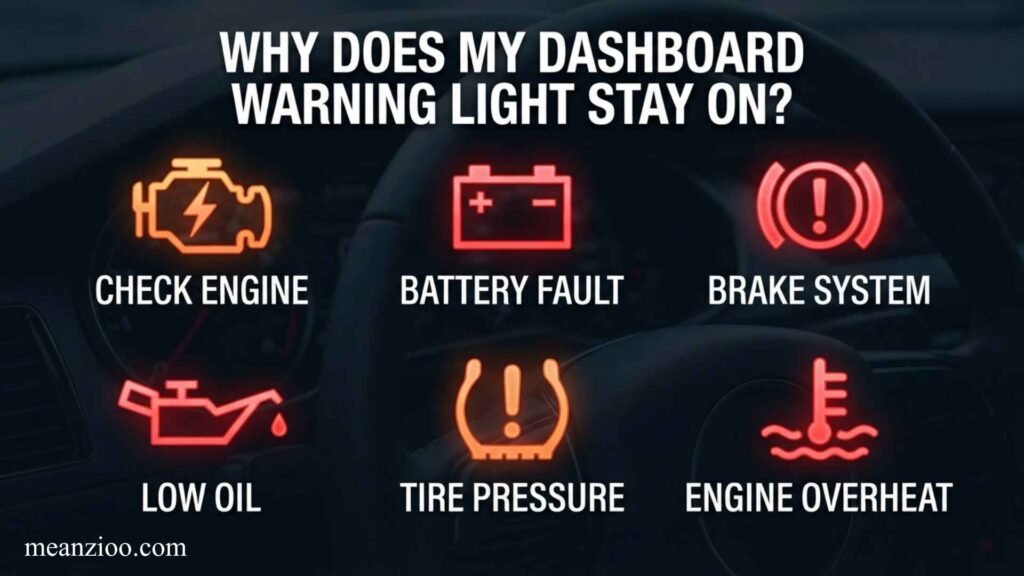
A warning light may remain illuminated because:
- The underlying problem has not been repaired.
- The vehicle continues to detect a fault.
- A sensor is malfunctioning.
- The system requires a reset.
- A maintenance procedure has not been completed.
- The fault is intermittent.
Clearing a warning light does not necessarily fix the underlying problem.
Common Mistakes Drivers Make With Dashboard Warning Lights
Ignoring Red Warning Lights
A red warning can indicate a serious safety or mechanical issue. Continuing to drive can make the situation worse.
Assuming Yellow Means No Problem
Amber warnings are generally less urgent than red warnings, but they still indicate that attention is needed.
Ignoring a Flashing Check Engine Light
A flashing check engine light can indicate a serious engine problem and should be treated more urgently than a steady warning.
Guessing the Meaning of a Symbol
Similar-looking symbols can have completely different meanings. Always check the owner’s manual instead of relying on guesswork.
Ignoring Additional Dashboard Messages
Your vehicle may display a detailed message that provides more useful information than the symbol itself.
Resetting a Warning Without Fixing the Cause
A warning may disappear temporarily after being reset, but it can return if the underlying problem remains.
Are Car Symbols the Same for Every Vehicle?
No. Car symbols are not completely identical across all makes and models.
Manufacturers can use different:
- Symbols
- Colors
- Names
- Warning messages
- Levels of urgency
For example, electronic stability control may be called ESC, ESP, VSC, or another manufacturer-specific name.
Diesel vehicles can also have DPF, glow-plug, and AdBlue or DEF warnings, while electric vehicles use symbols related to charging and high-voltage systems.
For this reason, your owner’s manual should always be considered the final reference for your vehicle.
Quick Reference: Car Symbols and Meanings
| Dashboard symbol | Meaning | General urgency |
| Check engine | Engine or emissions fault | Medium to high |
| Oil can | Low oil pressure | High |
| Battery | Charging-system problem | High |
| Brake | Brake or parking-brake warning | High |
| ABS | Anti-lock braking fault | Medium |
| Tire with ! | Low tire pressure | Medium |
| Thermometer | Engine overheating | High |
| Airbag | Restraint-system fault | High |
| Steering wheel ! | Power-steering problem | High |
| Car with skid lines | Traction/stability system | Medium |
| Fuel pump | Low fuel | Low |
| Seat belt | Seat belt not fastened | Safety issue |
| DPF | Diesel particulate filter warning | Medium |
| Coil | Diesel glow plugs | Vehicle dependent |
| EPC | Electronic power-control warning | Medium to high |
| Key/lock | Immobilizer or security system | Vehicle dependent |
| Windshield spray | Low washer fluid | Low |
| Blue headlamp | High beams active | Informational |
| Green arrow | Turn signal active | Informational |
| Fog lamp | Fog lights active | Informational |
| Door/car | Door or trunk open | Medium |
| Lane markings | Lane-assistance system | Informational/warning |
| Collision symbol | Collision warning | High |
| Speedometer/car | Adaptive cruise control | Informational |
| Charging plug | EV charging status | Informational |
| EV battery | Electric system/status | Vehicle dependent |
Frequently Asked Questions About Car Symbols and Meanings
What are the most important car dashboard symbols to know?
The most important symbols to understand include the oil-pressure, brake, engine-temperature, battery, check engine, tire-pressure, ABS, airbag, and steering warnings. These can indicate mechanical or safety problems that require attention.
What does a red car symbol mean?
A red dashboard symbol generally indicates a serious warning or important vehicle condition. Safely stop and check the owner’s manual when appropriate.
What does a yellow or orange dashboard light mean?
A yellow or amber light generally indicates a fault or condition that requires attention. You may sometimes be able to continue driving carefully, depending on the warning.
What does a flashing dashboard light mean?
A flashing warning can indicate a more urgent condition, but its meaning depends on the symbol. For example, a flashing traction-control light may indicate that the system is actively working.
Can I drive with the check engine light on?
If the light is steady and the vehicle is operating normally, you may be able to drive cautiously for a limited distance while arranging a diagnosis. A flashing light or serious symptoms require more urgent action.
What does the oil can symbol mean?
The oil-can symbol commonly indicates an engine oil-pressure problem. Safely stop and switch off the engine, then follow the manufacturer’s instructions.
Why is my ABS light on?
An ABS warning means the vehicle has detected a problem with the anti-lock braking system. The conventional brakes may still operate, but the anti-lock function may not work correctly.
Why is my tire-pressure light on after filling the tires?
The tire-pressure system may need time to update or, on some vehicles, require a reset. If the light returns, check for a puncture, incorrect pressure, or a TPMS fault.
What does the car with wavy lines mean?
This symbol commonly relates to traction control or electronic stability control. If it flashes, the system may be actively correcting wheel slip. If it stays on, the system may be disabled or have detected a fault.
What does the EPC light mean?
EPC generally stands for Electronic Power Control and is used by some manufacturers. It can indicate a problem with electronic engine or throttle control. The exact meaning depends on the vehicle.
What does the DPF light mean?
The DPF light is associated with the Diesel Particulate Filter. It can indicate that the filter needs regeneration or that the system has detected a fault. Follow the manufacturer’s instructions.
What does the car-with-key symbol mean?
A car-and-key symbol commonly relates to the immobilizer or vehicle security system. A persistent or flashing warning can indicate a key-recognition or security-system problem.
Why do all the dashboard lights come on when I start my car?
Many vehicles illuminate warning lights briefly during startup as part of a system check. They should generally turn off after the checks are complete. A light that stays on may require attention.
Where can I find the exact meaning of a dashboard symbol?
The owner’s manual for your exact make, model, and year is the most reliable source. Some vehicles also provide an explanation through the infotainment system or instrument display.
Conclusion
Understanding car symbols and meanings can help you respond correctly when a warning appears on your dashboard.
Not every symbol means there is a serious problem. Green and blue indicators are often simply telling you that a feature is active, while amber warnings generally mean that the vehicle needs attention. Red warnings can indicate serious conditions that may require you to stop.
The most important things to consider are the symbol, color, whether it is flashing or steady, the message displayed by the vehicle, and how the car is behaving.
Never ignore an unfamiliar warning simply because the vehicle still seems to drive normally. When in doubt, consult your owner’s manual or have the vehicle inspected by a qualified professional.
Knowing your dashboard symbols can help you make safer decisions, identify potential problems earlier, and avoid turning a minor vehicle issue into a much more expensive repair.
Also Check These Post:
Infinity Symbols: ∞ ♾️ and More Symbols to Copy, Paste, Type, and Understand
WW1 Symbols: Complete Guide to World War I Symbols and Their Meanings
Logical Symbols: Complete List, Meanings, Names, and Examples

I’m Ryan Mitchell, and I write about modern English, trending slang, and online expressions. I enjoy explaining the meanings, origins, and real-life usage of popular words in a simple way. I believe learning slang is an important step toward understanding today’s English-speaking culture. Through my work, I aim to help readers speak more naturally and stay updated with the latest language trends.