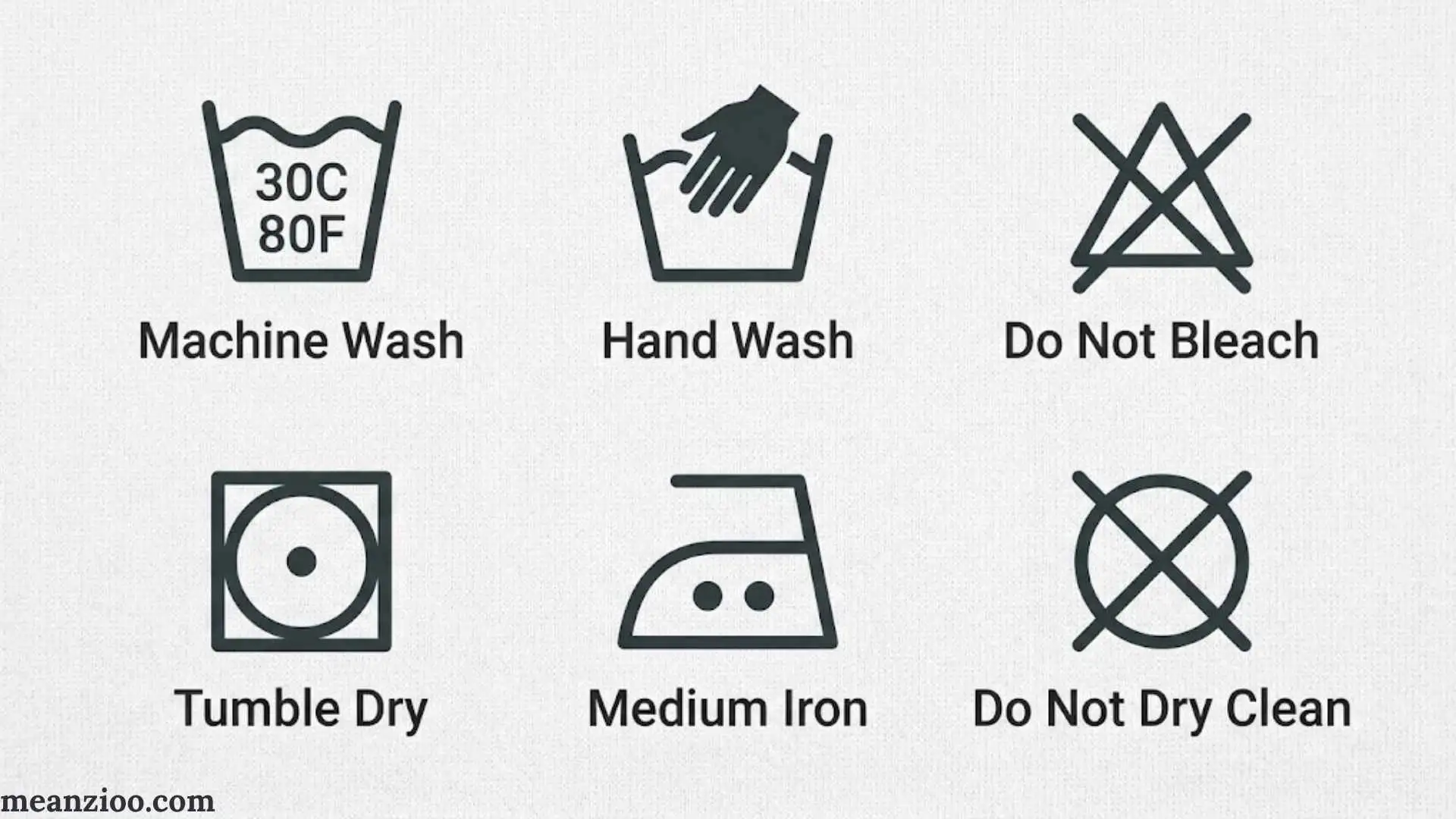
Laundry day gets much easier when you know what the symbols on your clothing labels mean. Those tiny pictures tell you whether to machine wash a shirt, use cold water, avoid bleach, tumble dry a sweater, or take a delicate garment to a professional cleaner.
However, laundry symbols can look confusing at first. A washtub, triangle, square, iron, and circle may seem like simple shapes, but each one communicates a different set of garment care instructions. Small details such as dots, lines, numbers, and crosses can completely change what you should do.
This guide explains wash instruction symbols, their meanings, and how to use them correctly. You’ll find a practical laundry symbol chart, clear explanations of washing and drying symbols, and useful tips for protecting different fabrics. By the end, you’ll know how to read your clothing care tags with confidence and avoid common laundry mistakes.
What Do Laundry Symbols Mean?
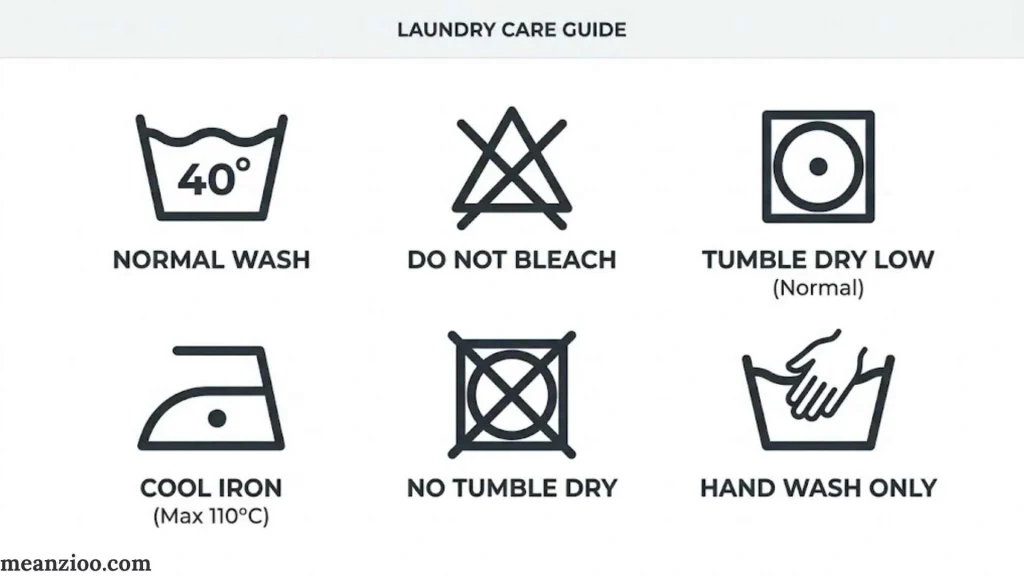
Laundry symbols are visual instructions printed on clothing labels to explain how to clean and maintain a garment. They help you choose suitable washing methods, water temperatures, bleaching treatments, drying techniques, and ironing settings.
Instead of relying entirely on written instructions, manufacturers use standardized symbols to communicate essential fabric care information. This makes care labels easier to understand across languages and markets, although symbol systems and labeling requirements can vary.
According to
, the international ISO 3758 system uses five basic symbol families. Each family covers a different part of garment care.
| Basic symbol | What it represents | What you need to know |
| Washtub | Washing | Whether and how you can wash the garment |
| Triangle | Bleaching | Which bleaching treatments are permitted |
| Square | Drying | Whether to tumble dry or use natural drying |
| Iron | Ironing | The permitted ironing temperature and restrictions |
| Circle | Professional textile care | Instructions for professional dry cleaning or wet cleaning |
These five categories form the foundation of most clothing care symbols. Additional markings provide more specific instructions.
For example, a number inside a washtub indicates the maximum washing temperature. Dots inside a dryer or iron symbol indicate a temperature level. A line underneath a symbol can call for gentler treatment, while a cross usually indicates that a particular process isn’t permitted.
One important point: care labels indicate suitable treatment, not guaranteed cleaning results. Following the label helps protect your clothes, but it doesn’t guarantee that every stain will disappear.
Laundry Symbols Chart: Quick Reference Guide
When you’re standing in front of the washing machine with a full laundry basket, you probably don’t want to decode every symbol from scratch. This quick-reference chart covers the most common laundry symbol meanings.
The descriptions below follow the general principles of the ISO 3758 care-label system. Always check the exact symbol and any additional instructions on your garment.
| Laundry symbol or marking | Meaning | What you should do |
| Washtub with a number | Maximum wash temperature | Keep the wash temperature at or below the number |
| Washtub with one underline | Mild washing process | Choose a gentler cycle with reduced mechanical action |
| Washtub with two underlines | Very mild washing process | Use a very gentle cycle designed for sensitive garments |
| Hand inside a washtub | Hand wash | Wash carefully by hand within the indicated temperature limit |
| Crossed-out washtub | Do not wash | Avoid the prohibited washing treatment |
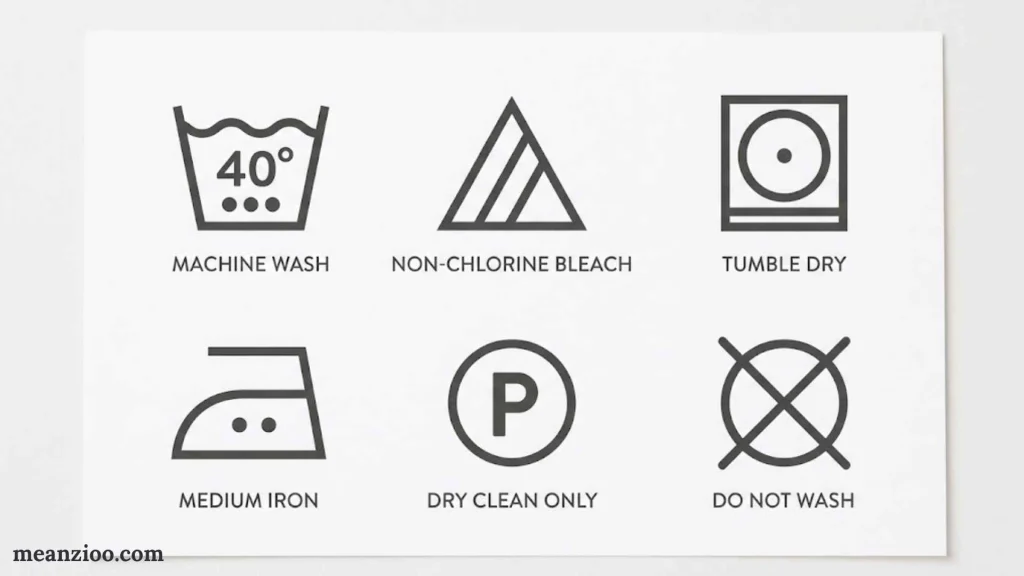
| Empty triangle | Bleaching permitted | Use bleach only as appropriate for the garment and labeling system |
| Triangle with two diagonal lines | Oxygen or non-chlorine bleach only | Avoid chlorine bleach |
| Crossed-out triangle | Do not bleach | Avoid bleaching products |
| Square with a circle | Tumble drying | Check the dots for the permitted heat level |
| Crossed-out square with a circle | Do not tumble dry | Choose an appropriate alternative drying method |
| Square with vertical lines | Natural line drying | Hang the garment to dry as instructed |
| Square with horizontal line | Flat drying | Place the garment on a flat surface |
| Square with a diagonal line | Dry in the shade when used with the relevant drying symbol | Keep the garment out of direct sunlight |
| Iron with one dot | Low ironing temperature | Use the lowest indicated heat setting |
| Iron with two dots | Medium ironing temperature | Use moderate heat |
| Iron with three dots | High ironing temperature | Use higher heat only when the label permits it |
| Crossed-out iron | Do not iron | Avoid ironing the garment |
| Iron with crossed-out steam | Do not use steam | Iron without steam only if ironing itself is permitted |
| Circle with letters | Professional cleaning instructions | Show the label to a qualified textile-care professional |
| Crossed-out circle | Do not dry clean | Avoid the prohibited dry-cleaning treatment |
Remember: A symbol’s details matter. A square with a circle means something different from a square with horizontal lines. Similarly, a triangle with diagonal lines doesn’t mean the same thing as an empty triangle.
Washing Symbols and Their Meanings
Washing symbols help you determine whether a garment can go into the washing machine, requires hand washing, or needs a more cautious approach. The washtub is the key symbol to recognize.
Machine Wash Symbol
The washtub represents domestic washing, including machine washing when the remaining markings permit it. Numbers or additional lines inside or underneath the tub provide more detailed instructions.
A basic machine-wash instruction doesn’t mean you should automatically select the washer’s default cycle. You still need to check the recommended temperature and washing intensity.
For example, a cotton T-shirt and a delicate synthetic blouse might both be machine washable. However, the blouse may require cooler water and a gentler cycle to protect its shape and finish.
Before starting a load:
- Check the number inside the washtub.
- Look for one or two lines underneath it.
- Sort garments by color and care requirements.
- Choose a suitable detergent and washing program.
- Check whether the garment has special written instructions.
These simple steps help you follow the washing instructions without exposing clothing to unnecessary wear.
Hand Wash Symbol
The hand-wash symbol shows a hand inside a washtub. It tells you to wash the garment by hand according to the label’s temperature limit.
Hand washing is often suitable for delicate items that need careful handling. Depending on the garment, these may include wool knitwear, certain silk garments, cashmere, or pieces with fragile embellishments.
Here’s how to approach hand washing:
- Fill a clean basin with water at the recommended temperature.
- Dissolve a suitable detergent in the water.
- Submerge the garment and move it gently through the water.
- Rinse carefully without aggressive rubbing.
- Remove excess water by pressing gently rather than twisting.
- Reshape the garment and follow its drying instructions.
Avoid wringing delicate fabrics. Twisting can stretch fibers, distort seams, and damage the shape of knitwear.
Some washing machines offer a hand-wash program. However, don’t assume it will suit every hand-wash garment. Check the appliance instructions and the garment label before using it.
Do Not Wash Symbol
A crossed-out washtub means the garment must not undergo the prohibited domestic washing treatment.
Some items contain water-sensitive materials, unstable dyes, structured linings, or special finishes. Others may be too delicate for ordinary washing.
Don’t assume that hand washing is automatically safe when the label says not to wash. The restriction may apply to water-based cleaning altogether.
Instead, check the complete care label for professional-cleaning instructions. If the garment is expensive, structured, or particularly delicate, ask a qualified cleaner for advice.
Normal, Mild, and Very Mild Washing Symbols
The lines underneath a washtub tell you how gently you should treat a garment.
- No underline: A normal washing process is permitted within the stated temperature limit.
- One underline: Use a mild process with reduced mechanical action.
- Two underlines: Use a very mild process with particularly gentle mechanical action.
Mechanical action refers to the movement, agitation, and handling a garment experiences during washing. More delicate treatment helps protect sensitive fabrics and garment construction.
A mild cycle may be appropriate for certain easy-care garments. A very mild cycle is often associated with delicate woolens and similarly sensitive items, provided the care label allows machine washing.
Don’t confuse these standardized markings with cycle names such as normal, permanent press, or delicate. Those are appliance settings. Their exact behavior varies between machines.
Choose the appliance program that best matches the garment’s care instructions.
Washing Temperature Symbols: 30°C, 40°C, 60°C, and More
Numbers inside a washtub indicate the maximum washing temperature in degrees Celsius under the ISO system. They tell you how hot the wash water may be, not how hot it must be.
| Temperature marking | General interpretation | Practical guidance |
| 30°C | Maximum 30°C wash | A common choice for garments requiring cooler washing |
| 40°C | Maximum 40°C wash | Allows a warmer wash when the label permits it |
| 50°C | Maximum 50°C wash | Follow the garment’s specific temperature limit |
| 60°C | Maximum 60°C wash | Suitable only when the label allows this temperature |
| 70°C | Maximum 70°C wash | Intended for garments whose care instructions permit it |
| 95°C | Maximum 95°C wash | A high-temperature treatment for suitable textiles only |
Not every labeling system or garment uses all these temperature markings. Follow the number actually shown on your care label.
Why does temperature matter? Excessive heat can shrink some fabrics, contribute to fading, affect elastic components, or damage garment finishes. Cooler washing can reduce certain risks, although it won’t eliminate every possible form of damage.
For example, a shirt marked for washing at 30°C shouldn’t be washed at 60°C simply because the shirt looks sturdy. Its dye, finish, seams, or other components may have influenced the manufacturer’s recommendation.
Also, don’t confuse wash-temperature numbers with dots inside dryer and iron symbols. They belong to different parts of the care-label system.
Bleaching Symbols Explained
The triangle is the main bleaching symbol on standardized laundry labels. Its markings tell you whether bleaching is permitted and which restrictions apply.
Bleach can help remove certain stains and brighten suitable fabrics. However, using the wrong product can damage fibers or leave permanent discoloration.
Empty Triangle: Bleaching Permitted
An empty triangle indicates that bleaching is permitted under the applicable symbol system.
This doesn’t mean you must add bleach to every wash. It simply means the label doesn’t prohibit the bleaching treatments covered by that symbol.
Before using bleach, check the product directions and confirm that the garment’s color and construction can tolerate it.
White clothing isn’t automatically safe for chlorine bleach. Dyes, trims, elastic, and fabric finishes can all affect suitability.
Triangle With Diagonal Lines: Non-Chlorine Bleach Only
A triangle with two diagonal lines indicates that only oxygen-based or non-chlorine bleaching is permitted under the ISO system.
This restriction matters because chlorine bleach can damage some dyes and textile materials. Oxygen-based products offer a different bleaching chemistry, but they’re not suitable for every garment or every cleaning situation.
Always check the bleach packaging and garment label before use.
Crossed-Out Triangle: Do Not Bleach
A crossed-out triangle means bleaching isn’t permitted.
Avoid chlorine bleach and other bleaching products, including oxygen-based bleach. Check detergent labels as well, especially if you use products marketed for whitening or stain removal.
If you’re treating a stain on a garment marked do not bleach, use a suitable bleach-free method instead. Test any stain-treatment product according to its instructions before applying it to a visible area.
How to Choose Bleach Safely
Follow these practical rules when handling laundry bleach:
- Read the garment’s bleaching symbol before selecting a product.
- Follow the bleach manufacturer’s dilution and usage instructions.
- Never mix bleach with ammonia, acids, or other incompatible cleaning products.
- Don’t assume a product is suitable simply because its packaging says it’s color-safe.
- Check whether the care label prohibits bleaching altogether.
The goal is to remove stains without sacrificing the garment’s color, strength, or finish.
Drying Symbols and Their Meanings
Drying symbols appear inside a square. They help you decide whether to use a clothes dryer or let the garment dry naturally.
The square’s internal markings identify the method, while dots indicate the permitted tumble-drying temperature level. Lines indicate different natural-drying methods.
Tumble Dry Symbol
A square containing a circle indicates that tumble drying is permitted under the conditions shown.
A plain tumble-drying symbol allows the normal drying process defined by the relevant labeling system. Additional dots may restrict the permitted heat.
Before putting a garment into the dryer, check its care label and the dryer’s available settings. If the label specifies a restricted heat level, select a suitable program.
Don’t assume every machine’s low-heat setting reaches the same temperature. Appliance programs differ, so follow the manufacturer’s instructions as well.
Low, Medium, and High Heat Dryer Symbols
Dots inside the tumble-drying symbol indicate temperature levels. More dots generally mean a higher permitted drying temperature.
| Dryer symbol marking | General meaning | What to do |
| One dot | Lower-temperature tumble drying | Choose a suitable low-heat program |
| Two dots | Normal or higher permitted tumble-drying temperature | Use a program that stays within the garment’s limits |
| Crossed-out tumble-drying symbol | Tumble drying prohibited | Use another permitted drying method |
The exact interpretation should follow the labeling standard used on the garment.
High dryer heat can cause shrinkage in susceptible fabrics. It can also damage elastic, some prints, and certain synthetic materials. When the label calls for lower heat, don’t override it simply to finish laundry faster.
Do Not Tumble Dry Symbol
A crossed-out tumble-drying symbol means you shouldn’t put the garment through the prohibited dryer process.
Instead, look for an appropriate natural-drying method. Depending on the garment, the label may specify hanging it, allowing it to drip dry, or laying it flat.
An air-only dryer program isn’t necessarily the same as natural drying. The drum still moves the garment, which can matter for delicate or shape-sensitive textiles.
Drip Dry Symbol
Drip drying allows a wet garment to dry naturally without first removing all its excess water through wringing or aggressive spinning.
The standardized symbol uses vertical lines inside a square. Additional markings can specify whether the garment should hang or lie flat and whether it must dry in the shade.
This method can help limit mechanical handling. However, a heavy wet garment may stretch if you hang it without adequate support.
Check the complete symbol before deciding how to position the item.
Hang Dry or Line Dry Symbol
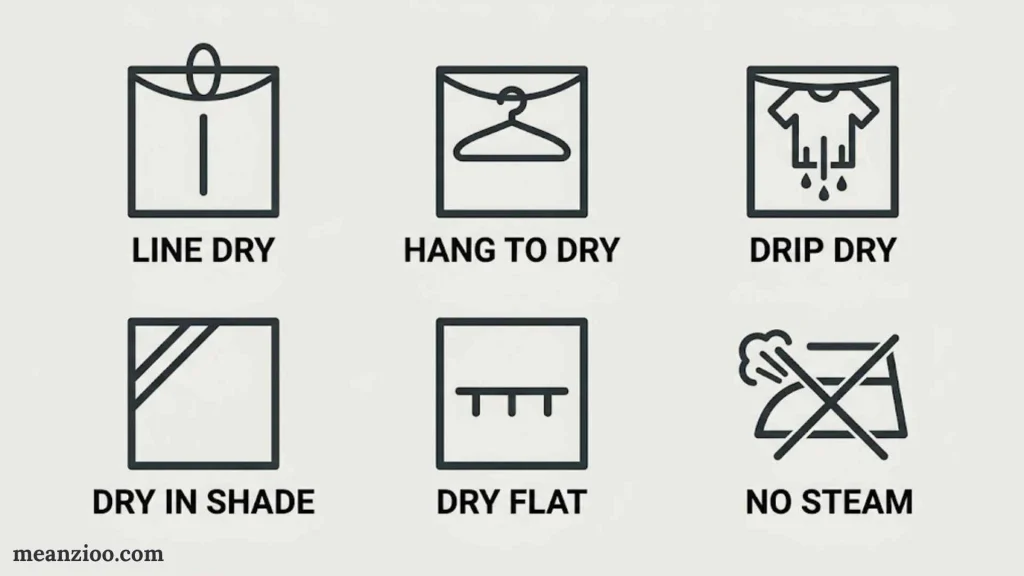
A square with a vertical line indicates line drying in the relevant symbol system.
Depending on the garment, you may use a clothesline or another suitable hanging arrangement. Support the garment so its weight doesn’t pull the fabric out of shape.
For delicate tops, knitwear, or heavy wet items, a hanger may not always be the best choice. Use the exact drying instruction and consider the garment’s construction.
Dry Flat Symbol
A square with a horizontal line indicates flat drying.
This method is useful for garments that may stretch or lose their shape when hung while wet. Certain wool sweaters and delicate knits may require flat drying when the care label specifies it.
To dry a garment flat:
- Gently remove excess water as permitted.
- Place the garment on a clean, dry surface.
- Reshape it according to its original construction.
- Allow air to circulate around the fabric.
- Turn or reposition the item when necessary.
Avoid placing delicate clothing on a surface that transfers color, dirt, or moisture.
Dry in the Shade Symbol
A diagonal line used with a natural-drying symbol indicates that the garment should dry in the shade.
Direct sunlight can fade certain dyes over time. Shade drying helps limit that exposure, particularly for susceptible colors and materials.
The diagonal line modifies the underlying drying instruction. It doesn’t replace it. Check whether the label calls for line drying, drip drying, or flat drying as well.
Gentle and Permanent Press Dryer Settings
You may see gentle, delicate, or permanent press on your dryer’s control panel. These are appliance programs rather than the five basic garment-care symbols.
A gentle program may use reduced heat or a different tumbling pattern. A permanent press program often aims to reduce wrinkles through a combination of drying conditions and a cool-down period.
However, these features vary by machine. Choose the program that matches the care label rather than assuming a familiar cycle name guarantees safe treatment.
Ironing Symbols and Their Meanings
The iron-shaped icon tells you whether you can iron a garment and how much heat it can tolerate. Dots inside the symbol indicate the permitted ironing temperature level.
Correct ironing helps smooth wrinkles and improve a garment’s appearance. Too much heat, however, can scorch fibers, melt certain synthetic materials, flatten textures, or damage decorative finishes.
One-Dot Iron Symbol: Low Heat
An iron with one dot indicates a low ironing temperature.
This setting is commonly associated with heat-sensitive materials, but you should always follow the garment’s label rather than relying on its fiber content alone.
When ironing a garment with one dot:
- Select the lowest suitable iron temperature.
- Avoid lingering in one spot.
- Use a pressing cloth when appropriate.
- Check whether the label prohibits steam.
- Test an inconspicuous area when the care instructions permit it.
Low heat doesn’t mean zero risk. Prints, coatings, and embellishments may need additional protection.
Two-Dot Iron Symbol: Medium Heat
An iron with two dots indicates a medium ironing temperature.
This setting allows more heat than the one-dot category. However, the correct treatment still depends on the garment’s construction and care instructions.
Some fabrics can tolerate moderate heat but may become shiny when pressed too firmly. If the label allows it, iron inside out or use a pressing cloth to protect the visible surface.
Three-Dot Iron Symbol: High Heat
An iron with three dots indicates the highest common dot-based ironing temperature category.
This setting is generally associated with heat-tolerant textiles, but don’t assume every cotton or linen garment can withstand high heat. Blends, coatings, dyes, and decorative details can change the recommended treatment.
Follow the label and avoid leaving the iron stationary on the fabric.
Crossed-Out Iron Symbol: Do Not Iron
A crossed-out iron means ironing isn’t permitted.
Direct heat can cause irreversible damage to some fabrics, prints, and finishes. If your garment carries this symbol, don’t try to remove wrinkles by using the iron’s lowest setting.
Instead, consider safer alternatives when appropriate:
- Hang the garment neatly after washing.
- Smooth wrinkles gently while the fabric is damp if the care instructions allow it.
- Let the garment dry in the correct position.
- Ask a professional cleaner about suitable finishing methods.
Don’t assume steaming is safe. A garment that prohibits ironing may also be sensitive to steam or moisture.
Iron Symbol With Crossed-Out Steam
An iron with crossed-out steam indicates that steam shouldn’t be used.
If the label otherwise permits ironing, use a suitable dry-ironing setting. Avoid spraying water onto the garment unless its care instructions allow that treatment.
Steam restrictions matter because moisture and heat can affect certain finishes and delicate materials differently.
Ironing Temperature Guide
The following table shows the approximate maximum soleplate temperatures associated with common ISO ironing categories.
| Iron symbol | Maximum soleplate temperature | General guidance |
| One dot | 110°C (230°F) | Low heat; steam may be restricted |
| Two dots | 150°C (302°F) | Moderate heat |
| Three dots | 200°C (392°F) | High heat |
These figures reflect common ISO symbol guidance. They shouldn’t be confused with every manufacturer’s iron-dial markings, which may use different settings or approximate ranges. The care label takes priority. GINETEX’s official symbol guide provides further details.
Dry Cleaning Symbols and Their Meanings
The circle is the main symbol for professional textile care. It communicates instructions for professional cleaning processes, including dry cleaning and wet cleaning.
Dry cleaning doesn’t mean cleaning without any liquid. Professional dry cleaning uses suitable solvents rather than ordinary household washing. Professional wet cleaning uses water-based methods with specialized equipment, controls, and finishing techniques.
These methods aren’t interchangeable for every garment.
Circle Symbol on Clothing Labels
A circle indicates professional textile-care instructions. Letters or additional markings inside or underneath the circle provide further information about the permitted process.
These details help professional cleaners determine which treatments are suitable for the garment.
Don’t interpret a circle alone as a universal instruction to dry clean. Look for any letters, underlines, crosses, or other accompanying symbols.
Do Not Dry Clean Symbol
A crossed-out circle means the garment shouldn’t undergo the prohibited dry-cleaning process.
This restriction doesn’t automatically mean you can wash the garment at home. The item may have a separate washing instruction, or it may require a different form of professional care.
Check the complete label before choosing another cleaning method. If the garment contains delicate linings, structured shoulders, beads, or special finishes, seek professional advice when the instructions aren’t clear.
What Do Letters Inside Dry Cleaning Symbols Mean?
Letters inside a professional-care circle communicate technical information about the cleaning process. They help professionals identify suitable solvents and treatment conditions under the applicable labeling standard.
Older or regional symbol references may include letters such as A, F, and P. However, their meanings shouldn’t be copied into a modern guide without verifying the specific standard and version.
For example, professional-care markings can distinguish between solvent types and indicate when a milder process is required. An underline may call for restrictions on mechanical action, moisture, or drying temperature.
Can You Wash Dry-Clean-Only Clothes at Home?
Sometimes a garment’s materials may tolerate water, but that doesn’t mean home washing is safe for the finished item.
Construction, dyes, interfacing, linings, and decorative elements can all affect how a garment responds to cleaning. A structured jacket, for example, may lose its shape even if its outer fabric appears washable.
Before attempting home washing:
- Read every instruction on the care label.
- Check the manufacturer’s care guidance when available.
- Consider whether the garment has structured or delicate components.
- Avoid experimenting with expensive or sentimental clothing.
- Consult a professional cleaner when the recommended treatment is unclear.
How to Read Clothing Care Labels Step by Step
Understanding individual symbols is useful, but reading the entire label correctly is what helps you make better laundry decisions.
Follow these steps whenever you wash a new garment.
Find the Care Label
Start by locating the garment’s clothing care tag. It may sit inside a side seam, near the waistband, or along the back of the neckline.
Don’t confuse the care label with the brand label or size tag. Some labels combine several types of information, including fiber composition, country of manufacture, and cleaning instructions.
Read the Symbols in Order
In the ISO care-label system, the five main categories follow this sequence:
- Washing
- Bleaching
- Drying
- Ironing
- Professional textile care
Read each category before starting laundry. A garment might permit machine washing but prohibit tumble drying or ironing.
One symbol never cancels out another restriction.
Look for Numbers, Dots, Lines, and Crosses
Small markings often carry the most important details.
- Numbers: Indicate the maximum washing temperature inside the washtub.
- Dots: Indicate temperature levels in relevant drying and ironing symbols.
- One underline: Indicates a milder process in the relevant symbol family.
- Two underlines: Indicate a very mild process.
- Crosses: Indicate that a treatment isn’t permitted.
- Diagonal lines: Modify particular bleaching or natural-drying instructions, depending on the symbol.
Don’t guess when a marking is difficult to identify. Compare it with a reliable laundry symbol chart.
Choose Suitable Laundry Settings
Once you’ve interpreted the label, match its instructions to your washing machine, dryer, and iron.
For example, a garment marked for washing at 30°C with a mild process needs a suitable temperature and gentle cycle. If its drying symbol prohibits tumble drying, use an appropriate natural-drying method instead.
Your machine’s program names may differ from the care-label terminology. Check the appliance manual if you’re unsure which setting best matches the instruction.
Check Everything Before Starting
Take a final look at the label before washing, bleaching, drying, or ironing.
This last check can prevent common mistakes. You might notice a bleaching restriction you missed earlier or discover that the garment must dry flat.
If a label is faded or missing, check the manufacturer’s website or product information. When the correct treatment remains uncertain, choose a cautious approach and seek professional guidance for delicate items.
How Laundry Symbols Apply to Different Fabrics
Fabric type offers useful clues about garment care, but it shouldn’t replace the label. Two garments made from the same fiber can require different treatment because of their construction, dyes, finishes, or blended materials.
Cotton and Linen
Cotton and linen appear in everyday clothing, towels, shirts, bedding, and summer garments.
Some cotton and linen items tolerate relatively warm washing and higher ironing temperatures. Others contain delicate dyes, decorative prints, elastic, or finishes that require gentler care.
Check the label before selecting a hot wash or high-heat dryer setting. Don’t assume a sturdy-looking fabric can withstand every treatment.
Wool and Cashmere
Wool and cashmere garments can be sensitive to agitation, temperature changes, and unsupported drying.
Depending on the label, a garment may require hand washing, a very mild machine cycle, or professional cleaning. Some items also need flat drying to help preserve their shape.
Avoid rubbing, twisting, or wringing delicate knitwear. When the label specifies flat drying, reshape the garment and allow it to dry on a suitable surface.
Silk and Rayon
Silk and rayon garments may require careful washing, controlled drying, and low-temperature ironing or no ironing at all.
Their care requirements vary with the fabric’s construction and finish. Some silk items permit hand washing, while others require professional cleaning.
Rayon can also change shape or texture under unsuitable conditions. Follow the garment’s actual instructions rather than applying a single rule to every item made from these fibers.
Polyester, Nylon, and Synthetic Blends
Polyester, nylon, and blended fabrics are common in activewear, jackets, shirts, dresses, and everyday clothing.
Many synthetic garments require controlled dryer heat and careful ironing. Elastic components, coatings, and printed designs can be more sensitive than the main fabric.
Check the drying and ironing symbols before applying heat. A garment may tolerate machine washing but still require low-heat drying or no ironing.
Denim, Activewear, Bras, and Delicate Knits
Garment construction matters just as much as fiber composition.
Denim may have stretch fibers or special finishes. Activewear can contain elastic materials that don’t tolerate excessive heat. Bras may have molded cups, underwires, or delicate fastenings. Knitted garments may stretch when they’re wet.
For these items, follow the individual garment care instructions. Use a laundry bag or another protective measure when appropriate, but don’t treat it as a substitute for the care label.
Common Laundry Symbol Mistakes to Avoid
Misreading one small marking can lead to shrinkage, fading, or damage. These are some of the most common mistakes to watch for.
- Treating the wash temperature as a target: A number in the washtub is a maximum, not a requirement to use that exact temperature.
- Confusing dots with wash-temperature numbers: Dots in dryer and iron symbols serve a different purpose from numbers inside a washtub.
- Assuming every square means tumble drying: The circle inside the square identifies tumble drying. Other markings can indicate natural-drying methods.
- Ignoring underlines: A line or double line underneath a washtub indicates a gentler washing process.
- Using the wrong bleach: A label that permits only non-chlorine bleach doesn’t authorize chlorine bleach.
- Replacing prohibited drying with an unsuitable method: No tumble drying doesn’t automatically mean hanging is safe. Check the natural-drying instructions.
- Ironing at the lowest setting despite a crossed-out iron: A do-not-iron symbol prohibits ironing altogether.
- Guessing dry-cleaning letter codes: Check the correct labeling standard rather than relying on outdated charts.
- Assuming all garments made from one fiber need identical care: Construction, dyes, finishes, and blends can change the recommended treatment.
- Ignoring written warnings: Additional instructions may address special concerns that the symbols alone don’t fully explain.
How to Protect Clothes by Following Wash Instruction Symbols
Correctly interpreting wash instruction symbols helps you choose suitable cleaning methods and avoid preventable damage.
Reduce Shrinkage and Shape Distortion
Follow the stated temperature and drying restrictions. Avoid excessive heat or mechanical action when the label calls for gentle treatment.
For shape-sensitive knitwear, use the specified drying method. Flat drying can help certain garments retain their original shape.
Help Prevent Fading and Discoloration
Follow bleaching restrictions and use appropriate laundry products. Sort garments by color when needed, especially when washing new or color-sensitive clothing.
If the label specifies shade drying, avoid prolonged direct sunlight. This can help reduce fading in susceptible dyes.
Reduce Wrinkles and Heat Damage
Check the ironing symbol before applying heat. Use the permitted temperature and avoid steam when the label prohibits it.
Choosing the correct drying method can also reduce wrinkles. However, don’t use a hotter dryer setting simply to make clothes dry faster.
Help Extend Garment Life
Small care decisions add up over time. Using suitable temperatures, gentler cycles, and appropriate drying methods can help preserve fabric appearance and construction.
Correct care can’t prevent every stain, snag, or sign of wear. It can, however, reduce avoidable damage and help you get more use from your clothes.
Frequently Asked Questions About Wash Instruction Symbols
What do the symbols on clothing labels mean?
Clothing care symbols explain how to wash, bleach, dry, iron, and professionally clean a garment. Numbers, dots, lines, letters, and crosses provide more specific instructions within each category.
What does the number inside a washing symbol mean?
The number inside the washtub indicates the maximum washing temperature in degrees Celsius under the ISO care-label system. For example, 30 means you shouldn’t exceed 30°C.
What does a triangle mean on a laundry label?
The triangle represents bleaching instructions. An empty triangle permits bleaching under the applicable system, a triangle with diagonal lines restricts the bleach type, and a crossed-out triangle prohibits bleaching.
What does a square with a circle mean on clothes?
A square containing a circle indicates tumble drying. Dots inside the circle identify the permitted heat level. A crossed-out version means you shouldn’t tumble dry the garment.
What does a crossed-out iron mean?
A crossed-out iron means ironing isn’t permitted. Don’t assume that low heat or steaming is safe. Check the garment’s instructions before trying another wrinkle-removal method.
What do the dots on laundry symbols mean?
Dots indicate temperature levels in relevant tumble-drying and ironing symbols. More dots generally mean a higher permitted temperature. Washing symbols use numbers to indicate maximum water temperature instead.
What does a circle with a letter mean on a care label?
A letter inside a professional-care circle communicates technical cleaning information, such as the permitted solvent or process under the relevant standard. Professional cleaners use these markings to select suitable treatment.
Can you wash clothes marked dry clean only?
Home washing may damage a dry-clean-only garment, depending on its construction, dyes, lining, and finishes. Check the manufacturer’s guidance and consult a professional cleaner before attempting a different cleaning method.
What should you do if a clothing label has faded or is missing?
Check the manufacturer’s website or product information for care instructions. If you can’t confirm the correct method, avoid aggressive washing, high heat, or bleach. Seek professional advice for delicate or valuable garments.
Conclusion: Use Laundry Symbols to Care for Clothes Correctly
Understanding wash instruction symbols takes the guesswork out of laundry. Once you recognize the washtub, triangle, square, iron, and circle, you can interpret the main clothing care symbols and make more informed decisions.
Pay attention to the small details. Numbers set washing-temperature limits, dots indicate relevant heat levels, underlines call for gentler treatment, and crosses prohibit particular processes.
Most importantly, read the entire care label before washing, drying, bleaching, or ironing. When a symbol isn’t clear, check a reliable laundry symbol guide rather than guessing.
A few seconds spent checking the label can help protect your favorite clothes, preserve their shape, and keep them looking their best for longer.

I’m Ryan Mitchell, and I write about modern English, trending slang, and online expressions. I enjoy explaining the meanings, origins, and real-life usage of popular words in a simple way. I believe learning slang is an important step toward understanding today’s English-speaking culture. Through my work, I aim to help readers speak more naturally and stay updated with the latest language trends.